Overview: when federal agencies need real-time data
Most federal analytic reporting is comfortable with overnight batch. Grant summaries, program performance, obligations rollups — nobody calls the Secretary at 2am because a weekly figure is six hours late. But a growing share of federal workloads cannot wait. Combatant command situational awareness, continuous cyber monitoring, fraud detection on payment flows, border throughput, public health surveillance during an outbreak, fleet telemetry, and real-time operational dashboards all require streaming infrastructure. So does any AI-native agency workflow where a model needs fresh features or an agent needs fresh context.
Streaming is also how federal agencies escape the overnight batch window. When nightly jobs are crowding each other out and downstream users want fresh data at 6am, moving to change data capture with Kafka and materialized downstream tables in Iceberg is usually cheaper than buying more warehouse compute to run the batch faster. It is also how modern operational systems escape point-to-point integrations — one event bus, many consumers, one schema registry.
Precision Federal designs and ships real-time pipelines inside federal authorization boundaries. We are comfortable at every layer of the streaming stack: brokers, schema governance, stateful processors, connectors, landing zones, and the observability that keeps streaming operable at 3am.
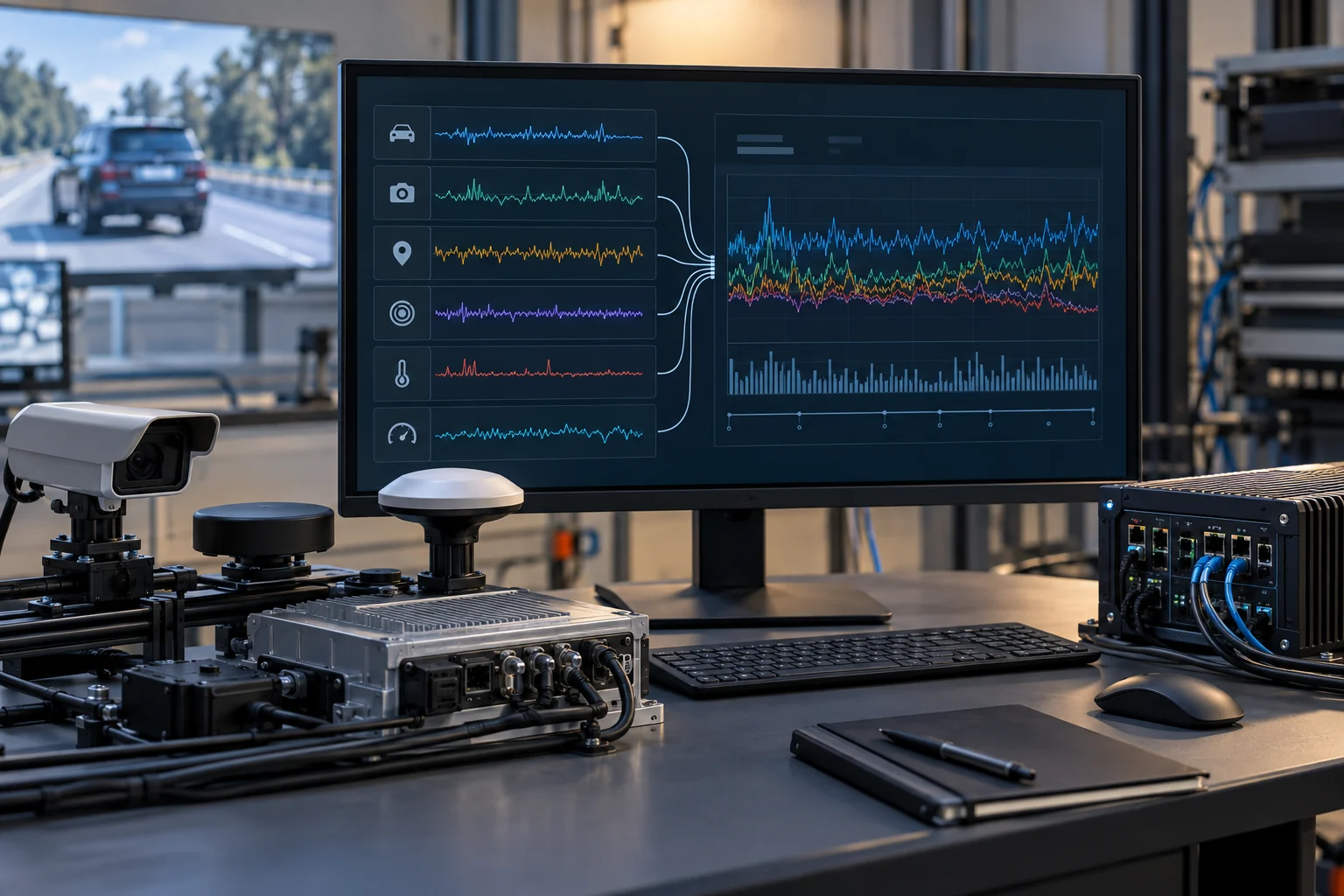
FEDERAL STREAMING DATA PIPELINE
Our technical stack

- Message brokers: Apache Kafka, Amazon MSK (AWS GovCloud, FedRAMP High, IL5), Confluent Cloud Government, Amazon Kinesis Data Streams, Kinesis Firehose, Azure Event Hubs (Azure Gov, FedRAMP High, IL5), Apache Pulsar, NATS JetStream, Google Cloud Pub/Sub (Assured Workloads).
- Stream processors: Apache Flink (managed via Amazon Managed Service for Apache Flink, Confluent Flink, or self-managed on Kubernetes), Spark Structured Streaming, Kafka Streams, Apache Beam on Dataflow, Materialize, RisingWave.
- Change data capture: Debezium (Postgres, MySQL, Oracle, SQL Server, MongoDB, Cassandra), AWS DMS, Fivetran HVR, Estuary Flow.
- Schema governance: Confluent Schema Registry, Apicurio Registry, AWS Glue Schema Registry. Avro, Protobuf, JSON Schema.
- Connectors: Kafka Connect ecosystem, Debezium connectors, Lambda sinks, Iceberg/Delta streaming sinks.
- Landing: Apache Iceberg, Delta Lake, Hudi (see data lakes); Snowflake Snowpipe Streaming; TimescaleDB; ClickHouse.
- Edge and IoT: Mosquitto / EMQX MQTT brokers, AWS IoT Core (Greengrass), Azure IoT Hub (Gov), OPC UA gateways for industrial sensors.
- Observability: Prometheus, Grafana, OpenTelemetry, Cruise Control for Kafka, Burrow for consumer lag, Conductor patterns. See observability.
Federal use cases
Army sustainment telemetry (pursuing)
vehicle health monitoring, maintenance event streams from GCSS-Army feeding predictive maintenance models. Sub-minute latency from fleet to depot planner.
Navy fleet and platform telemetry (pursuing)
shipboard sensor streams, engineering plant data, sparing forecasts computed as events arrive.
Air Force readiness and mission systems (pursuing)
sortie-generation tracking, airframe health management streams, base-level logistics.
FBI investigative event streams (pursuing)
tip ingestion, cross-case correlation, alerting on pattern matches without batch delay.
A federal health agency / HHS outbreak surveillance
syndromic surveillance feeds from hospitals and providers for early-warning detection. The founder's federal health agency work informs this pattern.
Treasury and IRS payment screening
real-time scoring of outbound payment batches against fraud and improper-payment models.
DHS border and entry telemetry
throughput tracking, anomaly detection on entry patterns, real-time watch-list matching.
NASA mission and earth observation
satellite downlink telemetry, ground station event streams, real-time science data pipelines.
DOE grid and energy sensor networks
substation telemetry, demand forecasting, anomaly detection on industrial control feeds.
Continuous cyber monitoring (across agencies)
log shipping, correlation, and alerting — the data substrate below every modern SIEM.
Reference architectures
Architecture 1: MSK + Flink + Iceberg on AWS GovCloud
Amazon MSK (FedRAMP High, IL5) as the broker backbone, multi-AZ with KRaft. Producers over mTLS with SASL/OAUTHBEARER. Confluent Schema Registry on EC2 GovCloud or AWS Glue Schema Registry for Avro contracts. Amazon Managed Service for Apache Flink for stateful processing with RocksDB state and S3-backed checkpoints. Iceberg streaming sink landing to S3 GovCloud. Athena for ad-hoc SQL over the landed tables. Snowflake Government for downstream BI via Iceberg external tables. MSK Connect for source connectors (Debezium on self-managed connect workers when the managed Debezium flavor does not fit). Monitoring with MSK's Prometheus endpoint into Amazon Managed Prometheus and Grafana. Audit log shipping to CloudTrail and the agency SIEM.
Architecture 2: Event Hubs + Stream Analytics + Azure Data Explorer in Azure Government
Azure Event Hubs (Azure Gov, IL5) with dedicated clusters for throughput isolation. Kafka protocol endpoint enabled for ecosystem compatibility. Azure Stream Analytics for simpler T-SQL-based processing or Azure Databricks with Structured Streaming for heavier workloads. Azure Data Explorer (Kusto) as the hot-path analytic store, ADLS Gen2 as the cold-path landing. Entra ID Gov authentication throughout. Private Link endpoints only. Microsoft Sentinel consuming audit logs. Power BI pulling real-time tiles from ADX.
Architecture 3: Air-gapped Kafka + Flink on Red Hat OpenShift
Strimzi operator managing Apache Kafka on OpenShift, deployed into a classified or tactical-edge enclave. Apicurio Schema Registry on the same OpenShift. Flink on Kubernetes Operator for stateful processing, Ceph-backed checkpoints. MinIO for S3-compatible landing. Prometheus and Grafana for observability. No external network dependency. Ideal for IC workloads, forward-deployed tactical units, or FISMA-High systems with strict boundary constraints.
Delivery methodology
- Discovery: inventory producers, consumers, latency budgets, message shapes, throughput peaks, and failure tolerance. Identify whether the workload truly needs streaming or whether micro-batch will serve.
- Design: broker selection, topic topology, partition key strategy, schema governance plan, security model, observability plan. NIST 800-53 control mapping.
- Build: infrastructure-as-code (Terraform / Bicep), Strimzi or MSK configuration, Schema Registry setup, Flink / Spark job repositories with unit and integration tests, connector catalog, CI/CD with SAST/SCA/SBOM.
- Performance validation: load tests with recorded or synthetic workloads. Measure p50/p95/p99 latency, throughput ceiling, failure recovery time. Publish results to the program stakeholder.
- ATO support: control narratives, continuous monitoring plan, SSP input. Streaming adds a handful of AC, AU, and SC controls not typically hit by batch workloads — we cover them explicitly.
- Operate: runbooks for broker restart, consumer lag recovery, partition reassignment, schema breaking-change escalation. SRE-grade ops if the engagement extends. See SRE.
Engagement models
SBIR Phase I fixed-price prototype
6-9 months, ~$150K-$250K. Great fit for streaming-topic SBIR scopes at Army, Navy, Air Force, DHS.
SBIR Phase II
18-24 months, $1M-$2M. Production streaming infrastructure with ATO.
Fixed-price build
90-day scope, $100K-$400K.
T&M task order
contracted directly with the agency, labor-category driven.
OTA prototype
via Tradewind, NSIN, or consortia for rapid DoD prototyping.
Partner team
we bring the streaming specialty; partner firms bring the rest of the program.
Maturity model
Level 1 — Pilot
one producer, one topic, one consumer. Proves the pattern.
Level 2 — Program
schema registry in place, multiple consumers, basic monitoring.
Level 3 — Enterprise
multi-tenant cluster, RBAC, quotas, DLQs, schema enforcement, consumer lag SLOs.
Level 4 — Mission-integrated
exactly-once across the stack, CDC from core systems, tiered storage, cross-region replication.
Level 5 — Continuously monitored
ongoing ATO, automated evidence, federated topics to partner agencies, SRE error budgets enforced.
Deliverables catalog
- Terraform / Bicep IaC for broker, schema registry, connector infrastructure.
- Kafka / MSK cluster configuration with KRaft, tiered storage, quotas.
- Schema registry with governance policy (compatibility modes, approval workflow).
- Flink / Spark job repositories with checkpointing, unit tests, integration tests.
- Connector catalog (Debezium, sinks, custom connectors).
- Producer / consumer SDK wrappers with agency-specific observability baked in.
- Load test harness and recorded baseline results.
- Runbooks for every common failure mode.
- NIST 800-53 control narratives (AC, AU, SC, SI).
- Cost dashboards with per-topic cost attribution.
- Training for the agency's own streaming operators.
Technology comparison: Kafka vs Kinesis vs Pulsar
Kafka / MSK
highest throughput ceiling, richest ecosystem, cross-cloud portability, strong exactly-once story. Higher operational complexity if self-managed. MSK removes most of that complexity.
Amazon Kinesis
AWS-native simplicity, tight Lambda/Firehose integration, pay-per-shard cost model, lower ceiling on single-topic throughput but practically unlimited via sharding.
Apache Pulsar
separation of compute and storage (BookKeeper), native multi-tenancy, geo-replication built in. Smaller ecosystem, fewer federal deployments.
Azure Event Hubs
Kafka protocol compatible, simplest Azure-native choice. Solid throughput with dedicated clusters. Native Entra ID integration.
Federal compliance mapping
AC-2, AC-3, AC-6
broker ACLs per topic and consumer group, RBAC via OAuth or Kerberos, least-privilege service identities.
AU-2, AU-12
broker audit log shipping, client audit hooks, cross-service correlation in SIEM.
SC-7
private endpoints only, broker listeners bound to internal subnets, no public ingress.
SC-8, SC-13
TLS 1.3 between clients and brokers, FIPS 140-2/3 validated modules.
SC-12, SC-28
customer-managed KMS keys for at-rest encryption of tiered storage and Flink checkpoints.
SI-4, SI-7
consumer-lag alerting, DLQ monitoring, schema compatibility enforcement as an integrity control.
Sample technical approach: replacing nightly batch with CDC streams
A civilian agency has a 600GB Oracle system of record and an 11pm nightly ETL that loads the warehouse. The batch overruns twice a week; downstream dashboards show stale data most mornings. Our approach: deploy MSK in AWS GovCloud with a 3-AZ cluster and KRaft controllers. Stand up Debezium on Kafka Connect, configured to read Oracle LogMiner with supplemental logging. Produce change events to topics keyed by primary key, partitioned for parallelism. Confluent Schema Registry for Avro contracts, backward-compatible mode. Flink job to materialize the latest row per key into an Iceberg table on S3 GovCloud with CDC merge semantics. Downstream warehouse queries Iceberg externally via Snowflake or Athena. Result: warehouse freshness drops from 8 hours to under 60 seconds, nightly batch goes away, Oracle load drops because LogMiner is lighter than the previous full-extract approach.
Past performance
Precision Federal holds two federal contracts directly: FHWA purchase order 693JJ326P000024 ($141,370.26, September 2026 through September 2028) and CDC purchase order 75D30126P21398 ($296,250, signed September 18, 2026). The work below is Bo Peng's, from before he founded the firm.
Production ML pipelines on behavioral health data
The founder's federal health agency production ML work established the data pipeline and governance discipline we bring to federal streaming projects. Full past performance →
Related capabilities, agencies, and insights
Streaming pairs naturally with data lakes, data warehousing, ETL / ELT, observability, machine learning, and SRE. Agency pursuits: Army, Navy, Air Force, FBI, DHS. Vehicles: SBIR, OTA. Insights: Exactly-once Flink pipelines, CDC replacing nightly batch.