Why DHS is buying AI in 2026
The Department of Homeland Security is a federation of component agencies, each with distinct mission sets and distinct AI appetites. What unites them in 2026 is the same pressure felt across federal: operational data volume has lapped the workforce's ability to process it. Border crossings, cargo manifests, cyber alerts, asylum adjudications, disaster damage assessments, baggage-screening images, and open-source threat signal all pile up faster than analysts can triage. AI is now a line-item priority in DHS budget justifications and in the Department's Artificial Intelligence Strategy.
Precision Federal is a SAM.gov-active, NAICS 541512 primary small business purpose-built for federal AI/ML delivery. We pursue DHS opportunities across the component map, and our stack is designed from day one for CUI workloads, NIST 800-53 controls, and FedRAMP deployment paths — not bolted on after a commercial-first product gets dragged into a government sale.
DHS components we target
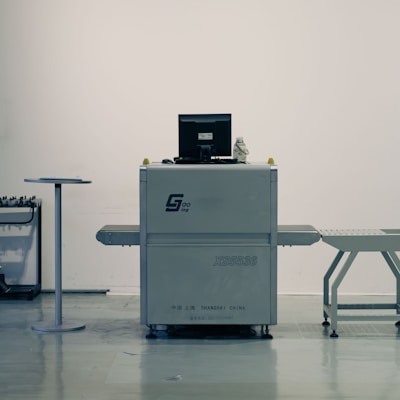
Homeland Security is not one buyer. It is a dozen. The components below are where our AI/ML fit is strongest, the budgets are real, and our proposal library has active drafts.
- Science and Technology Directorate (S&T) — DHS's R&D arm. S&T runs the Long Range BAA and administers DHS SBIR. This is our most active pursuit path — a BAA or SBIR topic out of S&T is the cleanest route for a small business to introduce AI capability to the Department.
- Customs and Border Protection (CBP) — Border imagery ML (vehicles, persons, drones), cargo manifest anomaly detection, non-intrusive inspection image analysis, trade enforcement analytics. CBP operates at continent scale and needs ML that works in the field, not just in a lab.
- Transportation Security Administration (TSA) — Passenger risk analytics, Secure Flight data science, baggage screening ML, airport throughput optimization. AI here has to be defensible in both a courtroom and a Congressional hearing.
- Cybersecurity and Infrastructure Security Agency (CISA) — Threat intel fusion, vulnerability prioritization, malware family clustering, EDR alert triage for federal civilian networks, and critical infrastructure sector analytics. CISA is an aggressive buyer of AI.
- U.S. Citizenship and Immigration Services (USCIS) — Case adjudication decision support, document extraction on I-130 / N-400 / asylum packages, evidence provenance, multilingual forms processing.
- Immigration and Customs Enforcement (ICE) — Case file synthesis, lead prioritization, operational analytics. Scope is politically sensitive and every deployment needs rigorous audit.
- Federal Emergency Management Agency (FEMA) — Disaster response analytics, damage assessment imagery ML, claims triage, resource allocation optimization. Geospatial ML is central.
- United States Coast Guard (USCG) — Maritime domain awareness, vessel track anomaly detection, search-and-rescue optimization, illegal-fishing analytics. DoD-adjacent scope, DHS chain of command.
DHS vehicles and opportunity paths
No single contract vehicle buys AI across the Department. We map scope to the right path and team accordingly. The main vehicles we track:
DHS S&T Long Range BAA
Continuously open, topic-driven. White paper first, full proposal on invitation. Strong fit for AI/ML capability demonstrations.
DHS SBIR
Roughly two solicitations per year, AI-heavy topics across components. Post-April-2026 SBIR reauthorization, we expect DHS SBIR activity to expand.
PACTS III
Program Management, Administrative, Clerical, and Technical Services IDIQ for professional services task orders.
EAGLE NEXT
DHS IT services IDIQ covering AI/ML scope.
FirstSource III
Hardware and hardware-adjacent work; relevant when AI deployments touch on-premise compute.
SEWP VI via partners
For AI-infrastructure hardware deployments on DHS networks.
Component-specific IDIQs and BPAs
CISA, FEMA, and CBP each run their own vehicles worth tracking.
Governmentwide vehicles
OASIS+, Alliant 2, GSA MAS are used by DHS for specialized work where a component needs capability outside its existing IDIQs.
OTA consortia
Several consortia relevant to cyber and DHS cross-cutting missions; we maintain active memberships.
How a small business wins DHS AI work
DHS socio-economic goals for small business participation are real. DHS buyers actively seek SAM.gov-registered, NAICS 541512 small businesses with direct federal past performance and AI/ML depth. Precision Federal hits every criterion.
We are also faster than a large integrator. A DHS S&T BAA white paper due in thirty days can be written start-to-submission-ready in two weeks. A CISA task order that needs an AI/ML technical narrative back in a week gets one in a week. That velocity is only possible because our engineering decisions do not route through five layers of capture review.
Past performance and what we bring
Precision Federal's own federal contracts are FHWA purchase order 693JJ326P000024 ($141,370.26, September 2026 through September 2028) and CDC purchase order 75D30126P21398 ($296,250, signed September 18, 2026). Before founding the firm, Bo Peng delivered this federal work at prior employers:
- A federal health agency (HHS) — production machine learning system inside a federal ATO boundary. Real users, real PII, NIST 800-53 controls, federal security review, ongoing operations. This is the closest analog DHS components will find in the founder's record to their own ATO-governed environments.
- Federal health IT data platform — ingest, governed analytics, lineage and auditability. Directly relevant to DHS component data platforms (USCIS case management, CISA telemetry, FEMA claims).
- Cloud migration engagements — multi-agency cloud migrations at prior consulting firms. Same cloud posture, same ATO inheritance rigor, same data classification discipline DHS expects.
For DHS-specific work, we target and pursue — we do not claim delivered past performance inside the Department. That honesty is how we expect to build a relationship with DHS contracting officers that lasts.
AI/ML scope that fits DHS the best
Across the eight components we target, a handful of AI/ML shapes recur. These are where we bid:
Agentic AI for case triage
multi-step reasoning over incoming cases (USCIS, TSA redress, FEMA claims), with provenance to source evidence and human-in-the-loop gates on outcome-affecting actions.
RAG over policy and case corpora
retrieval-augmented assistants for adjudicators, policy analysts, and watch-floor operators, with mandatory source anchors on every generation.
Cyber threat intel fusion (CISA)
ingest across commercial threat feeds, federal civilian telemetry, and open-source signal; ML clustering and prioritization.
Imagery ML (CBP, USCG, FEMA)
object detection, anomaly detection, and change detection on satellite, drone, and field imagery.
Document ML (USCIS, ICE, CBP)
extraction, classification, and entity resolution across multilingual document packages at scale.
Graph analytics
maritime domain, transnational criminal networks, trade-based money laundering patterns.
Geospatial ML (FEMA, USCG)
damage assessment, resource allocation, search and rescue optimization.
Security posture for DHS
Our default deployment target for DHS workloads is AWS GovCloud or Azure Government with FedRAMP Moderate or High paths depending on the data classification. We design around NIST 800-53 controls from the first architecture diagram, not after. Our principal, Bo Peng, is a U.S. person (22 CFR 120.62). For the vast majority of DHS AI/ML work — CUI, LES, sensitive but unclassified — we can lead today.
How to engage
If you are a DHS contracting officer or a component technical lead, email contact@precisionfederal.com. Include the DHS component, the vehicle, and the scope you need covered. We respond within 24 hours with a fit assessment, rough LOE, and an engagement plan.