The Navy's AI problem is a data problem
The Department of the Navy operates over 290 battle-force ships, roughly 3,700 aircraft, and more than 330,000 active-duty sailors. That fleet generates oceans of telemetry, maintenance records, sensor feeds, logistics transactions, and acoustic data. Very little of it gets to a model in a usable form. The Navy's most valuable AI/ML opportunities are almost all downstream of a data engineering problem that nobody has the clean-sheet time to solve.
That is the gap Precision Delivery Federal LLC (UEI Y2JVCZXT9HP5, CAGE 1AYQ0) targets. We pair production data engineering with production machine learning and wrap it in an architecture that survives federal security review. Small business, deep specialization, SAM-registered, DSIP-active, ready for Navy 26.1.
Navy commands and innovation arms we target
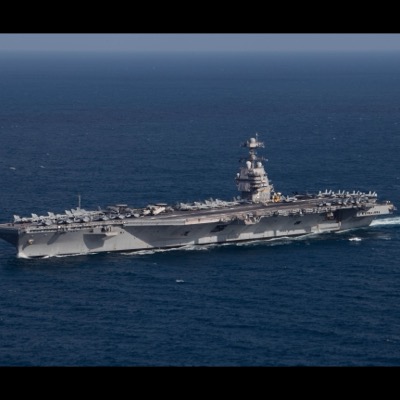
- NAVSEA — Naval Sea Systems Command. Ship construction, maintenance, modernization. ML opportunities in corrosion prediction, component failure forecasting, logistics depot optimization, welding and inspection computer vision.
- NAVAIR — Naval Air Systems Command. Aircraft maintenance, avionics, weapon systems. ML opportunities in predictive maintenance on legacy airframes (F/A-18, P-8), flight data anomaly detection, parts obsolescence forecasting.
- ONR — Office of Naval Research. BAAs on basic and applied research across AI, autonomy, undersea, human systems. STTR-friendly paired with university partners.
- Naval Research Lab (NRL) — corporate research lab of the Navy. CRADAs and BAAs. Deep science, long time horizon.
- NavalX — Navy's agility office. Tech Bridges across the country. Non-traditional performer pipeline, SBIR topic sponsorship.
- SPAWAR-successor commands (NAVWAR, NIWC Pacific, NIWC Atlantic) — C4ISR, cyber, space. AI/ML relevant across cyber anomaly detection, SIGINT processing, network monitoring.
- Marine Corps Systems Command (MCSC) — the Navy department's second service. Ground-force AI/ML analogous to Army scopes.
Navy mission areas mapped to our capability
Fleet logistics optimization
Parts availability, maintenance scheduling, inventory forecasting. ML forecasting and optimization on Navy logistics data. Our federal health data platform past performance translates directly: governed analytics, lakehouse architecture, reproducible forecasting pipelines.
Predictive maintenance (ships and aircraft)
Anomaly detection on sensor streams, remaining-useful-life modeling, maintenance demand forecasting. Kaggle Top 200-level time-series and anomaly detection practice, architected for operational fleet data.
Undersea autonomy and acoustic ML
Signal classification in noisy undersea environments, underwater vehicle autonomy (UUV), acoustic target recognition. CV and DSP-adjacent ML with open-weight deployment for disconnected operations.
ISR exploitation
Multi-INT fusion, report triage, OSINT synthesis with agentic LLM systems. See Agentic AI.
Sailor-facing decision aids
Operator-grade interfaces that make AI accessible to sailors and petty officers without ML training. Full-stack development plus LLM tool-calling.
SBIR 26.1 and Navy-specific positioning
The April 13, 2026 SBIR reauthorization (S. 3971) extends SBIR/STTR through 2031 and released 115 new DoD open and pre-release topics on DSIP the same day, including a substantial Navy block. The compressed 30–45 day topic windows favor firms that were ready before the reauthorization. We were.
83 Navy topics
in our current proposal draft library.
DSIP active
with firm certifications complete.
Strategic Breakthrough Phase II
new category for high-spend agencies. Navy qualifies at the department level via DoD aggregation.
Per-firm submission caps
rewards firms like us that prioritize tight topic-to-capability fit over volume.
Federal delivery record
Precision Federal's own federal contracts are FHWA purchase order 693JJ326P000024 ($141,370.26, September 2026 through September 2028) and CDC purchase order 75D30126P21398 ($296,250, signed September 18, 2026). Before founding the firm, Bo Peng delivered this federal work at prior employers:
- A federal health agency (HHS) — production ML system on federal health data, through full ATO, real users.
- Federal health IT data platform — lakehouse architecture, governance-first.
- Multi-agency cloud migration — delivered through federal contractor engagements, including federal workloads.
Why this matters for Navy buyers: the engineering discipline — ATO, NIST 800-53, audit logging, surviving security review — translates directly. For Navy scope specifically, we are targeting and pursuing work through SBIR 26.1, ONR BAAs, and university partnerships.
Relevant NAICS and vehicles
- Primary NAICS 541512 — Computer Systems Design Services. SBA small business.
- Additional NAICS on SAM — 541511, 541519, 541715, 518210.
- Vehicles — Navy SBIR/STTR via DSIP, ONR BAAs, NAVSEA and NAVAIR requirements, and NavalX Tech Bridge engagements.
How Navy program offices, partners, and POCs engage us
Three primary patterns:
- SBIR submission — on Navy AI/ML topics where we can carry full scope. Phase I $150–300K typical; Phase II $1–2M typical; Strategic Breakthrough Phase II materially larger.
- Partner team — on larger SBIR and BAA efforts, partner firms and university PIs join our proposal where the scope needs their specialties.
- Direct BAA awards — AI/ML requirements a focused small business can carry end to end.
Navy program offices, partner firms, and PIs: email contact@precisionfederal.com with the topic number or scope description. We respond within 24 hours with a fit assessment.