Why a focused AI small business for DoD
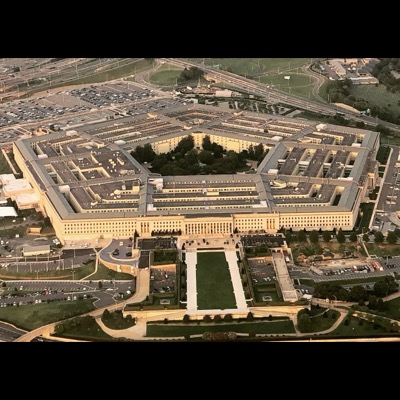
The Department of Defense is the single largest source of federal AI demand — spanning the Joint Staff, the Office of the Secretary of Defense, the military departments, the combatant commands, the intelligence community, and the defense agencies. DoD's FY2025 AI-related investment approaches $3 billion across unclassified programs alone, with substantially more classified. The Chief Digital and AI Office (CDAO), Defense Innovation Unit (DIU), and service-level innovation arms (AFWERX, NavalX, Army xTech) have all been explicitly tasked to find and fund non-traditional performers.
That means DoD buyers are actively looking for the profile we fit: a SAM-registered small business with production federal past performance and deep AI/ML specialization, not a body shop. Precision Delivery Federal LLC (UEI Y2JVCZXT9HP5, CAGE 1AYQ0, NAICS 541512 primary) exists to deliver that profile to DoD components.
The April 2026 inflection point
SBIR and STTR expired September 30, 2025 and lapsed for six months. On April 13, 2026, President Trump signed S. 3971, reauthorizing both programs through September 30, 2031 — the longest extension in program history. Same day, DoD released 115 new open and pre-release topics on DSIP for the 26.1 solicitation. The reauthorization introduced three structural shifts that reshape the DoD SBIR landscape:
Strategic Breakthrough Phase II
A new Phase II category for agencies spending more than $100M annually on SBIR. DoD qualifies at a far higher threshold. Awards can reach 0.5% of extramural R&D budget — materially larger checks, narrower competitive field.
Per-firm submission caps
Agencies must enforce maximum proposals per firm. Firms that relied on high-volume spray-and-pray submission will have to prioritize. Firms with tight topic-to-capability fit — like us — benefit.
Six-month backlog to clear
DoD components are simultaneously processing pre-lapse proposals and opening the 26.1 window. Expect compressed timelines, fast-moving topic lists, and unusual opportunity for ready firms.
DoD components we target
Our proposal library and capability set are structured around the components driving the majority of non-traditional AI/ML demand:
- Department of the Army — 102 topics in our current library. Army xTech, Army Futures Command, PEO IEW&S, CECOM. Priorities include soldier-worn sensing, predictive maintenance, logistics optimization, tactical decision aids. See Army AI contractor page.
- Department of the Navy — 83 topics in our library. NAVSEA, NAVAIR, ONR, NavalX, Naval Research Lab. Priorities include fleet logistics, ship and aircraft predictive maintenance, undersea autonomous systems, undersea acoustic ML. See Navy AI contractor page.
- Department of the Air Force — 21 topics in our library. AFWERX, AFRL, Space Force. Priorities include ISR exploitation, pilot decision aids, predictive maintenance on aging airframes, autonomous flight support. See Air Force AI contractor page.
- DoD-wide / OSD — cross-cutting topics that apply to multiple services, typically routed through DSIP.
- Chief Digital and AI Office (CDAO) — successor to the JAIC, anchor of the enterprise AI strategy, Maven, and AI-enabled command and control.
- SOCOM — operator-focused, rapid-prototyping oriented. Low latency on decisions, high tolerance for non-traditional solutions.
- DARPA — research-heavy, often STTR-appropriate, paired with university partners.
Capabilities mapped to DoD priorities
We do not pitch horizontal "AI services." Every capability we field is mapped to a published DoD priority:
Agentic AI and LLM systems
multi-agent orchestration, RAG over classified and unclassified document corpora, tool-calling systems with human-in-the-loop gates. Maps to report triage, intelligence synthesis, policy analysis, and AI-assisted decision support. See Agentic AI.
Machine learning and data science
computer vision for ISR, time-series for predictive maintenance, anomaly detection for cyber and acoustic domains, forecasting for logistics. From a Kaggle Top 200 data scientist who has shipped production ML in federal environments.
Cloud architecture — IL4/IL5
Azure Government, AWS GovCloud, on-premise air-gapped designs. Infrastructure-as-code. ATO-minded from day one.
Data engineering
the substrate JADC2 and CJADC2 depend on. Lakehouse architectures, real-time streaming, governed analytics, multi-classification handling.
Full-stack development
operator-facing tools that make the AI accessible to warfighters, analysts, and decision makers.
DevSecOps and cybersecurity
STIG compliance, ATO acceleration, NIST 800-53 control mapping, prompt-injection hardening for LLM deployments.
JADC2 / CJADC2 and the Maven-adjacent theme
Joint All-Domain Command and Control (JADC2) and its combined extension (CJADC2) are the enduring DoD themes that organize a large share of AI/ML demand. The scope is straightforward to describe and enormous to build: connect sensors across every domain to shooters and decision makers, with AI doing the fusion.
We are not pitching to rebuild JADC2. We are positioned to win narrow, technical AI/ML scopes inside JADC2-adjacent programs: sensor fusion ML models, common operating picture data pipelines, decision-aid LLM tooling, anomaly detection across sensor streams, and the audit logging that makes any of this trustworthy in command environments. Project Maven's evolution from a pilot to an enduring CDAO-run program demonstrates the direction of travel; we align our SBIR submissions and proposals to that direction.
Federal delivery record
Precision Federal's own federal contracts are FHWA purchase order 693JJ326P000024 ($141,370.26, September 2026 through September 2028) and CDC purchase order 75D30126P21398 ($296,250, signed September 18, 2026). Before founding the firm, Bo Peng delivered this federal work at prior employers:
- A federal health agency (HHS) — production machine learning system on federal health data. Full ATO. Real users. Shipped.
- Federal health IT data platform — lakehouse architecture on federal data, governance-first.
- Multi-agency cloud migration — delivered through federal contractor engagements, spanning federal workloads.
Relevant for DoD because the engineering discipline translates directly: ATO, 800-53, audit logging, governance, and shipping past security review. For DoD components specifically, we are targeting and pursuing work — through SBIR 26.1, BAAs, and other transaction agreements. Honest framing is part of the pitch.
How DoD program offices and COs engage us
Three common engagement patterns:
- SBIR submission — for AI/ML topics where we can carry full scope. Phase I typically $150–300K; Phase II $1–2M; Strategic Breakthrough Phase II materially larger.
- Partner team — on larger topics, partner firms and university PIs join our proposal where the scope needs their specialties.
- Direct BAA and OTA awards — for AI/ML requirements that a focused small business can carry end to end.
Vehicles and NAICS
- Primary NAICS 541512 — Computer Systems Design Services. Small business under size standards.
- Additional NAICS on SAM — 541511, 541519, 541715, 518210.
- Vehicles we're positioned for — DoD SBIR/STTR via DSIP, agency BAAs (e.g. AFRL, ONR), other transaction agreements, and agency IDIQs as on-ramps open.
If you are a DoD contracting officer, program office, or a firm looking for an AI/ML partner, email contact@precisionfederal.com.