
Two kinds of company will offer to help you enter the federal market, and they are not variants of the same thing. A reseller moves paper: they hold a contract vehicle, they can transact your product, and they will introduce you to buyers they already know. A build partner moves product: they take your software into an agency environment, integrate it with the systems already running there, carry it through security review, and stand behind it in production. Companies that confuse these two spend a year discovering that a contract vehicle does not make software run inside an agency, and that an engineering firm cannot invoice through a vehicle it does not hold.
This is written for the head of channels or head of public sector who has to build the partner strategy and defend it internally. The useful frame is not which type is better. It is which problem you have right now, because the two solve different ones, and most companies that succeed in this market eventually hold both.
The two functions, described precisely
A reseller solves the transaction. Federal buyers purchase through instruments: schedules, government-wide vehicles, agency-specific contracts. A reseller who holds the right one turns "we want to buy this" into a purchase order without your company acquiring and maintaining a contract vehicle. Good ones also carry relationships, know which offices have budget, and understand the fiscal calendar in a way your commercial sales team does not.
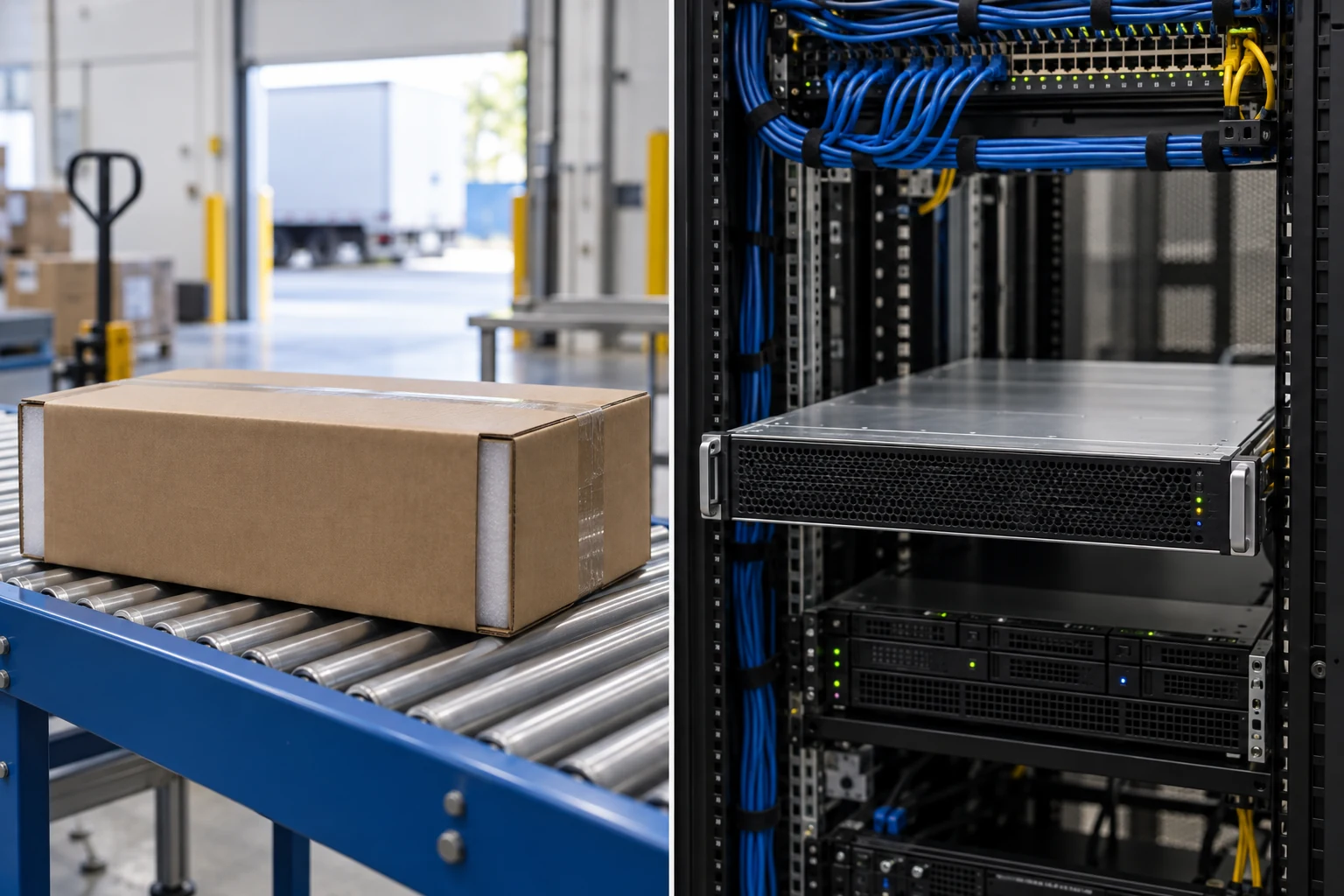
A build partner solves delivery. They have engineers who have deployed systems inside agency environments, they hold the environment access and the security relationships, and they are accountable for something working. When your product has to land inside a boundary you do not control, integrate with systems you cannot see from the outside, and survive a review by people who read documentation carefully, that is engineering work, and only an engineering firm does it.
The distinction shows most clearly in what each is accountable for. A reseller is accountable for a transaction completing. A build partner is accountable for a system working. Those are different contracts, different economics and different conversations, and asking either one to do the other's job is how partner strategies fail.
Which problem each kind of partner actually solves
Editorial weighting, illustrative rather than measured. The last row is deliberately low: neither kind of partner reliably manufactures demand for an unproven product.
The economics are structurally different
A reseller earns a margin on a transaction. That margin is a percentage of your list price, it recurs on renewal, and it scales with volume rather than with effort. Their incentive is to move as much product as possible through their vehicle with as little work per transaction as possible, which is a perfectly sound business and tells you exactly what they will and will not do. They will not spend eight weeks integrating your product into a program's data pipeline, because the margin does not pay for eight weeks of engineering.
A build partner earns fees for engineering work, either fixed-price against defined scope or as a committed team. Their incentive is delivery, because their reputation with the program office is the asset that produces their next engagement. That alignment is the reason a build partner will do the unglamorous work: the boundary documentation, the identity integration, the accessibility remediation, the deployment automation that only matters once.
The consequence for your model is that these are different lines in your budget. Reseller margin comes out of revenue. Build partner fees come out of the cost of entering the market, and they are largely one-time per product rather than per transaction, because the engineering that makes your product deployable in an agency environment is done once and reused for every subsequent buyer.
That last point is the one to make internally when someone objects to the cost. The first federal deployment carries the cost of making the product deployable at all. The second and third carry almost none of it. Amortized across the buyers you intend to reach, the build cost per deal falls fast, while reseller margin does not fall at all.
Where a build partner changes what a reseller can sell
This is the part most channel strategies miss, and it is the reason to sequence rather than to choose. A reseller can only sell what a buyer is prepared to purchase. What makes a federal buyer prepared to purchase a piece of commercial software is not a price list. It is a set of specific answers that only exist after engineering work has been done.
Can it run in the environment we require? Has it passed a security review, and can we see the artifacts? Does it meet accessibility obligations, and where is the conformance report? Who is running it today, in production, and will they take a call? How does it integrate with the systems we already operate? Who fixes it at two in the morning?
Every one of those is produced by delivery, not by paperwork. Once they exist, the reseller's job becomes straightforward, because they are transacting a decision the buyer has already made on technical grounds. Before they exist, the reseller is trying to sell an unanswered question, and their honest response is to spend their time on products that have answers.
So the sequence that works is: build first, transact second. Do the engineering that makes your product deployable and reviewable, deliver it into one agency environment so the answers exist and the reference exists, and then the reseller conversation changes character entirely. You stop asking them to take a risk on you and start giving them something easy to sell.
A decision framework
Four questions decide which partner you need next. Answer them honestly rather than aspirationally.
Does a federal buyer already want the product? If a named office has said they want to buy and the only obstacle is how to pay you, you need a reseller and you need one this quarter. If nobody has said that, a reseller will not change it.
Can the product run where the buyer needs it to run? If deployment into an environment you do not control is untested, this is your binding constraint, and it is engineering. No amount of channel activity moves it.
Do you have a production federal reference? If not, your priority is producing one, and the fastest route is delivery inside a funded program alongside an engineering firm already working there. Reference first, channel second.
Who will be accountable when something breaks? If the answer is not clearly your team or clearly the build partner, you have a support model gap that will surface during the first incident and damage the reference you worked to earn.
| Dimension | Reseller | Build partner | Both, sequenced |
|---|---|---|---|
| What they are accountable for | A transaction completing | A working system in production | Delivery first, then efficient transacting |
| How they are paid | Margin on your list price, recurring | Fees for engineering, mostly one-time per product | One-time build cost, then ongoing margin |
| What they need from you | Pricing, terms and a buyer who already wants it | Source access, architecture and technical people | Both, at different stages |
| What you get back | A purchase path and buyer relationships | Deployability, security artifacts and a reference | A repeatable federal motion |
| Failure mode | Waiting for demand nobody is creating | Engineering completed with no path to purchase | Running them in the wrong order |
| Right when | A named office wants to buy now | The product has never run in an agency environment | You intend to serve more than one agency |
Questions to ask each kind of partner
Both categories contain excellent firms and firms that will cost you a year. The questions below separate them faster than any capability presentation.
Ask a reseller: Which instruments do you hold, and does the scope of each actually cover software of this type? Which specific offices have you sold to in the last two years, and what did you sell them? What do you do when a buyer asks a technical question you cannot answer? Is exclusivity being requested, over what territory, for how long, and what performance commitment comes with it? Who at your firm owns this relationship day to day?
Ask a build partner: Which systems have you deployed into agency environments, and what did you personally do on them? Who did the environment access and the security documentation, you or someone else? Show me a boundary description or a control implementation you wrote. Who specifically would work on this, at what allocation, and what happens if the start slips a quarter? What do we own at the end, and is there a present assignment of intellectual property in your agreement? How does the handover work, and does our team deploy the system while you watch?
The last two questions are the ones that matter most and are asked least. A partner who cannot describe a clean exit is a partner you will not be able to leave.
Signals that a build partner has actually delivered inside agencies
Editorial weighting, illustrative rather than measured. The last row is deliberately low: registrations are easy to acquire and predict nothing about delivery.
Structuring the relationships so they do not collide
Once you have both, they can interfere with each other, and the interference is predictable. Three arrangements prevent most of it.
- Keep the customer relationship yours, in writing, with both. The reseller transacts and the build partner delivers; neither owns the account. Say so in both agreements, including who is present in meetings with the buyer and under whose name.
- Do not grant broad exclusivity to a reseller early. Exclusivity is a reasonable trade for a serious commitment, and an expensive mistake in exchange for enthusiasm. Bound it by agency, by time and by a performance threshold, with an exit.
- Make the intellectual property position unambiguous with the build partner. A written present assignment of the code they write, a named carve-out for their pre-existing tooling, and a perpetual license back so a future maintainer is not blocked.
- Define the support boundary before the first incident. Who is called, who has access to the environment, what diagnostics can be obtained, and what the escalation path is. Write it into both agreements.
- Agree the reference posture in advance. Who may cite the deployment, in what words, and with whose approval. This is easier to settle before the work than after.
- Insist on an exit as a deliverable from the build partner. Source, pipelines, infrastructure code, environment configuration, credential rotation and runbooks, delivered as a condition of final payment rather than as a courtesy afterward.
How we work as a build partner
We are an engineering firm. We build AI systems, data platforms, cloud infrastructure and full-stack software, and we build and deploy them inside federal agencies. We are not a reseller and we do not want your margin; we want to make your product deployable, reviewable and running in production where a buyer can see it.
In the first two weeks we deliver a readiness assessment written as engineering work: what stops your product from deploying into an environment you do not control, what a security review will find, what accessibility work is outstanding, each expressed as a specific change to a specific component with an hours estimate and a dependency order. Alongside it, a plain recommendation on partner strategy, including where a reseller genuinely helps you and where one will not.
Then we build. Our engineers work in your repositories, on your branching model, through your review process. Deployment automation, identity and audit seams, integration with the systems already running in the program, security documentation written from the system as built, accessibility remediation with real screen reader testing. We sit in the buyer's technical review alongside your team and answer engineering questions directly, because that is where these deals are won or lost.
What you keep. Everything. The code is yours, in your repositories, under a written present assignment of intellectual property. The security and accessibility artifacts are yours and carry forward to every future buyer. The customer relationship is yours; we do not sell your product and we do not stand between you and the agency. The handover is a rehearsal in which your team deploys and operates the system while we watch.
How it is priced. Fixed-price milestones where scope is definable, which fits the readiness assessment, the documentation set and discrete engineering increments. A committed team at a monthly rate where the work is continuous build and delivery support. Most programs use both: fixed price at the front and the back, a committed team through the middle.
How it starts. One email with a one-page brief: what the product does, what stack it runs on, which agency conversations are live, what deployment model has been discussed, and the date that matters. We return a scoped, priced statement of work with the assumptions written down.
Failure modes worth naming
Signing a reseller and calling it a federal strategy. The most common. A year later there is a vehicle, a price list, no deployment and no reference, and nobody can say what changed.
Granting exclusivity for enthusiasm. A partner promises the market in exchange for exclusive rights and then puts one part-time person on it. Bound every exclusivity by performance and by time.
Expecting engineering from a margin. Asking a reseller to integrate your product is asking them to fund engineering out of a transaction margin. They will not, and it is not unreasonable of them.
Building without a purchase path. The mirror failure. The product is deployable, reviewed and integrated, and there is no instrument to buy it through. Start the vehicle conversation while the engineering runs, not after.
Letting a partner own the account. Once the agency's relationship is with the partner rather than with you, your renewal, your pricing and your roadmap influence all move to someone else's balance sheet.
No written exit. A partner who cannot describe how you leave is a dependency, not a partner.
Bottom line
Resellers and build partners solve different problems, and running them in the wrong order costs a year. If a named office already wants your product and the only question is how to pay you, get a reseller now. If your product has never run inside an agency environment, no channel activity will change that, and the constraint is engineering: deployability, identity, audit, accessibility and integration. Do that work once, deliver into one agency, and you acquire the artifacts and the reference that make every subsequent sale straightforward, including the ones a reseller transacts. Build first, transact second, keep the customer relationship yours in writing with both, and insist that any build partner can describe exactly how you leave.
Frequently asked questions
A reseller holds a contract instrument and is accountable for a transaction completing. They turn a buyer's decision into a purchase order, and they earn a margin on your list price. A build partner has engineers who deploy systems inside agency environments and is accountable for a working system: integration, security review, accessibility, deployment automation and production support. They earn fees for engineering. Neither can do the other's job, and asking them to is the most common reason federal channel strategies stall.
Most companies serving more than one agency eventually do, but the order matters. If your product has never run inside an agency environment, engineering is the binding constraint and a contract vehicle will not move it. Do the delivery work first so that the answers a buyer needs exist: it runs in the required environment, it cleared a security review, the accessibility report exists, and someone is running it in production. Then a reseller has something easy to transact rather than an unanswered question to carry.
A reseller earns a margin on your list price, typically recurring on renewal, and their effort per transaction is deliberately low because that is what makes the model work. That tells you what they will and will not do: they will introduce you to offices they know and put paper through a vehicle, and they will not fund weeks of integration engineering out of a transaction margin. Budget reseller margin against revenue and build partner fees against market entry, since the engineering is largely one-time per product.
Which systems they have deployed into agency environments and what they personally did on them. Whether they wrote the boundary description and control implementation, and whether they can show one. Who specifically would work on your product, at what allocation, and what happens if the start slips. What you own at the end, and whether their agreement contains a written present assignment of intellectual property. And how the handover works, specifically whether your team deploys the system while they watch. A partner who cannot describe a clean exit is a dependency.
Rarely at the start, and never broadly. Exclusivity is a fair trade for a serious, resourced commitment, and an expensive mistake in exchange for enthusiasm. If you grant it, bound it: specific agencies rather than the whole market, a fixed term, a stated performance threshold, and a clean exit if the threshold is missed. Also keep the customer relationship yours in writing regardless of the partner type, including who attends buyer meetings and under whose name.