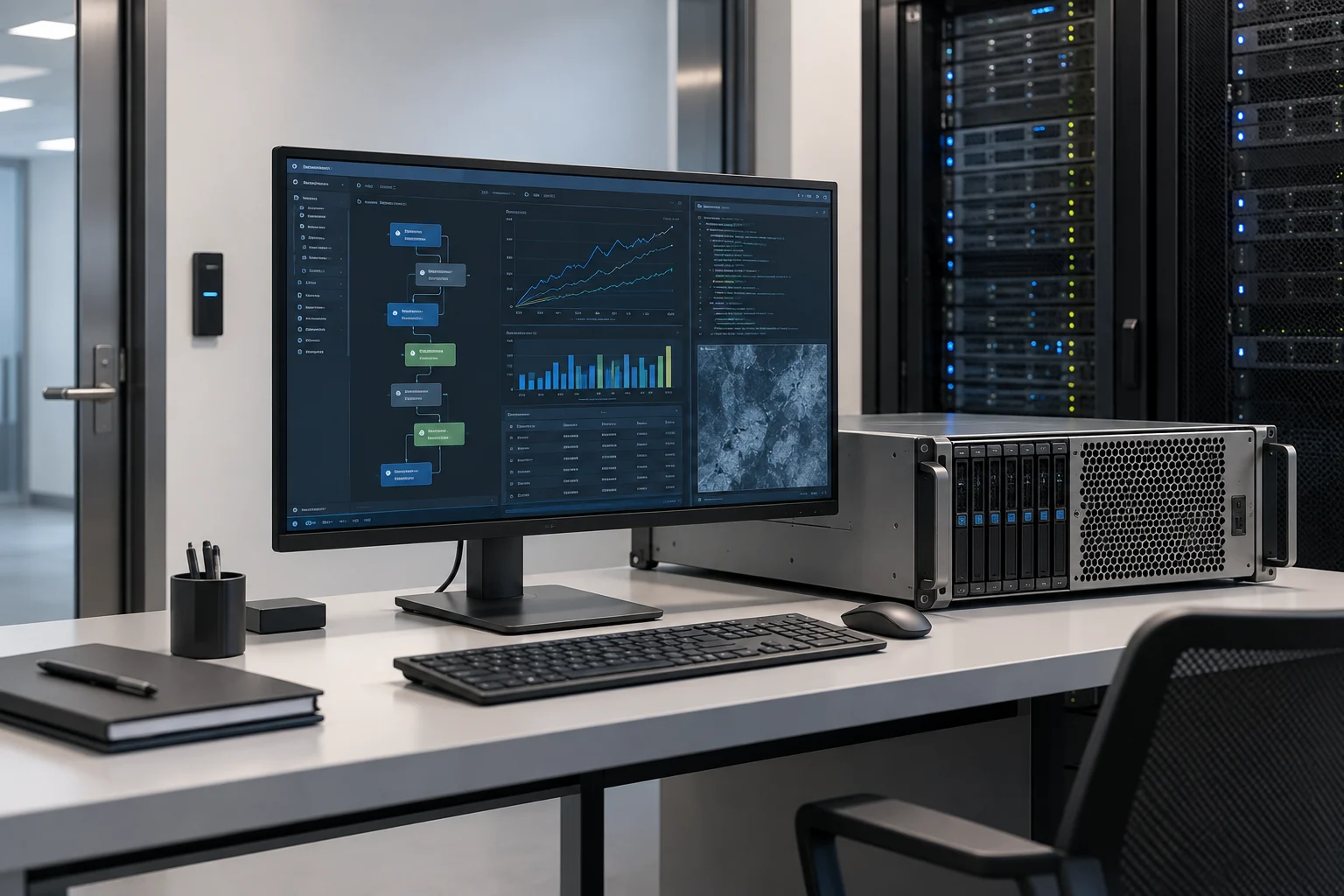
Overview — GCP in the federal landscape
Google Cloud holds a distinct position in federal computing. It is the youngest of the three major hyperscaler federal offerings yet has the deepest data and AI bench — BigQuery for exabyte-scale analytics, Vertex AI for model training and serving, Gemini for regulated generative AI, and GKE Enterprise as one of the strongest managed Kubernetes platforms in the market. Federal agencies choosing GCP are typically doing so to enable a specific analytics or AI capability that is materially better on Google's stack and are willing to operate in a smaller authorized service footprint than AWS GovCloud or Azure Government offer today.
Precision Federal engineers Google Cloud workloads under Assured Workloads for U.S. federal agencies targeting FedRAMP High, FedRAMP Moderate, DoD IL4, CJIS, and ITAR. The rest of this page describes exactly how Precision Federal builds on GCP for federal missions: the stack, the architectures, the ATO path, the compliance mapping, and the engagement models we support.
Overview — how Assured Workloads works
Assured Workloads is the compliance control plane that transforms ordinary GCP folders into federally compliant environments. When you create an Assured Workloads folder and select a compliance regime — say FedRAMP High — GCP enforces a set of policies automatically: region restriction to U.S. regions (us-central1, us-east4, us-east5, us-west1, us-west2, us-west3, us-west4), personnel access restriction to U.S. citizens located in the United States, customer-managed encryption key (CMEK) enforcement where the regime requires it, access transparency logging, and constraints on which resource types can be created in the folder.
Assured Workloads is not a separate "GovCloud" — it runs on the same global GCP infrastructure, and services in scope must individually hold the relevant authorization. We maintain current awareness of which services are in-scope for FedRAMP High, IL4, and CJIS in Assured Workloads and design accordingly. For services not yet in scope, we either stand up an alternative on a supported service (for example Dataflow replaced by Cloud Composer + Spark on GKE when needed) or architect a hybrid pattern with an in-scope component.
Our technical stack
The following table lists the GCP and ecosystem technologies we actively engineer with in federal environments. Each entry reflects real engagement experience or direct certification, not marketing claims.
| Layer | Technology | Federal use |
|---|---|---|
| Foundations | Resource Manager, Assured Workloads, Organization Policy, VPC Service Controls | Tenant scaffolding, regime enforcement, data exfil prevention |
| Identity | Cloud Identity, Workforce Identity Federation, IAM Conditions, Policy Intent, PAM | Agency IdP federation, short-lived privileged access |
| Networking | Shared VPC, Private Service Connect, Cloud NAT, Cloud Armor, NGFW Enterprise | Hub-spoke, egress control, WAF, L7 inspection |
| Compute | GCE with Shielded VMs and Confidential VMs, MIGs, GKE, GKE Enterprise, Cloud Run | STIG-hardened VMs, attested compute, containerized workloads |
| Data | BigQuery, Dataplex, Dataflow, Cloud Storage, Spanner, AlloyDB, Cloud SQL | Exabyte analytics, data governance, OLTP, lakehouse |
| ML / AI | Vertex AI (training, prediction, pipelines, feature store, model registry), Gemini, Document AI | Production ML, federal generative AI, intelligent document processing |
| Security | Security Command Center Enterprise, Chronicle SIEM, Cloud KMS with CMEK, Cloud HSM, Access Transparency | Unified CSPM/SIEM, FIPS 140-2 key management, audit evidence |
| Observability | Cloud Logging, Cloud Monitoring, Cloud Trace, Cloud Profiler, Managed Service for Prometheus | ConMon telemetry, performance analysis |
| Hybrid | Anthos, Config Connector, Config Sync, GKE on-prem, Config Management | On-premises and multi-cloud consistency |
| DevOps | Cloud Build, Artifact Registry, Binary Authorization, Cloud Deploy, Gitlab on GKE | CI/CD with signed artifact enforcement |
Federal use cases — where GCP wins
GCP is not the default federal cloud for most agencies; it is the preferred choice when a specific capability outcompetes alternatives by a wide margin. The following use cases represent engagements we are targeting or actively supporting:
A federal health agency — analytics and ML on behavioral health data
BigQuery with Dataplex governance, Vertex AI for predictive modeling, Looker for mission dashboards. Bo Peng delivered production ML at a federal health agency before founding the firm.
USDA — geospatial analytics for precision agriculture
Earth Engine, BigQuery geospatial functions, Vertex AI for crop yield modeling, Dataflow for sensor telemetry ingestion.
DoE national labs — HPC-adjacent analytics
BigQuery for experimental data analysis, Vertex AI Pipelines for orchestrating model training on TPUs, Cloud Storage with turbo replication for dataset distribution.
NIH — biomedical data and cancer research
BigQuery for genomic analysis, Vertex AI for imaging models, Cloud Life Sciences for bioinformatics pipelines, Chronicle SIEM for HIPAA/FISMA logging.
NASA — Earth observation pipelines
Cloud Storage for petabyte archive, Dataflow for scene processing, Vertex AI for anomaly detection, BigQuery for downstream analytics.
CDC — public health surveillance
Dataflow for real-time syndromic surveillance ingestion, BigQuery for population-level queries, Looker for health department dashboards.
VA — clinical decision support pilots
Vertex AI with CMEK-encrypted PHI, Vertex AI Feature Store for clinical features, Document AI for clinical note structuring under Assured Workloads.
DoD components — IL4 analytics
BigQuery IL4 analytics on readiness data, GKE Enterprise for mission applications, Anthos on-prem to extend control plane to tactical edges.
DOJ and federal law enforcement — CJIS workloads
Assured Workloads CJIS compliance regime with region and personnel constraints for criminal justice data.
FDIC / Treasury — regulatory reporting analytics
BigQuery for financial aggregation, Cloud Data Loss Prevention for PII discovery, Access Transparency for audit proof.
Precision Federal's own federal contracts are FHWA purchase order 693JJ326P000024 and CDC purchase order 75D30126P21398, both held directly. The federal health agency ML deployment above is Bo Peng's work from before he founded the firm; the other agency references on this page are prospective.
Reference architectures
Reference 1: FedRAMP High analytics platform on GCP
A federal analytics platform pattern we deploy: an Assured Workloads FedRAMP High folder contains a landing project (Shared VPC host, Cloud Logging sink, Security Command Center Enterprise), a data project (BigQuery datasets with CMEK, Dataplex lake, Cloud Storage CUI bucket), an ingestion project (Dataflow pipelines, Pub/Sub topics, Cloud Composer), and one analytics project per mission workstream. VPC Service Controls perimeters enforce a strict egress boundary around the data project — even privileged users cannot exfiltrate data to external buckets. Workforce Identity Federation with the agency SAML IdP provides short-lived tokens mapped to BigQuery row-level access policies. Audit logs flow to Chronicle SIEM with one-year retention at the log router and seven-year archive in Coldline storage with bucket lock.
Reference 2: IL4 GKE Enterprise application platform
For DoD mission applications at IL4, we deploy GKE Enterprise with Anthos Config Management synchronizing a Git-based policy repo, Binary Authorization enforcing signed container images built in Cloud Build with attestations, Workload Identity binding Kubernetes service accounts to Google service accounts with minimum IAM, and node pools using Confidential VMs with AMD SEV-SNP. Gateway API with Cloud Armor and NGFW Enterprise handles ingress; service mesh via Anthos Service Mesh enforces mTLS across workloads. Falco and Cloud Intrusion Detection feed findings into Chronicle. STIG compliance for node images is validated in Cloud Build with OpenSCAP scanning before any image is promoted.
Reference 3: Vertex AI production ML under Assured Workloads
For ML, we build a Vertex AI platform with CMEK on every dataset, model, endpoint, and pipeline. Training runs on Vertex AI Custom Training with VPC egress disabled and VPC-SC perimeter enforcement, pulling data from BigQuery via private connectivity. Model artifacts land in the Vertex Model Registry with lineage tracking; evaluation metrics and data drift monitoring feed into Vertex AI Model Monitoring. Endpoints serve predictions privately via Private Service Connect, never the public internet. An MLOps orchestrator (Vertex AI Pipelines on Kubeflow) automates retraining, approval gates, and promotion. This is the pattern the founder applied at a federal health agency, adapted to the Assured Workloads FedRAMP High regime.
Delivery methodology
Federal cloud engagements on GCP follow a repeatable five-stage methodology:
- Discovery (weeks 1–3). Mission understanding, data classification review, regulatory regime identification (FedRAMP level, DoD IL, CJIS, ITAR), existing agency tooling inventory, identity provider integration plan, exit criteria for ATO. Deliverable: discovery report and reference architecture recommendation.
- Design (weeks 3–8). Detailed Assured Workloads folder topology, VPC Service Controls perimeter design, IAM role taxonomy, data protection plan, SIEM integration plan, NIST 800-53 control inheritance matrix, and deployable Terraform module list. Deliverable: architecture decision records, Terraform module specifications, SSP control narrative drafts.
- Build (weeks 8–24). Terraform-driven provisioning, guardrail deployment, platform services (SIEM, observability, identity), and mission application onboarding. Continuous Trivy and OpenSCAP scanning, SBOM generation, Cosign signing. Deliverable: working platform, CI/CD pipelines, runbooks.
- ATO preparation (overlapping weeks 12+). Evidence collection automation, control narrative finalization, POA&M population, 3PAO coordination, SAR response. Deliverable: System Security Plan, POA&M, ATO package.
- Operations and continuous monitoring (ongoing). Monthly vulnerability scans, quarterly access reviews, annual security assessment support, continuous drift detection, and incident response. Deliverable: ConMon reports, incident reports as needed.
Engagement models
SBIR Phase I fixed-price ($50K–$314K)
Feasibility study, prototype architecture, risk reduction for a specific mission capability on GCP.
SBIR Phase II fixed-price ($1.8M–$2M)
Working prototype deployed to Assured Workloads with realistic data, ATO-ready artifacts, transition plan.
Fixed-price prototype (6–12 weeks)
Discrete outcome — a landing zone, a data platform baseline, a BigQuery migration — with defined acceptance criteria.
T&M engineering support
Embedded engineering for ongoing platform work, capped weekly hours, clear sprint goals.
OTA prototype delivery
Other transaction prototype agreements for GCP-based prototypes, with Precision Federal as the performer.
Partner teams
Partner firms and universities join the team when a program needs specialties beyond the core AI and cloud engineering.
Maturity model
We evaluate agency GCP readiness on a five-level scale and build a tailored roadmap to move up:
Level 1 — Ad hoc
Individual projects created manually, no central policy, inconsistent identity, no centralized logging. Common symptom: shadow IT projects with personal Google accounts.
Level 2 — Managed
Resource Manager hierarchy exists, IAM roles assigned, logging on by default, but no Assured Workloads enforcement and no formal compliance mapping.
Level 3 — Governed
Assured Workloads folders per environment, Organization Policies enforcing location/OS/service constraints, VPC Service Controls perimeters, centralized SIEM, Terraform for infrastructure.
Level 4 — Optimized
Full DevSecOps pipeline with policy-as-code, automated evidence collection, FinOps hygiene, SRE practices, continuous monitoring producing ATO-ready evidence.
Level 5 — Mission-integrated
GCP is an instrument of mission capability — agency applications, analytics, and ML depend on the platform, with proven reliability, cost discipline, and continuous ATO posture.
Deliverables catalog
- Assured Workloads folder topology diagram and Terraform modules
- VPC Service Controls perimeter configuration with inventory
- IAM role taxonomy with conditions, PAM, and Workforce Identity Federation
- NIST 800-53 Rev 5 control inheritance matrix (Google → Assured Workloads → customer)
- System Security Plan (SSP) control narratives
- Plan of Action & Milestones (POA&M) with automation hooks
- Continuous monitoring runbook and Chronicle/SCC dashboards
- GKE Enterprise cluster bootstrap (config-sync, binary-authorization, workload-identity)
- BigQuery data platform bootstrap (CMEK, Dataplex lake, row-level security)
- Vertex AI MLOps pipeline (training, registry, deployment, monitoring)
- Incident response runbooks and tabletop exercise materials
- FinOps report and Savings Plans/committed-use recommendations
Technology comparison — GCP federal versus alternatives
| Dimension | GCP Assured Workloads | AWS GovCloud | Azure Government |
|---|---|---|---|
| FedRAMP High | Yes (subset) | Yes (broad) | Yes (broad) |
| IL5 | Not yet (IL4 PA) | Yes | Yes |
| IL6 | No | AWS Secret Region | Azure Gov Secret |
| Data warehouse leader | BigQuery (strongest) | Redshift / Athena | Synapse / Fabric |
| Managed K8s | GKE (industry lead) | EKS (strong) | AKS (strong) |
| Generative AI | Gemini via Vertex AI | Bedrock (partial GovCloud) | Azure OpenAI (limited Gov) |
| Service breadth in gov | Smaller catalog | Largest catalog | Very large catalog |
| Best fit | Data/AI-first missions | Broadest workload mix | Microsoft-stack agencies |
Honest tradeoff: GCP's Assured Workloads service catalog is narrower than AWS GovCloud or Azure Government. If your workload depends on a service not yet in scope under your required regime, pick a different cloud or architect around that gap. We will tell you before you sign a statement of work.
Federal compliance mapping
Assured Workloads folder configuration and our reference architecture satisfy the following NIST 800-53 Rev 5 control families at the High baseline:
AC — Access Control
AC-2, AC-3, AC-4 (information flow via VPC-SC), AC-6 least privilege via IAM Conditions, AC-17 remote access via IAP and Workforce Identity Federation.
AU — Audit and Accountability
AU-2, AU-3, AU-6, AU-9, AU-11 via Cloud Audit Logs, Access Transparency, and Chronicle retention policies.
CM — Configuration Management
CM-2, CM-3, CM-6, CM-8 via Terraform, Config Sync, Organization Policies, and Cloud Asset Inventory.
IA — Identification and Authentication
IA-2 (PIV via federation), IA-5 password/credential management via Secret Manager, IA-8 external user identification.
SC — System and Communications Protection
SC-7 boundary protection via VPC-SC and Cloud Armor, SC-8 transmission confidentiality via TLS 1.2+, SC-12 cryptographic key establishment via Cloud KMS and Cloud HSM, SC-13 cryptographic protection with FIPS 140-2.
SI — System and Information Integrity
SI-4 monitoring via SCC Enterprise and Chronicle, SI-7 software integrity via Binary Authorization.
Sample technical approach
Consider an NIH pilot: build a FedRAMP High analytics platform for a cancer research program with 40 TB of imaging data, structured clinical metadata, and a requirement to run Vertex AI models for tumor segmentation. Our approach:
- Create an Assured Workloads FedRAMP High folder with Organization Policies locking resource creation to us-central1 and us-east4, enforcing CMEK across Cloud Storage, BigQuery, and Vertex AI.
- Stand up a Shared VPC host project with a hub VPC, Private Service Connect endpoints for every Google API consumed, and Cloud NAT for controlled egress to approved external endpoints (for example, NCBI reference datasets).
- Deploy Cloud Storage ingest buckets with CMEK, bucket lock for seven-year retention, and DLP scans on upload to redact any accidental PII before the imaging pipeline runs.
- Provision BigQuery datasets with column-level security for PHI fields, row-level security by study, and authorized views exposing only de-identified aggregates to downstream consumers.
- Build a Vertex AI Pipeline for tumor segmentation: preprocess with Dataflow, train on A100 GPUs with CMEK, evaluate with a held-out dataset, register in Model Registry, deploy to a private endpoint behind Private Service Connect.
- Wire Cloud Audit Logs, Access Transparency, and VPC Flow Logs to Chronicle SIEM with HIPAA/FISMA correlation rules, seven-year archive in Coldline with bucket lock.
- Run Binary Authorization on all GKE-hosted supporting services; any unsigned image is blocked.
- Automate ConMon with Security Command Center Enterprise, POA&M ticket creation in Jira, and weekly drift detection via
gcloud assetcomparisons against Terraform state.
Outcome: a platform ready for ATO within six months, a working tumor-segmentation model in production-equivalent conditions, and a compliance posture that regenerates evidence automatically for every reauthorization cycle.
Related capabilities, agencies, contracts, and insights
This capability connects to our broader federal stack. For the cloud foundations that sit alongside GCP, see AWS GovCloud, Azure Government, FedRAMP engineering, and Kubernetes for federal. For the workloads we deploy on top, see machine learning, agentic AI, data engineering, Terraform IaC, serverless, and CI/CD pipelines. For agency-specific playbooks see HHS, NIH, CDC, NASA, USDA, VA, DoE, and DoD. Contract vehicles and partnering: SBIR partnering, SAM.gov, OTA consortia. Detailed technical write-ups: GCP Assured Workloads patterns, BigQuery federal analytics.