Why an Iowa-based AI small business fits USDA
Precision Federal is targeting SBIR opportunities at the U.S. Department of Agriculture because the agricultural AI market and the USDA mission converge on a short list of problems we are purpose-built to solve. USDA runs its SBIR program through the National Institute of Food and Agriculture (NIFA), and USDA NIFA SBIR awards approximately $30-40 million annually to small businesses solving problems relevant to American agriculture, forestry, rural economies, and food systems. Our headquarters in Ames, Iowa — the agricultural data capital of the United States — puts us geographically and culturally aligned with the USDA mission in a way most coastal AI firms are not.
Iowa is the #1 U.S. producer of corn, soybeans, pork, and eggs. Iowa State University in Ames runs one of the country's largest agricultural research enterprises. USDA ARS operates the National Laboratory for Agriculture and the Environment directly in Ames. Row crop, livestock, soil, and food safety data pipelines are built and tested within a 60-mile radius of our office. That regional context is a real advantage in USDA proposal scoring, where panels explicitly look for relevance to U.S. agricultural production regions.
USDA NIFA SBIR topic structure
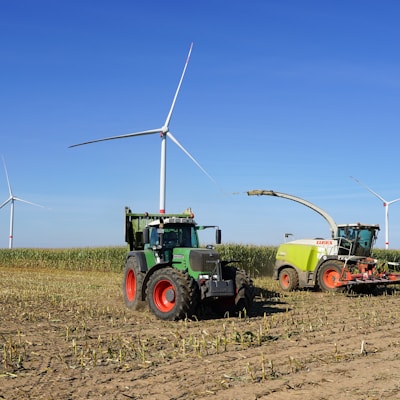
USDA structures its SBIR solicitation around eight Topic Areas, each governed by a lead program director. We prioritize the topic areas where AI, ML, computer vision, and data engineering are the dominant technical lever:
- Topic 8.1 — Forests and Related Resources — remote sensing ML for forest health, wildfire risk modeling, timber management optimization, pest and disease detection.
- Topic 8.2 — Plant Production and Protection (Biology) — crop yield prediction, weed and pest identification with computer vision, disease early-warning systems, precision seeding and input optimization. Core precision agriculture topic.
- Topic 8.3 — Animal Production and Protection — livestock monitoring, behavioral ML for health and welfare, dairy and beef production optimization, aquaculture disease detection.
- Topic 8.4 — Air, Water, and Soils — soil moisture ML, irrigation optimization, nutrient management, water quality sensing, climate impact modeling.
- Topic 8.5 — Food Science and Nutrition — food safety ML, contamination detection, supply chain traceability, nutritional modeling, shelf-life prediction.
- Topic 8.6 — Rural and Community Development — rural broadband analytics, rural telehealth, rural workforce tools, community data platforms, economic development dashboards.
- Topic 8.7 — Aquaculture — fish and shellfish farming optimization, water quality sensing, disease monitoring, harvest prediction.
- Topic 8.8 — Biofuels and Biobased Products — process optimization, biomass feedstock management, bioprocess analytics.
Phase I
Up to $181,500 over 8 months. Establishes scientific and technical merit and feasibility. Typical acceptance rate around 15-20% depending on topic area.
Phase II
Up to $650,000 over 24 months. Available only to prior Phase I awardees. Develops the prototype toward commercial viability.
Phase II Plus, FAST, CRP
Phase II Plus matches private-sector investment up to $100K. FAST provides state-level partnership funding. CRP (Commercialization Readiness Program) provides additional funding for scale-up and market entry.
Precision agriculture — the core AI opportunity
Precision agriculture is the term of art for using ML, computer vision, sensors, and data analytics to make farm-level decisions at sub-field resolution. It is also, not coincidentally, exactly the kind of problem where a Kaggle Top 200 data scientist with production federal ML past performance has an edge. USDA SBIR Topic 8.2 and 8.4 underwrite precision-ag innovations in categories including:
Crop yield prediction
multi-modal ML combining weather, soil, satellite imagery, and in-field sensor data. Our machine learning capability and data engineering stack both map directly.
Weed, pest, and disease identification
computer vision on drone imagery, in-field cameras, and smartphone capture. Fine-tuned vision models for species-level identification of invasives, insects, and plant pathogens.
Soil sensor ML
continuous learning models over IoT soil moisture, nutrient, and temperature data for irrigation and input optimization.
Livestock behavior and health ML
computer vision and accelerometer data for dairy, beef, swine, and poultry welfare monitoring, lameness detection, and early disease alerts.
Farm decision dashboards
full-stack systems that put ML outputs in farmer-facing UIs that actually get used in the cab of a tractor or the office of a 5,000-acre operation.
Food safety ML — Topic 8.5
USDA Food Safety and Inspection Service (FSIS) and the joint FDA/USDA food safety ecosystem are pouring budget into data-driven food safety. SBIR Topic 8.5 underwrites small businesses solving problems in contamination detection, supply chain traceability, foodborne pathogen modeling, and allergen management. Our production ML past performance on federal health data (a federal health agency) is directly relevant — the engineering discipline for ATO-grade ML on regulated health data transfers to food safety ML on regulated food data. ML pipelines, governance, audit logging, and model monitoring are the same problem in a different vertical.
Rural broadband and rural data — Topic 8.6
Topic 8.6 is USDA's software-heavy topic area. The Rural Development mission area runs billions in annual loans and grants to rural infrastructure, including the ReConnect Program for broadband. SBIR Topic 8.6 solicits innovations in rural broadband analytics, rural telehealth, rural economic development dashboards, rural workforce matching, and community data platforms. We do not lay fiber. We do build the data infrastructure and ML that make rural broadband programs measurable — coverage mapping ML, take-rate prediction, affordability analytics, and tribal and agricultural county-specific data products.
Federal delivery record
Precision Federal's own federal contracts are FHWA purchase order 693JJ326P000024 ($141,370.26, September 2026 through September 2028) and CDC purchase order 75D30126P21398 ($296,250, signed September 18, 2026). Before founding the firm, Bo Peng built a federal health agency production ML system with full ATO, which establishes the discipline required to ship ML on regulated federal data — directly applicable to food safety ML and USDA data governance contexts. For USDA topic areas, we are explicitly targeting and pursuing scope through SBIR Phase I submissions and partnerships with university researchers at Iowa State and peer land-grant institutions.
Grants.gov, ezFedGrants, and the USDA portal stack
USDA SBIR proposals are submitted via Grants.gov using the USDA NIFA SBIR workspace. Precision Delivery Federal LLC is SAM.gov active, which is a Grants.gov prerequisite, and prepared to complete the Grants.gov organization profile and Workspace submissions. Post-award actions for USDA flow through ezFedGrants — the USDA-specific grant management portal — which we are prepared to onboard upon award.
The April 2026 SBIR reauthorization and USDA
The April 13, 2026 reauthorization (S. 3971) extends USDA SBIR through September 30, 2031. USDA historically spends well below the $100M extramural SBIR threshold that triggers Strategic Breakthrough Phase II, so the new Phase II category is unlikely to change USDA's core Phase I/II structure. The reauthorization does introduce per-firm submission caps that reduce high-volume submitter dominance — benefiting firms like us with tight topic-to-capability fit rather than scattershot volume.
NAICS, size standards, and vehicle posture for USDA
- Primary NAICS 541512 — Computer Systems Design Services. Small business under the applicable standard.
- Additional NAICS on SAM — 541511, 541519, 541715, 518210.
- Vehicles beyond SBIR — USDA NIFA also runs the AFRI competitive grants program, Conservation Innovation Grants (NRCS), and Rural Development ReConnect. Several Phase II awardees graduate into AFRI or NRCS follow-on funding.
Engagement patterns for USDA-aligned partners
- SBIR submission — we are the submitting firm on AI/ML precision-ag, food safety, or rural analytics topics.
- STTR with Iowa State University or other land-grant institutions — particularly for Topics 8.2, 8.3, 8.4 where university agricultural research labs bring deep domain expertise and we bring the ML and systems engineering.
- Direct USDA awards — AI/ML scope within agricultural services, extension programming, or rural development requirements.
If you are a USDA program director, land-grant PI or agricultural cooperative needing an Iowa-based AI partner, email contact@precisionfederal.com or see our SBIR partnering page.