Why GovCloud is different
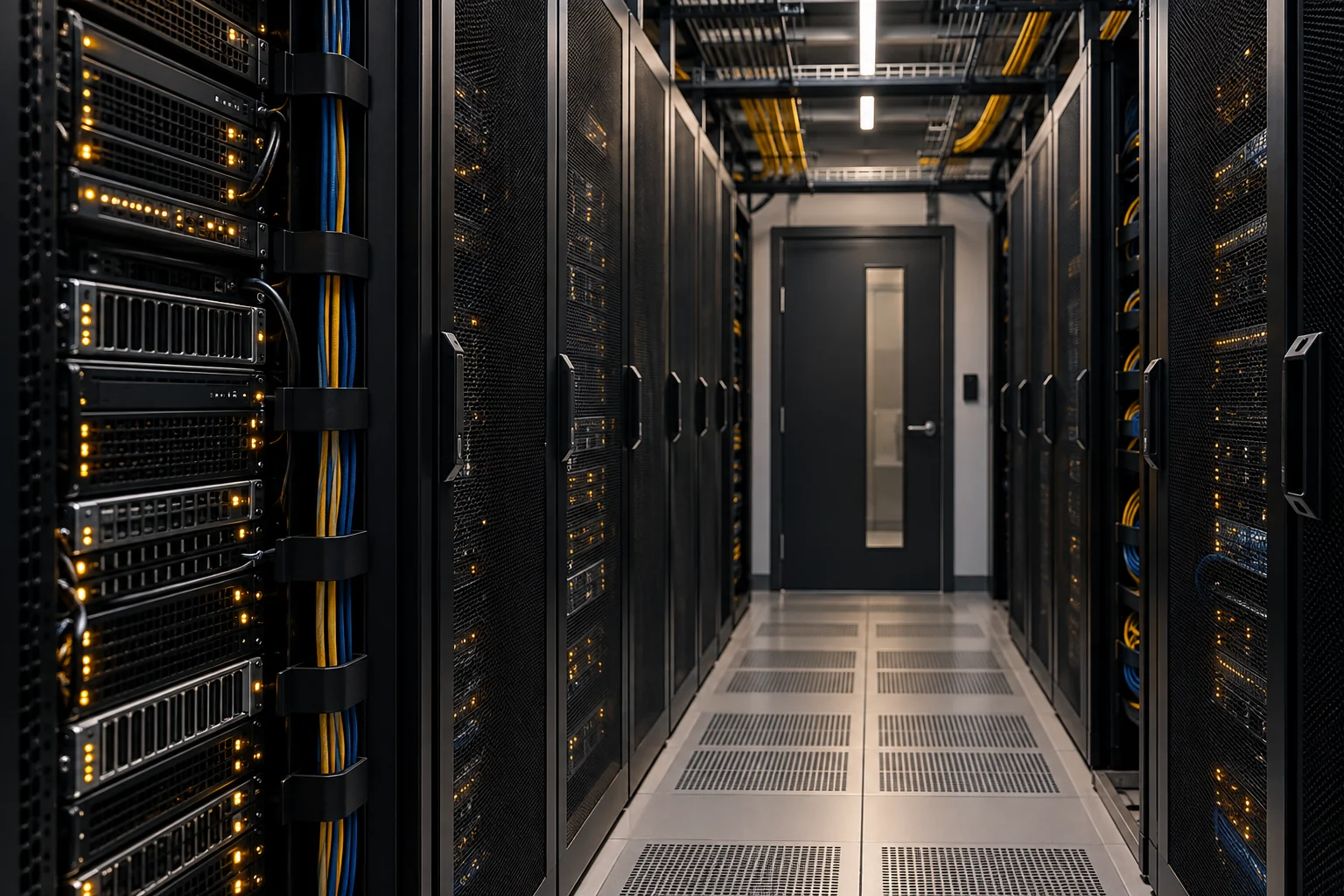
AWS GovCloud (US) is not just another AWS region with a different name. It is a physically isolated partition — aws-us-gov — operated exclusively by U.S. persons who have been vetted for handling ITAR export-controlled data and other sensitive federal information. The APIs look familiar, but the operational reality is different: separate IAM principals, separate root accounts, a distinct AWS Organizations instance, different service endpoints, a lagging but deliberate service catalog, and zero implicit connectivity to the commercial partitions. This isolation is the feature. It is also the source of most engineering pain for teams migrating from commercial AWS.
Precision Federal engineers federal workloads directly in GovCloud US-East (us-gov-east-1) and US-West (us-gov-west-1). Bo Peng holds 7 cloud certifications across AWS, Azure, and GCP and has shipped production ML systems in regulated environments. What follows is the engineering model we apply — the architecture patterns, the control strategies, and the operational disciplines that get federal agencies from kickoff to Authority to Operate on time.
Landing zone design with Control Tower
Every serious GovCloud engagement starts with a landing zone. Dropping workloads into a single account is how agencies end up with a year-long re-architecture before their first ATO. We deploy AWS Control Tower in GovCloud with a carefully composed Organizational Unit hierarchy: a Security OU containing the Log Archive and Audit accounts, an Infrastructure OU for shared networking and transit, a Workloads OU subdivided by environment and mission, and a Sandbox OU quarantined from production data. Guardrails are tuned for NIST 800-53 Rev 5 High — not the weaker Moderate baseline many commercial Control Tower deployments ship with.
Identity federation goes through IAM Identity Center (formerly SSO), bound to the agency's IdP — typically Entra ID Government, Okta for Government, or Login.gov for citizen-facing systems. Permission sets map to job functions rather than individuals, and session duration is capped at four hours with MFA re-authentication. Break-glass accounts exist, are stored offline, and trigger SNS alarms on any use.
Networking: Transit Gateway, VPC, and PrivateLink
Federal networks are never flat. We design hub-and-spoke topologies with Transit Gateway as the hub, route tables segmented by security domain (production, nonproduction, shared services, DMZ), and VPC route propagation disabled by default — every route gets approved before it exists. Egress is centralized through inspection VPCs running AWS Network Firewall or Gateway Load Balancer with a third-party NGFW (Palo Alto VM-Series, Fortinet FortiGate-VM). East-west traffic between workload VPCs is filtered at the TGW route-table level, not left to security groups alone.
For cross-partition connectivity — moving data between GovCloud and a commercial AWS account, or connecting to an on-premises agency data center — we use Direct Connect with MACsec encryption terminating at an on-premises Juniper or Cisco edge, with redundant connections in different locations for availability. PrivateLink endpoints replace public NAT egress for AWS service calls, keeping traffic off the internet and off CloudTrail logs for S3 access. Every endpoint policy is least-privilege and scoped to the specific IAM principals allowed to use it.
IL4 and IL5 workload engineering
DoD Impact Levels 4 and 5 cover Controlled Unclassified Information (CUI) and non-classified National Security System (NSS) data respectively. AWS GovCloud is accredited for both, but the accreditation only applies if the customer-side architecture respects the boundary. Our IL4/IL5 patterns: dedicated AWS accounts per mission owner (no shared production accounts across missions), customer-managed KMS keys with explicit key policies denying cross-account access, S3 buckets with aws:SecureTransport conditions and object-lock in compliance mode for audit data, EC2 with Nitro Enclaves for workloads that need attested TEE execution, and SSM Session Manager replacing SSH bastions entirely.
Nitro Enclaves deserve a specific mention. For IL5 workloads that process secrets — signing keys, attestation tokens, sensitive model weights — we use Nitro Enclaves to create an isolated compute environment with no persistent storage, no network, no operator access, and cryptographic attestation of the exact code running. The enclave attests to KMS via the kms:RecipientAttestation condition key, so a signing key can only be decrypted inside a specific measured enclave. This is materially stronger than any VM-level boundary.
Data services in GovCloud
S3 in GovCloud supports the full set of security features: bucket policies, Block Public Access (enforced at the account level via Control Tower guardrail), Object Lock, SSE-KMS with CMK, and access logging to the Log Archive account. Our default S3 baseline includes a deny-all bucket policy that explicitly allows only the application roles and the Log Archive replication role, with MFA Delete enabled on critical buckets.
RDS and Aurora in GovCloud support encryption at rest via KMS, encryption in transit via TLS 1.2+, IAM database authentication for humans, and Secrets Manager rotation for application credentials. Aurora PostgreSQL is our default for new federal workloads — strong ecosystem, row-level security for multi-tenant schemas, and pgaudit for detailed audit logging that feeds into Security Hub. For analytics, we build on Redshift with Redshift Spectrum over S3, or Athena queries against Parquet in S3 with Lake Formation fine-grained access control.
Observability and continuous monitoring
Continuous monitoring (ConMon) is not optional for federal systems — it is an ATO precondition. We wire CloudTrail (with data events for S3 and Lambda), VPC Flow Logs, Config with NIST 800-53 conformance packs, GuardDuty, Inspector, Macie for CUI discovery, and Security Hub as the aggregator. Findings flow into EventBridge rules that create Jira or ServiceNow tickets with SLA tags, auto-populate POA&M entries, and escalate criticals to the on-call rotation via SNS.
For application observability we deploy the OpenTelemetry Collector into every workload VPC, shipping traces to AWS X-Ray, metrics to CloudWatch and optionally to an Amazon Managed Prometheus workspace, and logs to CloudWatch Logs with subscription filters to an Elasticsearch or Splunk cluster for long-term SIEM retention. Log retention is set by data classification — 30 days hot, one year warm, seven years cold in S3 Glacier Deep Archive with Object Lock for FISMA compliance.
CI/CD and GitOps in GovCloud
GovCloud supports CodePipeline, CodeBuild, CodeArtifact, and CodeDeploy natively. For teams using GitHub, GitHub Enterprise Cloud for Government is FedRAMP Moderate authorized and can run Actions via self-hosted runners inside GovCloud VPCs. GitLab Self-Managed on EC2 or EKS is another common pattern. We favor GitOps with ArgoCD for Kubernetes workloads and Terraform Cloud (self-hosted agent) or Atlantis for infrastructure changes — every infrastructure change is a reviewable pull request with automated terraform plan output, policy checks via OPA/Conftest, and drift detection on every merge.
Our CI/CD pipelines enforce security gates: Semgrep and CodeQL for SAST, Trivy and Grype for container image scanning, Syft for SBOM generation, Cosign for signing, and OpenSCAP for STIG compliance checks on base AMIs built with Packer. A failed gate blocks the merge — there is no override without an explicit exception ticket logged to the audit trail.
Where this fits in your federal stack
AWS GovCloud engineering is the foundation for almost everything else Precision Federal delivers. Our Kubernetes capability runs EKS clusters in GovCloud; our serverless capability deploys Lambda and Step Functions to the gov partition; our machine learning work uses SageMaker in GovCloud for CUI-bearing models. If you are pursuing FedRAMP authorization, see our FedRAMP engineering page for the accreditation path. Agency-specific patterns live in Army, Navy, Air Force, and DoD pages. Long-form engineering write-ups are in GovCloud landing-zone insights.