Overview — what a federal digital twin actually is
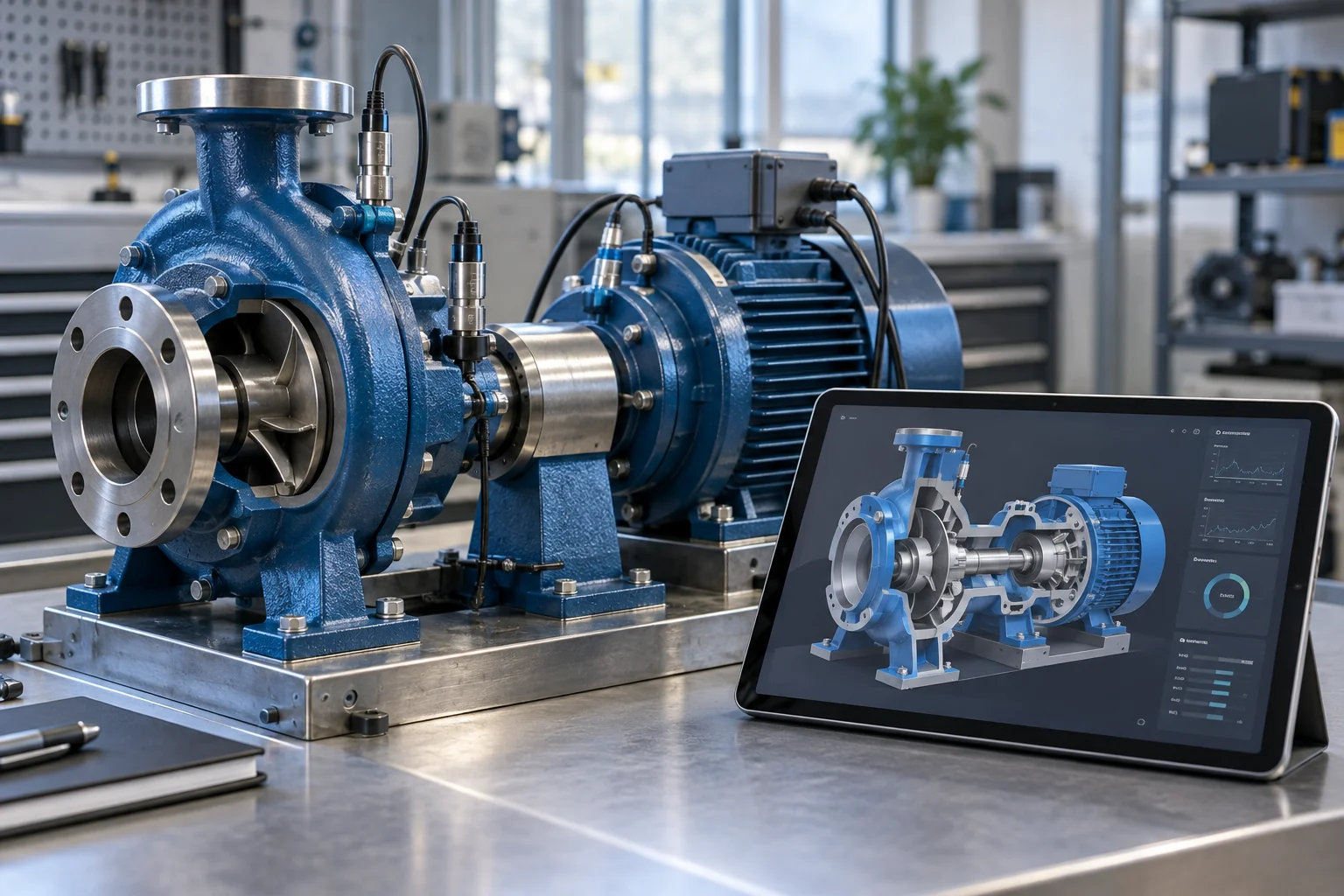
The federal government has spent the last decade using the phrase "digital twin" for everything from a single spreadsheet to a PowerPoint-grade 3D model. That is not a digital twin. A digital twin is a specific kind of engineering artifact: a live, evolving representation of a physical asset that ingests real telemetry, hosts behavioral and physics-based models, and closes a decision loop with the real asset or the humans responsible for it. If you cannot answer "what breaks if the twin disagrees with reality?" — you do not have a twin, you have a diorama.
Federal assets that genuinely benefit from digital twins fall into four categories. First, fixed infrastructure: dams, locks, bridges, runways, radar sites, sensor ranges, shipyards, depots. Second, mobile platforms: ships, aircraft, ground vehicles, unmanned systems. Third, installations as systems of systems: bases, ports, campuses. Fourth, networks: the grid, water systems, communications infrastructure. Across these categories, Precision Federal builds twins that deliver measurable mission value: reduced downtime, earlier failure detection, better operator decisions, and faster what-if analysis for planners.
We are a SAM.gov registered small business (UEI Y2JVCZXT9HP5, CAGE 1AYQ0, NAICS 541512). Our digital twin practice combines data engineering, simulation modeling, 3D / geospatial rendering, and full-stack app development — exactly the multidisciplinary blend that most twin programs underestimate.
FEDERAL DIGITAL TWIN DELIVERY
Our technical stack
| Layer | Primary | Alternates | When we use it |
|---|---|---|---|
| Scene graph / USD | NVIDIA Omniverse + OpenUSD | Autodesk, Pixar USD toolchain | High-fidelity visual twins, collaborative authoring. |
| Interactive engine | Unreal Engine 5 | Unity, Godot | Installation walkthroughs, training, VR decision support. |
| Physics | Modelica / OpenModelica | Simulink, AMESim, Ansys Twin Builder | System-level physics (thermal, fluid, electrical). |
| Discrete-event simulation | SimPy | AnyLogic, Arena | Flow, queuing, scheduling problems. |
| Agent-based simulation | Mesa, NetLogo | Repast, GAMA | Behavioral questions, crowd dynamics. |
| Geospatial basemap | Cesium 3D Tiles + ArcGIS | Mapbox, MapLibre | Installation-scale and above. |
| Telemetry ingest | MQTT, OPC UA, DDS | Modbus, BACnet, proprietary | Whatever the asset speaks. |
| Time-series store | AWS Timestream | InfluxDB, TimescaleDB | 30-day to 5-year hot windows. |
| Entity model | Custom graph on Neptune / Neo4j | AWS IoT TwinMaker, Azure Digital Twins | Hierarchy of systems, subsystems, components. |
| ML / PHM | PyTorch + MLflow | scikit-learn, XGBoost | Anomaly detection, RUL, failure attribution. |
| Streaming to client | Pixel Streaming (Unreal) | WebRTC, WebGPU native | Browser-based operator consoles. |
Federal use cases
Army Corps of Engineers dams and locks
structural telemetry + hydrodynamic simulation for gate operations and sediment management. USACE page.
Navy shipyard twins
dock scheduling, crane choreography, power demand, and availability tracking. Navy page.
Air Force installation twins
airfield operations, runway surface monitoring, hangar utilization. Air Force page.
NASA test stand twins
engine test stand instrumentation and physics-based live prognostics.
DOE grid twins
substation behavior, outage propagation, and renewable integration. DOE page.
Veterans Affairs hospital facility twins
HVAC energy optimization, equipment utilization, and wayfinding. VA page.
FAA NAS twins
airspace sector simulation and ATC decision support.
NOAA vessel twins
ocean research fleet health and mission planning.
USPS processing facility twins
conveyance and sortation flow modeling.
NPS / BLM park twins
visitor flow, asset monitoring, fire risk.
Reference architectures
1. Installation-scale twin in AWS GovCloud
A Navy installation with ~400 buildings, 6 piers, and 40 critical systems. Source data: GIS basemap, CAD drawings for pier and dry-dock geometry, BIM models for critical buildings, SCADA feeds for power and water, and building management telemetry for top-20 energy consumers. All converted to OpenUSD and layered in Omniverse Nucleus. Cesium 3D Tiles provides terrain and context. The entity graph lives in Neptune — every physical asset is a node, relationships capture feeds-from, depends-on, and contains. Telemetry lands in Timestream via MQTT over IoT Core. An Unreal front-end renders operator consoles via Pixel Streaming from g5 GPU instances; analysts use a React dashboard for non-3D views. All CAC-authenticated through the installation's PIV infrastructure.
2. Fleet twin in Azure Government IL5
A fleet of 120 unmanned aerial systems. Each aircraft streams airframe telemetry, engine data, and mission logs to Azure IoT Hub at IL5. Digital twin instances (Azure Digital Twins) hold entity state for each airframe and rolled-up fleet state for squadrons. PHM models run as containerized inference in AKS; anomaly alerts raise tickets in the maintenance system. A Unity viewer shows a fleet map and drill-down to individual airframe 3D models with highlighted health status.
3. System-level physics twin for test stands
NASA test stand twin. Modelica model captures propellant flow, thermal dynamics, and valve behavior. During a test, live stand telemetry streams into a state estimator that updates the Modelica model in near-real-time; the twin runs 30 seconds ahead of the physical stand, flagging predicted anomalies before they manifest. After the test, the twin becomes the authoritative lineage artifact — every parameter adjustment captured and versioned.
Delivery methodology
- Discovery (2-4 weeks) — decision question (what does the twin need to answer?), asset inventory, data sources, telemetry availability, existing CAD / BIM / GIS artifacts, operator workflows.
- Design (4-6 weeks) — entity graph, fidelity levels (LOD 1-5 per asset class), simulation scope, ingestion architecture, rendering targets (desktop, browser, VR), ATO boundary.
- Build (12-20 weeks) — 2-week increments. Early: ingestion pipeline, entity graph, low-fidelity scene. Mid: high-priority physics and PHM models. Late: operator UI, analyst UI, runbooks.
- Validation — twin-vs-reality reconciliation tests. Error bars on every predicted signal against measured signal.
- ATO & operations — SSP, pen test, DR test, operations handoff.
Engagement models
SBIR Phase I fixed-price
feasibility twin of a single asset class, 6 months.
SBIR Phase II fixed-price
installation or fleet-scale twin with operational pilot.
Fixed-price prototype
bounded scope, defined deliverables, capped risk.
T&M
long-horizon installation twin programs where scope evolves.
OTA
DIU, NSIN, AFWERX, Tradewinds, NavalX.
Partner team
twin engineering with partner firms that bring installation-management expertise.
Maturity model
Level 1 — Visualization
static 3D model, no telemetry.
Level 2 — Instrumented model
real-time telemetry overlayed on geometry.
Level 3 — Predictive twin
PHM models provide anomaly detection and forecasts.
Level 4 — Prescriptive twin
what-if simulation drives operator decisions; recommendations are measurable.
Level 5 — Autonomous twin
twin closes control loops directly with the asset under human oversight.
Deliverables catalog
- Entity model schema and ER diagram.
- OpenUSD scene graph.
- Ingestion pipeline IaC (Terraform + Helm).
- Physics / PHM model source + validation report.
- Operator UI (web, Pixel Streaming).
- Analyst UI (React dashboard).
- Alert and workflow integration (ServiceNow, Maximo, Jira).
- Twin-vs-reality validation report.
- SSP appendix + control inheritance.
- Operations runbook.
Technology comparison — honest tradeoffs
| Platform | Strengths | Weaknesses | Federal fit |
|---|---|---|---|
| NVIDIA Omniverse | OpenUSD, collaborative, GPU-accelerated. | Requires RTX GPU, licensing complexity, newer in federal. | High — trending hard. |
| Unreal Engine 5 | Mature, Pixel Streaming, Nanite for huge scenes. | C++ learning curve, asset pipeline overhead. | High — existing DoD adoption. |
| Unity | Large ecosystem, C#, fast iteration. | Less photoreal, licensing changes unsettled trust. | Medium. |
| AWS IoT TwinMaker | Serverless, integrates with AWS telemetry. | Limited fidelity, tight AWS coupling. | Medium — right for pragmatic IoT twins. |
| Azure Digital Twins | DTDL modeling, tight Azure integration, IL5 available. | DTDL limitations, vendor lock-in. | High in IL5 DoD work. |
| Siemens Xcelerator | Industrial provenance, strong Modelica/Simcenter. | Cost, licensing, integration friction. | Medium — when agency already owns. |
Federal compliance mapping
Digital twin deployments touch several NIST 800-53 control families. Representative mapping:
AC-3, AC-6
operator vs analyst vs admin role separation, enforced at the API gateway and UI.
AU-2, AU-12
every simulation run and every control-side effect logged with operator identity.
SC-7, SC-8
twin runs inside the FedRAMP / IL5 enclave; telemetry edges secured with mTLS.
SC-28
CAD, BIM, and telemetry at rest encrypted with KMS-managed keys.
CM-2, CM-3
twin version maps 1:1 to asset drawing revisions; every change tracked in Git and USD versioning.
SI-4
anomaly detection on telemetry doubles as intrusion detection for certain asset classes.
Sample technical approach — dam twin for USACE
The sponsor wants a twin for an inland navigation lock to support gate-operation decisions and predictive maintenance. Existing data: original 1970s paper drawings, a 2018 LiDAR scan, SCADA feeds for gate position, head/tail water levels, and motor currents, and 20 years of maintenance records in Maximo.
Discovery phase: we interview lockmasters, identify the top three decisions the twin must support (gate-sequence planning, lower-guide-wall pressure warnings, motor-health trending), and map every input signal.
Design phase: OpenUSD scene from LiDAR + drawing vectorization. Modelica model for hydrodynamic flow. PHM models for motor degradation trained on 20 years of Maximo + SCADA data. Operator UI as a browser-based Pixel Streaming console with overlayed telemetry.
Build phase: 8 two-week increments. Telemetry reconciliation report at every sprint — the twin must match measured values within defined error bars before the sprint closes.
Validation: a 30-day shadow period where the twin runs alongside operations. Lockmasters review twin-recommended sequences; measured outcomes compared to predicted outcomes weekly.
Related capabilities, agencies, vehicles, insights
- Capabilities: IoT & Embedded, GIS & Geospatial, Machine Learning, Data Engineering, Cloud Infrastructure.
- Agencies: Navy, Army, Air Force, USACE, NASA, DOE.
- Vehicles: SBIR, OTA, AFWERX.
- Insights: Digital twin vs visualization.
- .