Precision Federal is pursuing opportunities at the U.S. Space Force
Precision Federal is pursuing opportunities at the U.S. Space Force across SpaceWERX Open Topic SBIR, STRATFI/TACFI transition vehicles, Orbital Prime, Space Systems Command (SSC) BAAs, and topical challenges. The Space Force is the youngest and most technology-forward service in the U.S. military — stood up December 20, 2019 — and its entire operating model depends on data, software, and AI as first-class capabilities, not as add-ons to legacy platforms.
That makes USSF a natural buyer for a SAM-registered small AI business with production federal ML past performance. Precision Delivery Federal LLC (UEI Y2JVCZXT9HP5, CAGE 1AYQ0, NAICS 541512) — led by a Kaggle Top 200 data scientist — is structured for USSF's pace.
USSF organizational structure
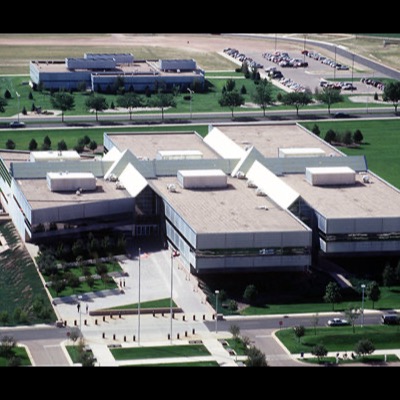
The Space Force operates through three field commands and a growing innovation ecosystem:
Space Systems Command (SSC)
Los Angeles. Acquires and fields space systems. Where major IDIQs and BAAs live.
Space Operations Command (SpOC)
Colorado Springs. Operates space capabilities. Drives requirements for operator-facing tooling.
Space Training and Readiness Command (STARCOM)
builds and sustains Guardian readiness.
SpaceWERX
the USSF innovation arm, colocated with AFWERX. Operates Open Topic SBIR, STRATFI/TACFI, Orbital Prime, and topical challenges.
USSF mission areas mapped to our capability
Space Domain Awareness (SDA)
Tracking, characterizing, and predicting the behavior of objects on orbit. ML for orbit determination, conjunction analysis, maneuver detection, and pattern-of-life modeling. Classical orbital mechanics + modern ML = large unmet opportunity. Our ML and Data Engineering practice fits.
Satellite telemetry anomaly detection
Unsupervised and semi-supervised ML on satellite health telemetry streams. Predictive maintenance analogs adapted for on-orbit assets. Kaggle Top 200-level time-series and anomaly detection practice.
Ground-system data engineering
USSF ground systems ingest massive telemetry volumes from sensors, satellites, and partners. Lakehouse architectures, streaming ingestion, governance, and analytics are essential plumbing. Exactly our Data Engineering practice.
Agentic AI for space operations centers
LLM-assisted operator tooling in space operations cells — report synthesis, alert triage, COA drafting. See Agentic AI.
Cyber defense of space networks
ML anomaly detection on ground-station networks and space-ground data links. Relevant to SSC cyber task orders and the growing USSF cyber mission area.
Orbital Prime / ISAM adjacencies
AI-enabled orbital operations — autonomous rendezvous and proximity, servicing planning, debris characterization, with ISAM platform partners.
SpaceWERX Open Topic SBIR
The SpaceWERX Open Topic SBIR (a sibling of the AFWERX Open Topic mechanism) is one of the most accessible SBIR structures in DoD. Instead of pre-defining topics, SpaceWERX invites non-traditional performers to propose solutions against broad USSF mission need areas. The Open Topic construct:
- Phase I — short feasibility, typically ~$75–150K, rapid turn.
- Phase II — prototype, typically $750K–$1.5M, with mission pull required.
- Phase III / STRATFI-TACFI — transition bridge to program of record, up to $15M government match under STRATFI.
The April 13, 2026 SBIR reauthorization (S. 3971) extends SBIR/STTR through September 30, 2031. SpaceWERX topics within the 26.x window are priority targets for us; our DSIP posture is current with firm certifications complete.
STRATFI and TACFI — the Phase II-to-III bridge
STRATFI (Strategic Funding Increase) and TACFI (Tactical Funding Increase) are AFWERX/SpaceWERX mechanisms designed to close the classic "Phase II to Phase III valley of death." STRATFI can match up to $15M in government funds plus up to $15M in private investment plus up to $15M in additional SBIR against a Phase II winner with strong mission pull; TACFI operates at a smaller ceiling. Both require:
- An existing SBIR Phase II award,
- Evidence of mission pull from a government customer,
- A credible private-match investor (for STRATFI).
We position Phase II submissions with STRATFI/TACFI in mind from the start — including early engagement with a prospective government customer and a credible investor narrative. Transition is the defining challenge of SBIR; STRATFI is the single cleanest mechanism USSF provides to solve it.
Orbital Prime
Orbital Prime is SpaceWERX's focused solicitation for In-space Servicing, Assembly, and Manufacturing (ISAM) technologies. While Orbital Prime centers on hardware, it increasingly includes AI-enabled scope — autonomous rendezvous, on-orbit perception, servicing planning, and debris characterization. We engage Orbital Prime with ISAM platform partners: they bring the hardware, and we bring the perception, planning, and data-engineering layers.
Space Systems Command (SSC)
SSC runs larger USSF acquisitions through IDIQs, BAAs, and task order vehicles. For scopes that exceed a single small business, our positioning is a partner team: partner firms bring the platform and domain depth, and we ship the model and data engineering scope.
Federal delivery record
Precision Federal has not delivered a USSF contract — we are pursuing. Founder's prior federal delivery — including delivery at Harmonia:
- A federal health agency (HHS) — production ML on federal health data. Full ATO.
- Federal health IT data platform — lakehouse architecture, governance-first.
- Multi-agency cloud migration — delivered through federal contractor engagements.
Why this translates to USSF: the engineering discipline — ATO, NIST 800-53, audit logging, lakehouse architecture, reproducible ML pipelines — is exactly what USSF needs to turn lab prototypes into deployed capability. For USSF scope we are targeting and pursuing through SBIR 26.x, Orbital Prime, topical challenges, and SSC BAAs.
Vehicles, NAICS, and engagement
- Primary NAICS 541512 — Computer Systems Design Services. SBA small business.
- Additional NAICS on SAM — 541511, 541519, 541715, 518210.
- USSF vehicles we're positioned for — SpaceWERX Open Topic SBIR, STRATFI/TACFI transition bridges, Orbital Prime, SSC BAAs, and SpaceWERX topical Challenges.
If you are a SpaceWERX program manager, an SSC task order owner or an Orbital Prime team lead, email contact@precisionfederal.com. See also SBIR partnering, How We Work and Partners.