What the technical approach has to prove
A technical approach for a federal construction job has one purpose: to convince an evaluator who has never met you that your people have already thought through this building, on this site, under these restrictions. Evaluators read many of these. Most of them could have been written about any project, and those are the ones that score in the middle.
The good ones read as a plan already in progress. They name the sequence, the constraint that drives it, the crew that will do the hard part and what happens if the first plan fails. This guide covers how the procurement method shapes what you write, and how to fill each section with content that could only be about this job.
The delivery method decides what you write
Federal construction runs on a short list of acquisition procedures. The current FAR Overhaul text says the contracting officer must use design-bid-build, two-phase design-build selection, or another procedure authorized by law when contracting for the design and construction of a public building, facility or work. Agencies are putting the Overhaul text in place through class deviations, so always read the clauses and provisions in your own solicitation.
| Method | What the government buys | Your written effort |
|---|---|---|
| Design-bid-build, sealed bid | A completed design, built for the lowest responsive, responsible price | Little or no narrative. Effort goes to the takeoff, forms and bid security |
| Design-bid-build, negotiated | A completed design, with award on stated factors | A technical approach, past performance and management content, scored against the factors |
| Two-phase design-build | One team to design and build, with a short list chosen first | Phase one qualifications and approach, then phase two design concepts and a separate price |
Sealed bidding is only available when the conditions in FAR Part 6 are all met, including award on price and price-related factors and no need for discussions. When those conditions fail, the job goes to competitive proposals, and the technical approach is what you are being graded on.
Two-phase design-build, in practice
Two-phase selection exists because design-build proposals are expensive to prepare. Under the current text it can be used when three or more offers are anticipated and offerors must perform design work before developing price, at substantial expense.
Phase one is where most small contractors lose the chance to compete. The evaluation factors must include a technical approach, excluding detailed design, and technical qualifications such as specialized experience, capability to perform, and the past performance of the offeror's team, including both the architect-engineer and construction members. Price is not part of phase one.
No more than five offerors go on to phase two unless the contracting officer determines in writing that a larger number is in the government's interest. So phase one is a cut, and it should be written as one. Show the team, the relevant work the design and construction members have done together, and a concept for the approach that demonstrates you understand the problem without giving the design away. Phase two then follows negotiated procedures, with design concepts and separate technical and price proposals.
Start from the evaluation factors
Before you outline anything, list every factor and subfactor from the solicitation in the order they are stated, along with their relative importance. Agencies must evaluate each competitive proposal based solely on the factors and subfactors in the solicitation, so a brilliant section that answers no factor earns nothing.
Construction solicitations need extra care here. The uniform contract format, with its familiar Sections L and M, is expressly not required for construction and architect-engineer contracts. Your evaluation criteria may sit in a specification section, an attachment or a narrative on the solicitation form. Find them before you do anything else, and then use the solicitation's own words as your section headings.
Show you understand this project
Open with the two or three things that make this job hard. An occupied clinic where infection control governs every move. A runway closure window of a fixed number of nights. A historic facade, a contaminated subgrade or a security perimeter that limits deliveries. Evaluators know the difficult parts of their own project, and an offeror who names them correctly has earned attention before the first schedule bar.
Then connect each difficulty to a decision you made. If the existing mechanical system must stay live during cutover, say what temporary system you are carrying, for how long, and who on your team has done that exact swap. Understanding is proved by a decision, and a paragraph that restates the statement of work proves nothing.
Phasing, schedule and critical path
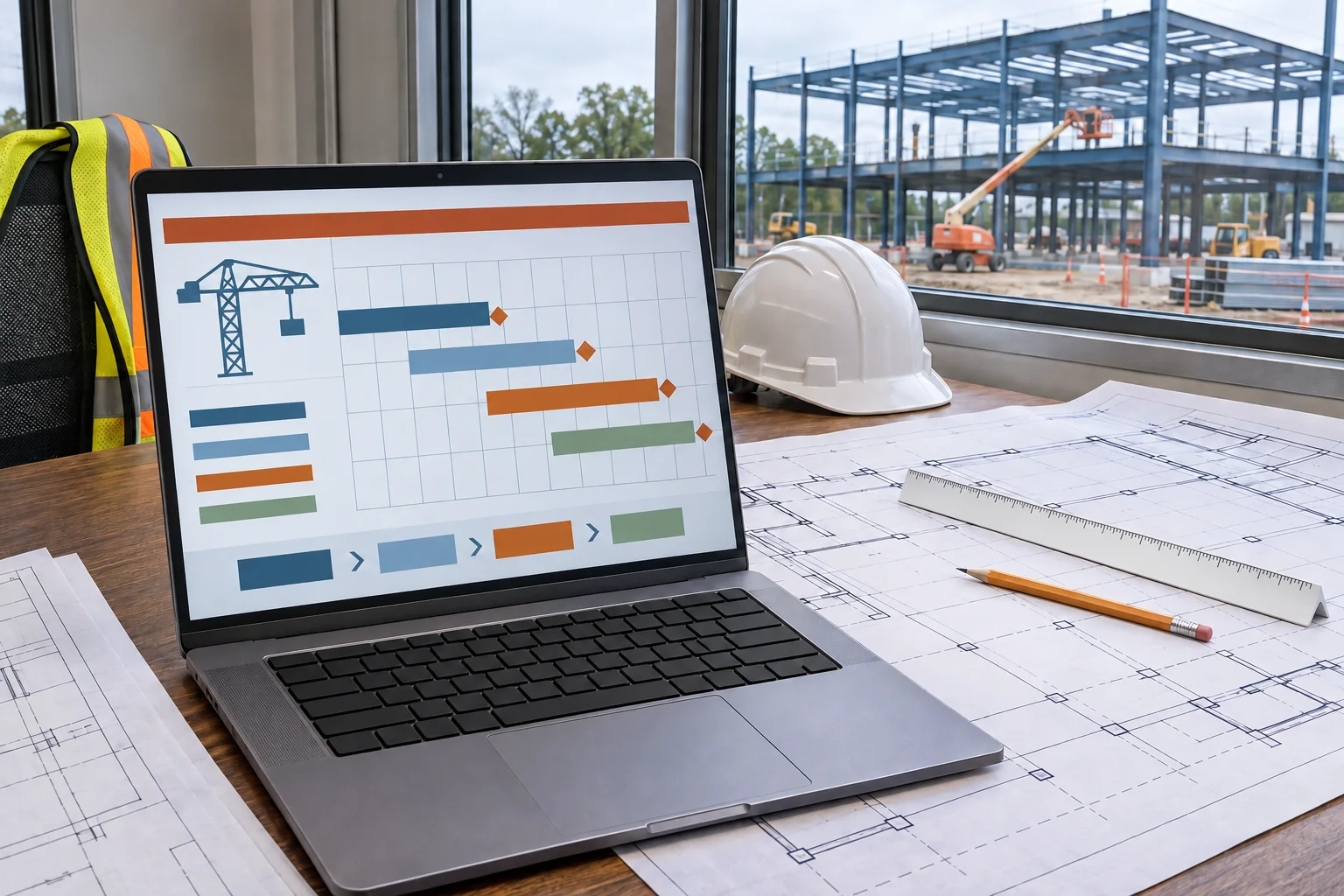
The schedule section is where evaluators can quickly test whether your approach is real. Federal fixed-price construction contracts commonly carry the schedules clause, which requires a practicable schedule showing the order of the work, generally within five days after work commences unless the contracting officer sets another period. If you fall behind, the clause requires steps to recover lost time without additional cost to the government, and it allows the contracting officer to terminate your right to proceed if you do not.
- Phases tied to the owner's constraints: what the building users can give up, when, and for how long
- The critical path in plain language: the five or six activities that set the finish date
- Long-lead items with order dates and the submittal they depend on
- Government review time built in at the durations the specifications allow
- Weather and seasonal limits for the actual location and months of work
- A named float strategy: where slack exists and what you do when it is gone
Include a real summary schedule if the page limit allows, and make sure the durations in the text match the bars. Mismatches between narrative and schedule are among the easiest weaknesses for an evaluator to write down.
Site logistics, drawn on the site
Site logistics is where a generic proposal is most exposed. Say where the trailer goes, where deliveries enter, where the crane stands, how you keep the public and government personnel out of the work zone, and how material gets to the upper floors. Reference actual gates, adjacent buildings and access limits from the drawings and the site visit.
Attend the site visit if one is offered, and walk it with the person writing this section. Photographs and notes from that visit are the raw material for details nobody can copy from a past proposal. Add a simple site logistics sketch if the instructions allow graphics, with the phases shown.
Safety and quality as working systems
The accident prevention clause requires compliance with the Department of Labor standards at 29 CFR parts 1926 and 1910. On Department of Defense construction it also requires compliance with the latest version of the U.S. Army Corps of Engineers Safety and Health Requirements Manual, EM 385-1-1, in effect on the date of the solicitation. Name the requirements that apply and describe how your site safety lead will carry them out on this job, including the riskiest activity you expect.
On quality, the inspection of construction clause requires the contractor to maintain an adequate inspection system and complete inspection records, and it states that government inspections do not relieve the contractor of responsibility for quality control. Describe who inspects, at what stage, what gets held until it passes, and how a deficiency is recorded and closed.
Self-performed work and the trades you bring
Evaluators want to know who will actually do the work. State which trades you self-perform, which you will subcontract, and why each choice lowers risk on this project. Name subcontractors where you have commitments, and describe how your superintendent will coordinate them.
On small business set-asides, check the limitations on subcontracting. The clause sets a cap, excluding the cost of materials, of 85 percent of the amount paid by the government for general construction and 75 percent for construction by special trade contractors, for subcontractors that are not similarly situated entities. Make sure your subcontracting plan and your numbers agree with that cap.
Make every page specific to that site
Before you file, run one test on every paragraph: could this sentence appear unchanged in a proposal for a different building. If it could, replace it or cut it. A page limit is a budget, and generic text spends it on nothing.
A page limit is a budget, and generic text spends it on nothing.
- Reciting the statement of work back to the people who wrote it
- Pasting a safety manual excerpt with another project's name still in the footer
- Promising a finish date that the schedule in the same volume does not support
- Naming a project manager whose resume shows no comparable job
- Writing a schedule with no government review durations
- Leaving the riskiest part of the job unmentioned because it is uncomfortable to write about
Keep the record of your good work current. Federal agencies must prepare past performance evaluations for each construction contract of $900,000 or more, so today's site logistics and schedule discipline becomes tomorrow's past performance score.
Frequently asked questions
As long as the solicitation allows and the content earns. Follow the page limit exactly, then spend the pages in proportion to how the factors are weighted. Keep unrelated company history out of it.
Usually no. Sealed bids are awarded on price and price-related factors, and the job is about being responsive and responsible at the lowest price. Read the invitation, though, since some require specific documents with the bid.
Include one where the solicitation asks for it or the page limit allows, and keep it consistent with the narrative. A readable summary that shows phases, the critical path and the government's review windows usually serves an evaluator better than a dense printout.
No. The current text says the technical approach in phase one excludes detailed design or technical information. Save the design concepts for phase two, and use phase one to show the team and the thinking.