
What SeaPort-NxG is
SeaPort-NxG (Next Generation) is the Navy's multi-billion-dollar professional services IDIQ, administered by Naval Sea Systems Command (NAVSEA). It is the primary vehicle through which Navy buys engineering, professional, and technical services — including AI, data science, software development, and systems engineering. It succeeded SeaPort-e and has a 10-year ordering period from its 2019 inception, with a ceiling in the tens of billions.
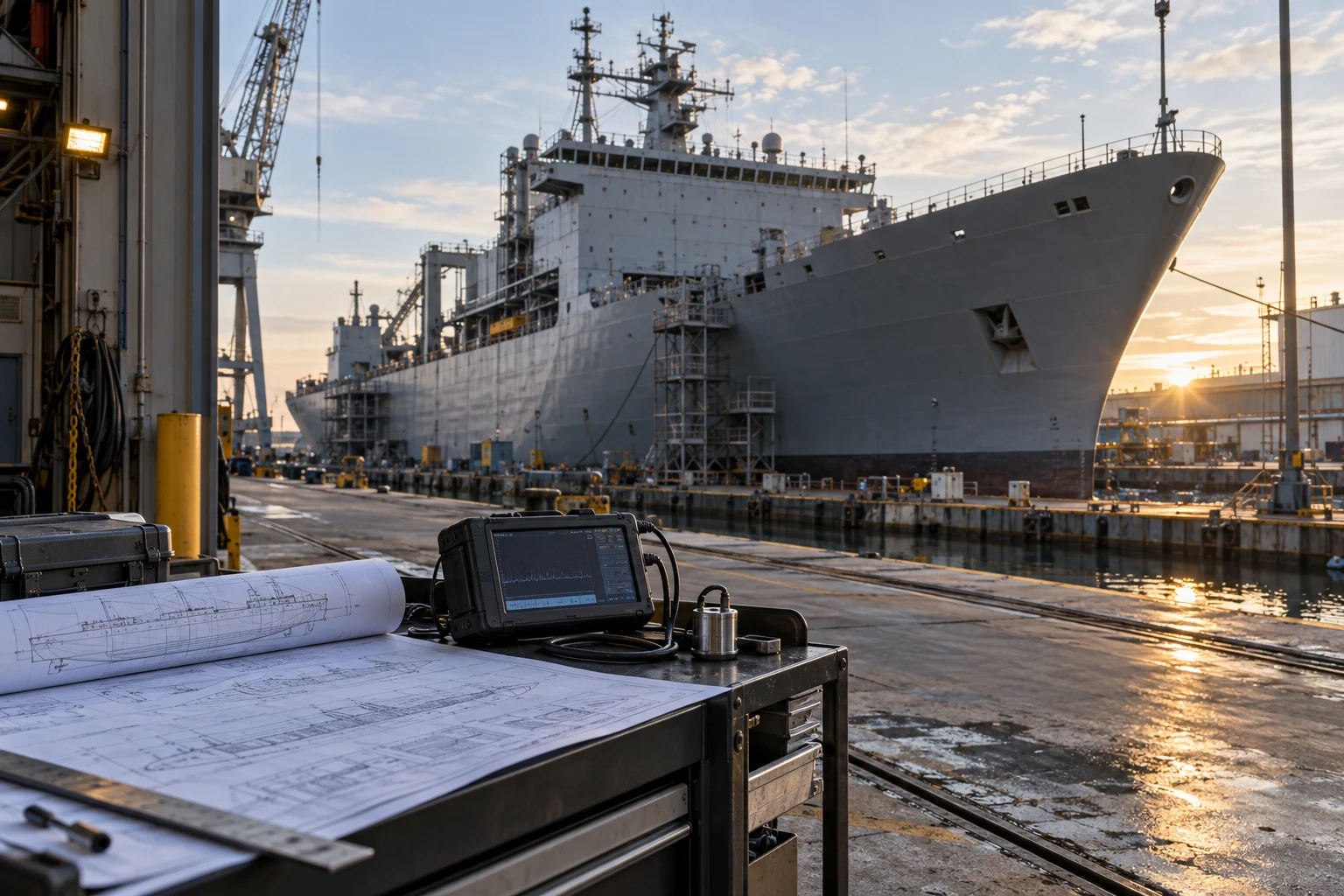
SeaPort NxG is the Navy's primary IDIQ for professional services — covering R&D, systems engineering, and program support including AI/ML. Small businesses on SeaPort compete for task orders across all Navy commands without separate contracting actions.
The vehicle has thousands of prime contract holders — the Navy's philosophy has been inclusive awarding, with an understanding that actual competition happens at the task order level. For a small AI firm, SeaPort-NxG seat acquisition is approachable; the hard part, as with every IDIQ, is winning individual task orders after the seat is in hand.
Zones and functional areas
SeaPort-NxG divides the country into seven zones, and the work itself into 23 functional areas. A firm proposes to one or more zones and one or more functional areas. Task orders are typically tied to a zone (geography of the sponsoring Navy activity) and a functional area (the type of work).
| Zone | Primary Navy activities |
|---|---|
| Zone 1 — Northeast | NUWC Newport, NAVSEA HQ (Washington Navy Yard), Portsmouth Naval Shipyard. |
| Zone 2 — National Capital | NAVSEA HQ, NSWC Dahlgren, NSWC Indian Head, ONR. |
| Zone 3 — Mid-Atlantic | Norfolk Naval Shipyard, NSWC Dam Neck, Aegis Training Center. |
| Zone 4 — Gulf | NSWC Panama City, NSWC Corona (partial). |
| Zone 5 — Midwest | NSWC Crane, NSWC Carderock (split). |
| Zone 6 — Southwest | NSWC Port Hueneme, NIWC Pacific, NSWC Corona. |
| Zone 7 — Northwest | Puget Sound Naval Shipyard, NSWC Keyport. |
Functional areas that map to AI work
The 23 functional areas cover the full sweep of Navy engineering and professional services. For an AI firm, the relevant ones are:
SeaPort-NxG Functional Areas — AI Firm Relevance Score
Editorial weighting from public sources and practitioner reading — illustrative, not a measured statistic.
Propose 2–4 tightly scoped FAs maximum. More than 4 dilutes technical narrative and raises reviewers' questions about depth.
- FA 3.1 — Software Engineering, Development, Programming, and Network Support. The primary home for AI/ML implementation work on SeaPort-NxG.
- FA 3.4 — Modeling, Simulation, Stimulation, and Analysis Support. ML models, digital twins, analytical pipelines.
- FA 3.13 — Information System (IS) Development, Information Assurance (IA), and Information Technology (IT) Support. AI-adjacent IT, cybersecurity AI.
- FA 3.18 — Training Support. AI-enabled training systems and courseware.
- FA 3.2 — Reliability, Maintainability, and Availability (RM&A) Support. Predictive maintenance AI.
Proposing too many functional areas in a single offer dilutes the technical narrative. Two to four tightly scoped FAs usually outperform seven loosely justified ones.
Small business set-aside dynamics
SeaPort-NxG does not have formal socioeconomic pools like OASIS+. Instead, individual task orders are set aside for small business, 8(a), HUBZone, WOSB, or SDVOSB at the Contracting Officer's discretion based on the FAR rule of two and acquisition strategy. A small business prime on SeaPort-NxG can bid set-aside task orders where only similarly-sized firms compete. The task order set-aside decision is made per task order, not per seat.
The practical implication: a small firm's SeaPort seat is valuable mostly for set-aside task orders. Unrestricted task orders bring the small firm into direct competition with CACI, Leidos, SAIC, and similar — rare wins for a 10-person shop.
Teaming on SeaPort task orders
Most Navy task orders are won by teams, not solo primes. A typical small AI firm on SeaPort either:
- Teams as a sub to a large prime on an unrestricted task order, providing specialized AI/ML content. Work share typically 10-30%.
- Primes a small-business set-aside task order with small business subs filling adjacent technical areas.
- Primes a directed task order where the Navy activity wants the specific firm's capability.
The teaming conversation starts early. By the time a task order hits the street, the winning team is already formed. Firms that wait for the RFP before making teaming calls lose. The move is to identify target program offices, map who primes the relevant work, and build teaming relationships with those primes 6-12 months before a task order drops.
How task orders flow
Task order issuance cadence varies by activity. Some Navy activities issue several task orders per month on SeaPort. Others issue a few per year. For a small AI firm, the approach is:
- Pick 1-3 Navy activities as target customers (NAVSEA HQ, NUWC, NSWC Dahlgren, NIWC Pacific are common AI centers).
- Track task order history for those activities — FPDS and USASpending show prior SeaPort obligations with which firms.
- Identify the program offices driving AI adoption at those activities.
- Make the BD calls — conferences, industry days, 1-on-1 outreach — 6-12 months before the expected task order.
- Team with the prime (or plan to prime if set-aside) when the RFP drops.
Realistic revenue expectations
A small firm holding a SeaPort-NxG seat but not actively bidding sees zero revenue from the seat. A firm actively bidding 1-2 set-aside task orders per quarter can realistically expect:
- Year 1 — 0 to 1 task order wins. Ramping BD and teaming.
- Year 2 — 1 to 3 task orders, $500K — $5M combined value.
- Year 3+ — 3 to 8 task orders annually if customer relationships mature, $2M — $20M combined value.
These numbers assume active engagement. A dormant seat produces nothing.
When on-ramps happen
SeaPort-NxG has periodic rolling admission — new firms have been admitted in batches through the contract life, including small business rolling admissions. Firms missing the initial award can watch for the next rolling admission window (historically annual or biennial) and submit. A new small AI firm in 2026 should monitor the NAVSEA SeaPort-NxG portal for rolling admission announcements and prepare the offer in advance.
Bottom line
SeaPort-NxG is the right vehicle for a small AI firm selling to the Navy. Seat acquisition is approachable via rolling admissions; task order wins require active BD with specific Navy activities and early teaming. The vehicle does not create customers — it removes procurement friction with customers you are already working to earn. Plan for both legs, or the seat becomes a line on a capability statement with no revenue attached.
Frequently asked questions
Watch for rolling admission announcements on the NAVSEA SeaPort portal. The initial award closed in 2019; subsequent rolling admissions have been held. Prepare the offer (technical narrative, zone and FA selection, past performance) in advance.
Yes, on task orders set aside for small business, 8(a), HUBZone, WOSB, or SDVOSB. The set-aside decision is made at the task order level by the contracting officer using the FAR rule of two.
FA 3.1 (software engineering) is the primary home. FA 3.4 (modeling and simulation), FA 3.13 (IT/IA), and FA 3.2 (RM&A) cover adjacent AI work. Propose 2-4 FAs tightly, not 7 loosely — and confirm FA numbering against the current SeaPort-NxG PWS before you certify scope.
NAVSEA HQ, NUWC Newport (undersea), NSWC Dahlgren (combat systems), NIWC Pacific (information warfare), and ONR (research) are the centers of gravity for Navy AI procurement.
Small to very large. Typical small-business set-aside task orders are $500K — $5M. Unrestricted task orders reach tens of millions. The contract ceiling is multi-billion.
Usually. Small firm primes on set-aside task orders often team with other small business subs for adjacent capability. On unrestricted task orders, small firms almost always sub to larger primes.