What NAMC is
The National Advanced Mobility Consortium is a 501(c)(3) nonprofit that holds an other transaction agreement with the Army and competes prototype work under it to its members. Its subject is ground mobility in the broad sense: vehicles, autonomy, robotics, power, survivability, and the software running across all of them. It is member-led, its members elect its board, and it is one of the older standing consortia in the defense system.
The structural fact that matters most is easy to miss. NAMC states plainly that it does not employ a consortium management firm or a consortium administrative organization. It runs the agreement with its own staff and consultants. Most defense consortia are the other arrangement: a membership body on paper, with a separate for-profit management company doing the administration and taking a fee for it. NAMC has collapsed those two roles into one nonprofit whose board its members elect. That changes who you are dealing with when a project agreement is being negotiated.
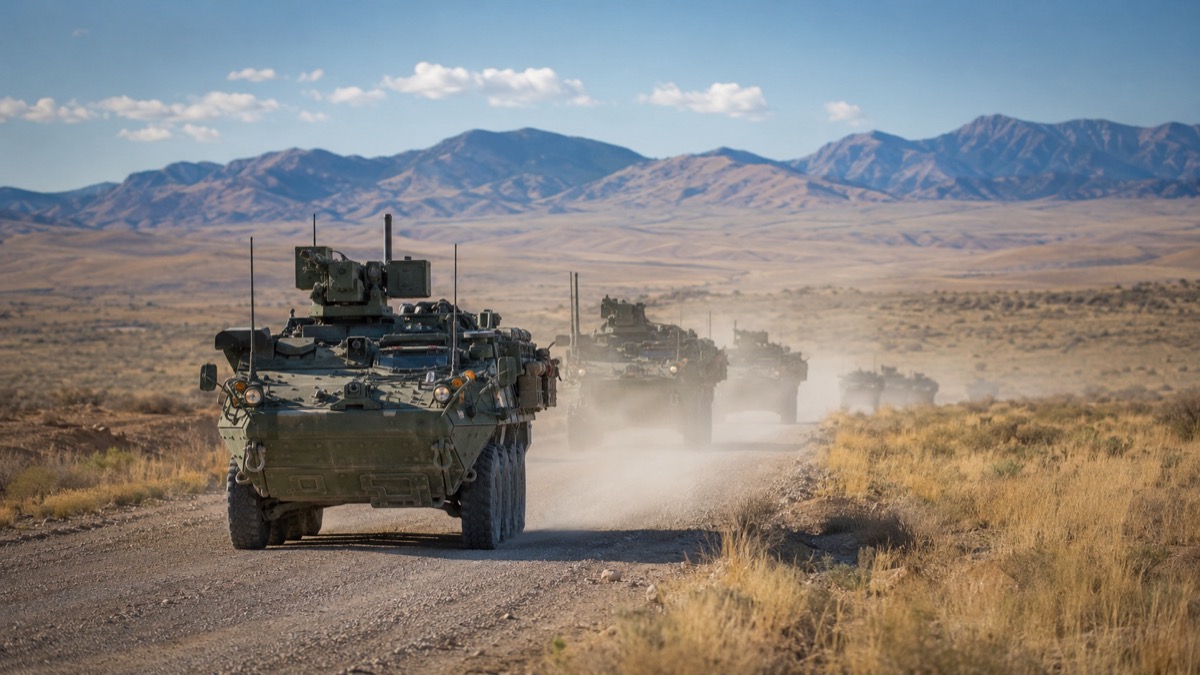
The government side is concentrated in one place. The agreement is administered by the Army Combat Capabilities Development Command Ground Vehicle Systems Center, a research and development center in Warren, Michigan that shares facilities with the Tank-automotive and Armaments Command, and contracting runs through Army Contracting Command – Detroit Arsenal. Program Executive Office Ground Combat Systems and Program Executive Office Combat Support and Combat Service Support are among the program customers. One technical center, one contracting office, a small set of programs. Against a consortium serving a dozen sponsors across several services, that is a narrow and legible customer base — an advantage if your capability fits and a hard wall if it does not.
The agreement history, and why it is the most useful thing on the website
NAMC publishes its own agreement lineage, and it happens to be one of the clearest public illustrations of how prototype other transaction authority actually works.
The consortium began in 2008 as the Robotics Technology Consortium, formed by industry and academic organizations working in robotics. It won an other transaction managed by the Office of the Secretary of Defense and contracted through Army Contracting Command – New Jersey, focused on ground robotics. In 2014 it won a second, broader agreement covering manned and unmanned ground vehicle systems, managed out of the Vehicles and Robotics Alliance at what was the Tank Automotive Research and Development Center and is now the Ground Vehicle Systems Center.
That 2014 agreement was awarded under what practitioners called Section 845 authority. The FY2016 National Defense Authorization Act removed Section 845 and replaced it with Section 815, which is the ancestor of the prototype authority now codified at 10 U.S.C. § 4022. Section 815 did two things that mattered. It revised the definition of a nontraditional defense contractor, and it created the ability to award follow-on production without further competition after a prototype was successfully completed — provided the underlying agreement had itself been competed.
NAMC's own account of what happened next is the instructive part. The 2014 agreement was not considered to have been competed. Follow-on production was therefore not available under it. The agreement was also committing more than its estimated ceiling of roughly $100 million per year. So the government ran a competition, NAMC won the new agreement in 2017, and that one carried a five-year, $2 billion ceiling and did allow follow-on production. The 2017 agreement expired in September 2023 and was replaced the same month by the Detroit Arsenal Innovation agreement, which NAMC states it won competitively and which now covers fifteen technology focus areas.
Read § 4022(f) against that history and it lines up exactly. A follow-on production contract or transaction may be awarded to participants without competitive procedures if two conditions hold: competitive procedures were used to select the parties for participation in the transaction, and those participants successfully completed the prototype. The statute goes further than most summaries admit. It says a transaction includes all individual prototype subprojects awarded under it to a consortium of United States industry and academic institutions. It permits the determination of successful completion at the level of an individual prototype or subproject. And it states that a follow-on award is not contingent on the successful completion of all activities within a consortium.
One detail in the current text is frequently reported wrong. Older guidance said the original request had to announce that a follow-on might result. The statute as it now reads allows the non-competitive follow-on even if explicit notification was not listed within the request for proposal for the transaction. The notification is good practice and it removes argument later. It is not the statutory trigger. The two conditions above are.
For anyone weighing a consortium, that produces a single diagnostic question, and it is not one most membership brochures answer: was the base agreement competitively awarded? If it was not, every project under it is a prototype with no non-competitive route to production, whatever the marketing says. NAMC answers that question about itself on a public page, including the years when the answer was no.
What actually gets competed
NAMC's opportunity board is public down to the filter counts, which makes it possible to describe the portfolio rather than guess at it. As of August 2026 the board carries 376 listings: 363 closed, 9 pending, and 4 open. By instrument, 331 are requests for prototype proposals, 33 are requests for information, and 12 are requests for white papers. Three hundred seventy-five of those listings carry a technology objective area.
| Technology objective area | Listings | Share of the board |
|---|---|---|
| Autonomy | 96 | 26% |
| Survivability | 89 | 24% |
| Modeling & simulation | 32 | 9% |
| Platforms | 27 | 7% |
| Architecture, security & modularity | 26 | 7% |
| Collaboration | 21 | 6% |
| All other areas (powertrain, mobility, petroleum and water, external systems, test and evaluation, and three smaller areas) | 84 | 22% |
Counts from the public opportunity filters on namconsortium.org, August 2026, across 375 classified listings. Shares are rounded.
Autonomy and survivability alone account for 185 of 375 listings, which matches the sponsoring center's own stated priorities: human-machine integration and protection lead its list.
For a software firm the more useful cut is by what the work is made of rather than what it is bolted to. Autonomy, modeling and simulation, architecture and security and modularity, and collaboration are the four areas where the deliverable is predominantly code, models, interfaces, and data. Those four total 175 listings, roughly 47% of the classified board. Ground mobility sounds like a metal-bending portfolio. Close to half of what has been competed here is not.
The open window is narrow at any moment, and that is the honest counterweight. Four listings were open on the day this was written, and three belonged to a single annual planning cycle sharing one request number and one closing date of September 30, 2026. The board is mostly a historical record. Membership is a subscription to a pipeline that surfaces in bursts, not a stream of daily bid opportunities.
What the awards look like
NAMC publishes award recipients and dollar values on an open page, which is unusual and useful. The most recent page of that list includes a soft-kill active protection award to BAE Systems at roughly $20.6 million, a high-voltage energy award to UEC Electronics at roughly $22.3 million, three parallel unmanned-systems autonomy awards to Forterra, Overland AI, and Scout AI in the $6.2–7.3 million range, three parallel autonomous decontamination awards to Stratom, Integrated Solutions for Systems, and HDT Robotics near $2.1–2.2 million each, a digital twin award to Array of Engineers at roughly $3.4 million, and a vehicle armor manufacturing award to Buffalo Armory Group at roughly $687,000.
Three patterns come straight off that list. A single request often produces several parallel prototype awards rather than one winner, which is what happened in both the autonomy and the decontamination lines above; being second is not automatically losing. The spread is wide, from the high six figures to the tens of millions, with one legacy project at roughly $97 million. And one entry is explicitly an SBIR Phase III — a camera sensor analysis effort at roughly $1.1 million — so the sole-source Phase III authority and the consortium agreement are being used together rather than as alternatives.
The dollar figures also decide an audit question firms tend to discover late. Under § 4022(c), an agreement providing for payments in excess of $5 million must include a clause giving the Comptroller General discretionary access to the records of any party to the agreement or any entity participating in its performance. There are carve-outs: the requirement does not attach to a party that entered no other agreement providing government audit access in the prior year, examinable records can be limited for firms whose only prior instruments were other transactions, the head of the contracting activity can waive it with notice to Congress, and access expires three years after final payment. Still, that $5 million line runs through the middle of NAMC's published award list. On the most recent page, half the awards sit above it.
Joining: cost, gate, and cycle
Dues are a flat $500 per year per company, prorated for new members against the federal fiscal year of October 1 to September 30, with automatic renewal on October 1. NAMC states there are no other fees, that member events are free to attend, and that the rate is deliberately low so dues are not a barrier to entry.
The real gate is not the money. NAMC restricts membership to U.S. companies holding a valid DD-2345 certification, which it uploads as part of the application, because that certification is what permits the consortium to share export-controlled and militarily sensitive technical data with members. Foreign companies cannot join; their U.S. subsidiaries can. Foreign firms may team on projects, but a distribution statement waiver has to be requested before any solicitation document is shared with them. Members must also be able to contribute technically — the capability narrative is expected to describe organizational technical expertise, and independent consultants are not the intended member.
The application asks for real artifacts, not a form. Company FEIN, UEI, and CAGE. The DD-2345 as a required upload. A foreign ownership, control, or influence mitigation plan where relevant. Four named contacts covering the key, contractual, financial, and technical roles. Socioeconomic designations. An attestation to at least one technical capability area. Past performance award information. And a non-proprietary written description of the business, its primary technology, and its technical capabilities, submitted without controlled unclassified information in it.
Approval runs through the board, not a clerk. The chief operating officer reviews the application and the executive committee of the board of directors considers it for approval. NAMC states the process typically takes five to seven business days unless more information is needed.
The membership year, as the consortium publishes it
Cost share and the nontraditional gate
The four conditions at § 4022(d)(1) decide whether a prototype other transaction can be used at all. At least one nontraditional defense contractor or nonprofit research institution participating to a significant extent. Or every significant non-federal participant is a small business or a nontraditional contractor. Or at least a third of total project cost comes from non-federal sources. Or the senior procurement executive makes a written exceptional-circumstances determination.
NAMC translates that into a practical rule for its members, and the translation is accurate. If the prime is a nontraditional contractor or a nonprofit, or the whole team is small businesses, there is no cost share. A traditional prime that shows significant nontraditional or small-business participation also meets the statute without cost share. A traditional prime without that participation carries the one-third cost share. Significant participation means supplying a new key technology or product, performing about a third of the effort, causing a material reduction in cost or schedule, or causing an increase in performance.
The definition of nontraditional is narrower than most people assume and much easier to satisfy. Under 10 U.S.C. § 3014, a nontraditional defense contractor is an entity not currently performing, and not having performed for at least the year preceding the solicitation, any Defense contract or subcontract subject to full coverage under the Cost Accounting Standards. The test is Cost Accounting Standards coverage. It is not company size, revenue, or whether the firm has ever held a Defense contract. Firms with substantial federal work often still qualify.
One further point that is easy to miss and matters at exactly the moment it is worth the most: § 4022(d)(3) says these conditions do not apply to follow-on production awards under subsection (f). The nontraditional gate is an entry condition for the prototype, not a permanent condition on the production that follows it.
The agreement is outside the FAR. It is not outside everything else
Prototype other transactions escape the Federal Acquisition Regulation, the Cost Accounting Standards, and the standard data rights clauses. But § 4022(h) states that an agreement under this authority is treated as a federal agency procurement for the ethics rules of chapter 21 of title 41. Appropriations law, the Anti-Deficiency Act, and the False Claims Act are untouched. Export control and controlled unclassified information handling follow the data, which is why membership is gated on a certification to receive controlled technical data. And with the standard clauses absent, intellectual property is negotiated project by project — NAMC says so directly.
Task requests and communities of interest: the lane nobody markets
Alongside prototype requests, NAMC runs task requests: projects judged to be of common benefit to industry and government, awarded to NAMC itself as prime with multiple members brought in as subcontractors. Those often organize a community of interest or a community of practice — a standing subset of members who give feedback, join discussions, and track the work.
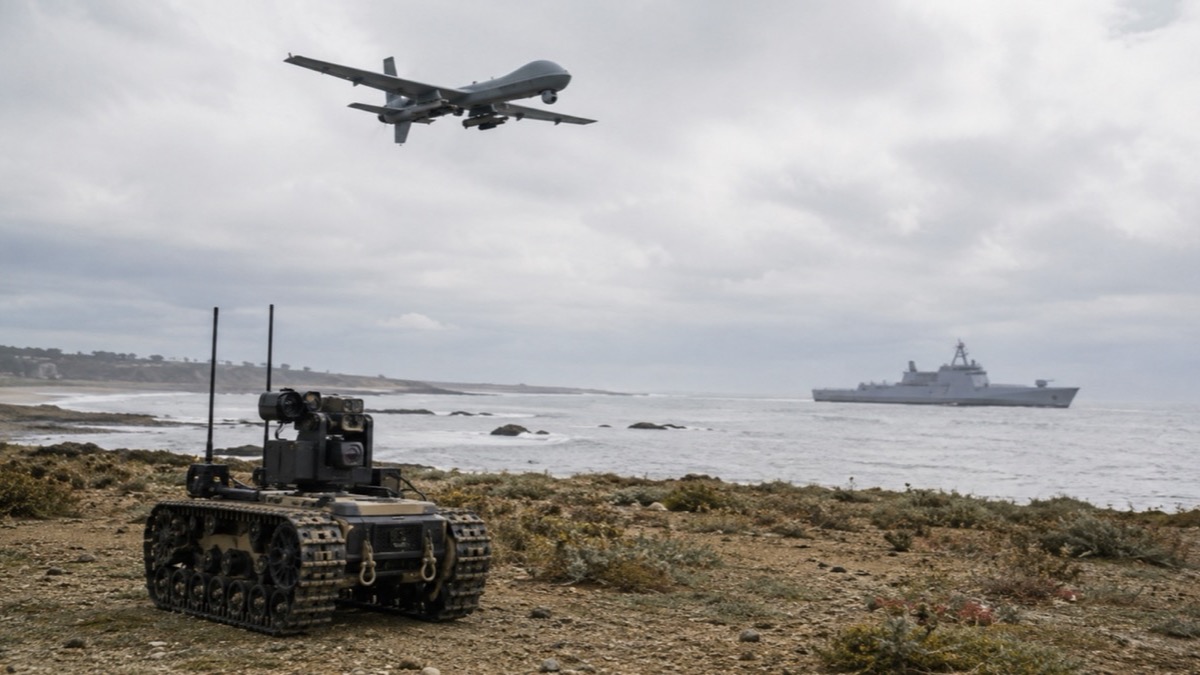
NAMC currently coordinates five: an Abrams community of practice, an Army ground autonomy community of practice, a ground combat systems common infrastructure architecture community of interest, a robotic and autonomous systems community of interest, and a vehicle protection systems community of interest. The robotic and autonomous systems group is an umbrella over three efforts a software engineer will recognize: a military variant of the Robot Operating System built on ROS 2, a common controller architecture for operating heterogeneous air and ground robots, and the interoperability profiles defining standardized baselines for classes of ground robots.
This is the part of the consortium a software firm should read first. These groups are where interface standards, architecture releases, and control documents get drafted and reviewed — before the prototype request that requires compliance with them is written. The ground autonomy community of practice runs four subcommittees, including a technology advisory board and an executive committee that handles intellectual property questions across the structure. Access is not automatic: the architecture community of interest is open to U.S. persons at member organizations in good standing, and the vehicle protection group requires a one-to-two-page white paper submitted for government review.
A firm that joins, sits in the right community, and contributes to a control document has done something no proposal sprint reproduces. It has helped define the interface the eventual work will be judged against, and it has become a known quantity to the engineers who will read the response.
How this structure compares
| Axis | NAMC, self-managed and member-led | Consortium run by a management firm | Direct agency award |
|---|---|---|---|
| Who holds the base agreement | The nonprofit itself, with an elected board and in-house staff | A membership body whose day-to-day administration sits with a separate management company | No base agreement; the agency awards to you |
| Cost to be eligible | A flat $500 per year, prorated, with no other fees stated | Varies widely by consortium and tier; the manager is paid out of the arrangement | Nothing to be eligible; registration in the federal award systems |
| Vetting to join | Board-level approval, technical capability attestation, and a required certification to receive controlled technical data | Varies; often lighter, sometimes little more than a signed member agreement | Not applicable |
| Where requirements come from | One technical center and a small set of Army program offices | Often several sponsors across services and agencies | The office running the announcement |
| Path to production | Available, because the base agreement was competed — the condition § 4022(f)(2) turns on | Depends entirely on whether that consortium's base agreement was competed | Depends on how the individual award was made |
| Who selects | The government sponsor; NAMC states it does not review evaluations or influence selection | The government sponsor, with the manager running mechanics | The government, directly |
The middle column is deliberately general. Management arrangements differ enough that the only safe answer is to read the specific base agreement — the subject of a separate piece linked below.
Reading the published numbers honestly
NAMC's self-reported figures are worth citing, and worth citing carefully, because its own pages do not fully agree. Membership is "over 500" on the questions page, "nearly 550" on the about page, and "approximately 580" on the homepage. Projects competed appear as "400+" in one place and "580+" in another. The share of funding going to nontraditional contractors is 70% on one page and 73% on another. The consortium also reports more than $1.5 billion in awards facilitated since 2008, expected project value of roughly $250 million per year under the current agreement, more than 300 members with autonomy or robotics capability, and that about one member in four has received an award.
None of those spreads changes a decision, and pages on any site drift at different rates. Use them as an order of magnitude: a membership in the mid-hundreds, a couple of hundred million dollars a year in competed work, most of it going to nontraditional and small firms, and a roughly one-in-four historical hit rate. Anyone quoting a precise figure from a consortium page — including this one — should date the quote.
Due diligence before you join
Is $500 a real decision, or should we just join?
The dues are not the cost. The cost is the certification you need before you can join at all, the four named contacts you have to staff, the capability narrative someone has to write, the meeting you must attend annually to stay in good standing, and the bid effort when a request lands. Firms that join and then ignore the distribution list get nothing for the $500, which is exactly what it is worth.
Does joining put us in front of the Army?
It puts you on the distribution list, in the member directory, and in the government-facing capability portal where verified government users can search member capabilities and quad charts. It does not put you in front of a program office by itself. The members who convert are the ones who show up in the communities of interest, the virtual industry sessions, and the market research activity long before a request appears.
Can we team with a foreign parent or partner?
Membership is restricted to U.S. companies, and a U.S. subsidiary of a foreign company may join. Foreign companies are permitted and encouraged to team on projects, but a distribution statement waiver has to be requested before any solicitation document is shared with them. Plan that lead time into a teaming decision rather than discovering it after a request drops.
What should we ask about any consortium, not just this one?
Was the base agreement competitively awarded, and where is that on the record? What is the ceiling and when does the agreement expire? Which technical organization sponsors it and which contracting office writes the agreements? What does the standard project agreement say about intellectual property before negotiation starts? And how many projects were competed in the last twelve months, as opposed to since inception?
Bottom line
NAMC is a narrow, deep consortium. One technical center, one contracting office, a defined set of Army program customers, and a portfolio in which autonomy and survivability carry half the competed work. Membership is cheap in dollars and gated on a certification, which filters harder than any fee would. The self-managed structure means the entity holding the agreement is the entity its members elect.
The reason to study it goes beyond ground vehicles. Its published agreement history is the cleanest public demonstration of what makes prototype other transactions strategically valuable: the base agreement's own competition is what makes non-competitive follow-on production available to every project underneath it. NAMC lived through the version where that was not true and had to compete a new agreement to fix it. That story is on their website, and it is the first question to ask of any consortium that invites you to join.
Frequently asked questions
A flat $500 per year per company, prorated for new members against the federal fiscal year running October 1 to September 30, renewing automatically on October 1. NAMC states no other fees are assessed and that membership events are free to attend. The binding requirement is the DD-2345 certification, which has to be uploaded with the application.
The current Detroit Arsenal Innovation agreement, awarded in September 2023, is administered by the Army's DEVCOM Ground Vehicle Systems Center in Warren, Michigan and contracted through Army Contracting Command – Detroit Arsenal. Program Executive Office Ground Combat Systems and Program Executive Office Combat Support and Combat Service Support are among the program customers.
It can. Under 10 U.S.C. § 4022(f), a follow-on production contract or transaction may be awarded without competitive procedures when competitive procedures were used to select the parties for participation in the transaction and those participants successfully completed the prototype. The statute permits that determination at the level of an individual prototype or subproject within a consortium, and it does not require that every activity in the consortium succeed.
The board says yes. Autonomy, modeling and simulation, architecture and security and modularity, and collaboration account for roughly 47% of the classified listings, and those are areas where the deliverable is code, models, interfaces, and data rather than hardware. The statutory definition of a prototype project at § 4022(e)(5) expressly reaches proofs of concept, business processes, agile development activity, and novel applications of commercial technology.
Not personally, but the team has to open one of the four conditions in § 4022(d)(1). NAMC's practical rule is that a nontraditional or nonprofit prime, or an all-small-business team, carries no cost share; a traditional prime with significant nontraditional or small-business participation also meets the statute; and a traditional prime without that participation carries a one-third cost share. Those conditions do not apply to follow-on production awards.