Four events, four different sets of rules
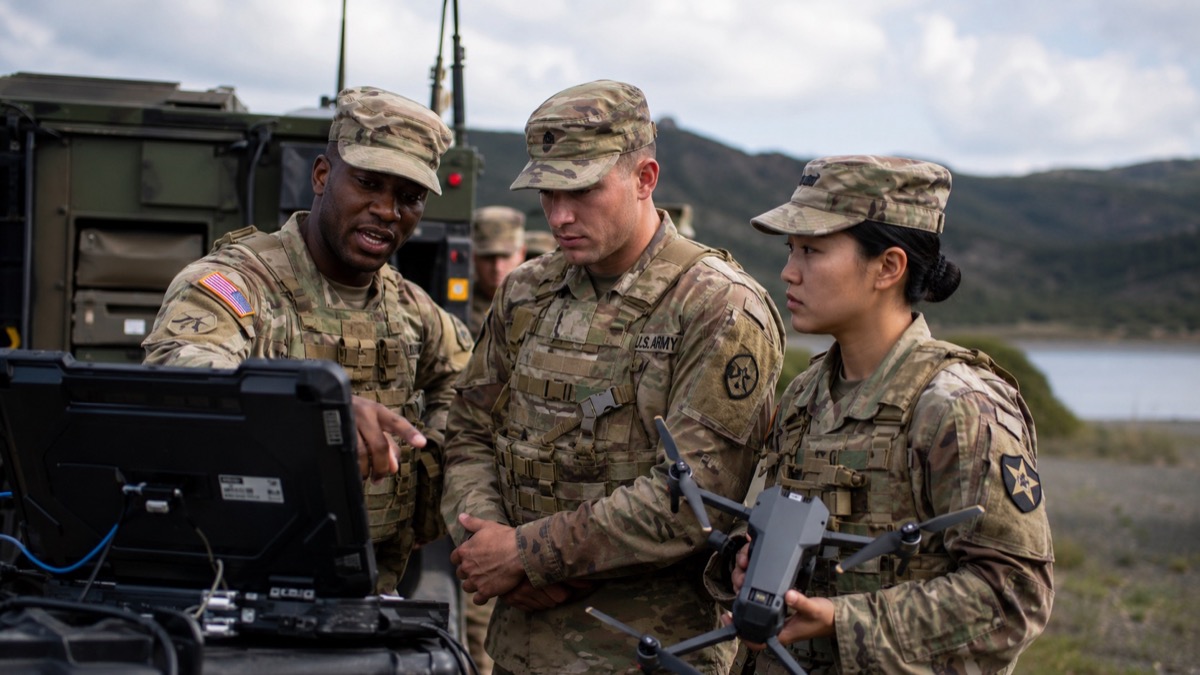
A program office that is about to buy something usually tells the market first. The telling takes four common forms, and each carries different rules about what may be said, who may say it, and what happens to the words afterward. Firms that treat all four as "the networking thing" burn the only pre-award window in which a government engineer will talk to them freely. Firms that know the difference walk out with the acquisition strategy, the likely contract vehicle, the security posture, and a short list of primes who need exactly the workshare they can perform.
FAR 15.201(c) lists the techniques an agency may use before a solicitation exists: industry or small business conferences, public hearings, market research, one-on-one meetings with potential offerors, presolicitation notices, draft requests for proposals, requests for information, presolicitation or preproposal conferences, and site visits. The list is permissive. Nothing forces a program office to hold any of them. That is exactly why the ones that do happen carry information the eventual solicitation will not.
Industry day. Held before a solicitation exists, sometimes a year out. The program office briefs the requirement as it understands it, the acquisition timeline, and the constraints it has already accepted. Government slides, government voices, industry in the seats. Often paired with one-on-one sessions the same day or the next morning.
Pre-solicitation conference. Closer in. A draft statement of work or a draft RFP usually exists and has been posted. The purpose is to find out whether the draft is buildable and whether the evaluation criteria can be met by a real company. This is the event where the government most wants to be told it has written something impossible, and the one where saying so plainly earns respect.
Pre-proposal conference. After the solicitation is out. A different animal. Everything said is on the record, every question and answer is published to every offeror, and the communication blackout described later in this article is already running.
One-on-one session. Fifteen to thirty minutes with a subset of the government team, usually the program manager, a technical lead, the contract specialist, and the small business specialist. Registration is typically first come, capped at one or two people per company, and the slots are frequently gone within a day of the notice posting.
Why the government bothers
Three reasons, and understanding them tells you how to behave in the room.
The first is legal. FAR Part 10 requires market research before soliciting offers above the simplified acquisition threshold, which sits at $250,000 under FAR 2.101. The contracting officer has to document what the market can actually do. Attendance sheets, sources-sought responses, and one-on-one notes are that documentation.
The second is the set-aside decision, and this is where small firms leave the most value on the table. FAR 19.502-2(b) says the contracting officer shall set an acquisition aside for small business when there is a reasonable expectation that offers will be obtained from at least two responsible small business concerns and that award can be made at fair market prices. Below the simplified acquisition threshold, FAR 19.502-2(a) reserves the work for small business on the same rule-of-two logic. If two capable small firms do not show up and do not respond to the sources-sought notice, the file supports full and open competition. Attendance is not a courtesy. It is a vote in the set-aside decision, and the record shows who was in the room.
The third reason is that the primes are shopping. Any other-than-small prime holding a contract expected to exceed $750,000 with subcontracting possibilities owes a subcontracting plan under FAR 19.702(a), with goals the agency will hold it to at closeout. Their capture teams attend industry days to find named small business partners for exactly that reason. Half the value of the room is on the industry side of it.
What a program office weighs when it meets a firm for the first time
Editorial weighting from public sources and practitioner reading, illustrative rather than a measured statistic.
Finding the event before the slots are gone
Notices of industry days, conferences, and draft solicitations go up on SAM.gov as special notices under FAR 5.205, and presolicitation notices go up under FAR 5.203, which also requires the contracting officer to wait at least 15 days after publishing a presolicitation notice before issuing the solicitation. Set saved searches by NAICS and by agency, and check them daily rather than weekly. The registration window on a popular event is often shorter than the notice period.
The second channel is the agency's Office of Small and Disadvantaged Business Utilization, which every agency maintains under 15 U.S.C. 644(k). OSDBU offices publish annual forecasts of contracting opportunities, run small business industry days and matchmaking sessions, and will answer an email from a firm that has read the forecast first. SBA's procurement center representatives, assigned to major buying activities, review acquisitions for set-aside potential and are worth knowing by name.
What to bring, and what to leave in the car
Bring a one-page capability statement carrying the facts a contract specialist needs to look you up: UEI, CAGE code, the NAICS codes you compete under with the size standard from the SBA table at 13 CFR 121.201, socioeconomic status, three to five core competencies written in the buyer's vocabulary rather than yours, differentiators a stranger could verify, and a named point of contact with a phone number a human answers.
Bring a second page written for this requirement specifically. Not a proposal. A page that says: here is the part of your problem we would own, here is how we have solved that class of problem, here is what we would need from you to do it. Program offices remember the firm that arrived having read the draft statement of work. They forget the firm that arrived with a corporate deck.
Bring an engineer. The single most common failure in a one-on-one is sending only business development staff, then answering a technical question with a promise to follow up. Our team sends the person who would actually do the work, because the government side of the table is technical and knows within two questions whether they are talking to a builder. Leave behind the thirty-slide overview, the pricing sheet, and anything you would be unhappy to see quoted in a Q&A document.
How one-on-ones actually get scheduled
The one-on-one sequence, start to finish
Two details about step 4 that change how you prepare. First, the government usually will not brief you in a one-on-one. The slot is for your questions and your capability, and the note-taker is capturing what you said for the market research file. Second, many agencies state in the notice that they will not accept proprietary information. If you must show something proprietary, mark it with a restrictive legend and say out loud that it is marked, or assume it can be released.
What gets answered, and what never will
| Question | What to expect | Why |
|---|---|---|
| Anticipated acquisition strategy and contract type | Usually answered, with caveats | Testing the strategy against industry reaction is the point of the event |
| NAICS code and size standard | Answered, or "still under consideration" | It decides who may compete; the table is at 13 CFR 121.201 |
| Security, clearance level, CUI and CMMC posture | Usually answered | Offerors who cannot meet it should self-select out early |
| Estimated value or the government cost estimate | Rarely; occasionally a broad range | Releasing it distorts pricing and weakens the competition |
| Will this be set aside for small business? | "Under consideration" | The decision rests on the market research record being built that day |
| Is our approach the right one? Are we a good fit? | Never | An answer would preview source selection and create an unfair advantage |
| The incumbent's pricing or proposal detail | Never | Protected as contractor bid and proposal information under FAR 3.104 and 41 U.S.C. 2101 to 2107 |
One more rule shapes everything above. FAR 15.201 provides that when specific information necessary for the preparation of proposals is disclosed to one or more potential offerors, it must be made available to the public as soon as practicable and no later than the next general release of information. A contracting officer who answers your clever question in a private session has to publish the answer. Knowing that, expect the private answer to be narrow, and expect your question to appear in the public Q&A. Ask about the requirement. Do not ask anything that reveals your approach.
Questions worth the slot
What went wrong last time. The best question in federal business development. Program offices answer it, often at length, and the answer is a preview of the evaluation criteria before those criteria exist on paper. Nothing else you can ask returns as much.
Which vehicle is this going through. A stand-alone contract, a task order under an existing IDIQ, a GSA schedule buy, an agency BPA, or an other transaction under a consortium are five different bids with five different qualification chains. If the answer is a vehicle you do not hold, the real opportunity in the room is the prime who does.
What are the data rights expectations. For DoD work, the operative clauses are DFARS 252.227-7013 for noncommercial technical data and 252.227-7014 for noncommercial computer software. A program that intends to take government purpose rights in your model weights and pipeline code is a different business proposition than one content with restricted rights in a delivered component.
What data would we get, and when. Government-furnished information availability is the difference between a schedule you can hold and one you cannot. Ask what exists, what format it is in, who owns the authority to release it, and how long release has taken on comparable efforts.
What does the government want the first six months to produce. This flushes out whether the office wants a study, a prototype, or a system in production, which in turn tells you whether your cost model fits.
What they are evaluating while you talk
Three assessments run in parallel behind the government side of the table. Can this firm perform. Is this firm real. Will this firm create a problem.
Performance is judged mostly by vocabulary. When you describe the mission problem the way the operators experience it, including the parts that are ugly, the technical lead concludes you have been near this work. When you describe it the way a marketing page would, the same lead concludes the opposite. This is why sending an engineer matters more than sending a polished presenter.
Being real is a checklist: active SAM.gov registration, a CAGE code, NAICS codes that match the work, an accounting system that can support a cost-reimbursement contract if one is coming, and named people rather than a promise to staff up. Our team brings named engineers and licensed professional engineers to these conversations for that reason. A seat filled by a specific person with a specific résumé is worth more in the room than any adjective.
Creating a problem covers organizational conflicts of interest, cyber posture under DFARS 252.204-7012 for covered defense information, and key personnel turnover. Primes in the room are running the same three assessments on you, with one addition: can this firm hold a defined workshare without needing to be managed daily.
Shaping the requirement can disqualify you from bidding it
Under FAR 9.505-2, a firm that prepares specifications or work statements for a solicitation may be barred from competing on the resulting contract, because it would be competing under biased ground rules. Program offices sometimes ask a helpful firm to draft language. Before you write anything that could become the requirement, get the contracting officer to state in writing which side of the line the help sits on. Shaping a buy and winning it are frequently mutually exclusive.
The blackout: what changes when the solicitation posts
On the day the solicitation is released, the open exchange ends. Under FAR 15.206(a), when the government changes its requirements or terms, before or after receipt of proposals, the contracting officer amends the solicitation in writing and issues that amendment to everyone. The pairing of that rule with the public-release rule in FAR 15.201 means there is no longer any such thing as a useful private conversation about the requirement.
In practice, the program manager and the technical lead who talked freely in January stop answering email in March. That is not rudeness and it is not a signal about your standing. They are protecting the procurement, and they should. The contracting officer becomes the only authorized channel, which reflects FAR 1.602-1: only a contracting officer may bind the government, and only within the limits of their warrant.
The blackout is not silence. Questions still get asked, in writing, to the address in Section L, by the deadline in the solicitation. The answers come back as an amendment published to every offeror. Ask early. Questions submitted a day before the cutoff often get a one-line answer or none at all, because the contracting officer has a queue and a calendar.
The DoD SBIR and STTR programs mechanize this cleanly enough to be worth studying even if you never bid one. During the pre-release period, roughly three weeks before an announcement opens, offerors may contact the named technical point of contact directly and ask whatever they like. The moment the announcement opens, direct contact ends, and every question routes through the interactive question system on the DoD SBIR/STTR portal, where the question and answer are public and the asker stays anonymous. Same principle as FAR Part 15, with the timing published in advance.
One deadline hides inside the blackout. Under GAO's bid protest rules at 4 CFR 21.2(a)(1), a protest based on a defect apparent on the face of a solicitation must be filed before the deadline for receipt of proposals. If the industry day surfaced a term your firm cannot live with, the time to raise it is during the question period, in writing. After proposals are due, that objection is gone.
Following up without becoming a nuisance
Send one email within two business days, to the contracting officer and the small business specialist, under two hundred words. Thank them for the session, attach the one page written for their requirement, and make one specific offer that costs them nothing: a reference architecture, a data-format review, a short read-out on how a comparable problem has been solved elsewhere. Then stop.
Do not call repeatedly. Do not send an unsolicited proposal. Do not send a white paper the notice did not invite, because unsolicited technical material creates a handling burden for the recipient and occasionally a conflict question. And do not buy anyone coffee: under 5 CFR 2635.204(a), a federal employee generally may accept a gift of $20 or less per occasion, capped at $50 per year from any one source. Putting a contracting officer in the position of calculating that is a poor first impression.
Ask for the attendee list. Many agencies release it, and for a small firm it is often worth more than the briefing, because it is a pre-qualified list of primes and peers working the same requirement. The follow-up that actually moves a set-aside decision is not a thank-you note at all: it is a sources-sought response in the exact format requested, submitted on time, with the size and capability data the contracting officer needs to write the rule-of-two determination.
After that, re-contact on events rather than on a calendar. A new certification, a delivered system in the same problem class, a draft solicitation posting, a teammate you have added who fills the gap they described. Each of those is a reason to write. "Checking in" is not.
Bottom line
Engagement events are the cheapest information in federal contracting and the most casually wasted. The government is doing required market research, building the record that decides whether the work gets set aside, and forming first impressions that follow your firm into the evaluation. Every one of those is worth preparing for at the same level you would prepare a proposal section.
Precision Federal builds AI, data, and software systems for federal, state, and commercial customers, and we bring the engineers who would do the work into these rooms. We also sit on the other side of the table with primes who need a named AI and data workshare, a bench that clears the technical questions, and a subcontractor who holds a boundary without supervision. If a requirement in your portfolio is heading toward an industry day, that is the right moment to talk.
Frequently asked questions
Almost never required, and a solicitation that made attendance a condition of award would be unusual and challengeable. It matters for a different reason: attendance and sources-sought responses form the market research record that decides the acquisition strategy, including whether the work is set aside for small business under FAR 19.502-2.
You can ask. You will not get an answer. Endorsing one company's approach before competition would create an unfair advantage and would edge into source selection information protected under FAR 3.104. Ask about the requirement, the constraints, and the history instead. Those questions get real answers.
It starts when the solicitation is released. From that point, changes and clarifications flow through written amendments under FAR 15.206, and the contracting officer is the only authorized channel. Program and technical staff will redirect you, correctly. Submit questions in writing well before the stated cutoff.
Usually first come through the registration link in the SAM.gov notice, sometimes by lottery when demand is high, and typically capped at one or two attendees per company. Popular sessions fill within a day of posting, which is the practical argument for daily saved-search monitoring rather than weekly.
It can end them. FAR 9.505-2 allows exclusion of a firm that prepared specifications or work statements for the resulting solicitation, on biased-ground-rules grounds. Answering general market research questions is fine. Drafting requirement language is a decision to make deliberately, with the contracting officer's position in writing.