A term with a precise origin and a blurry present
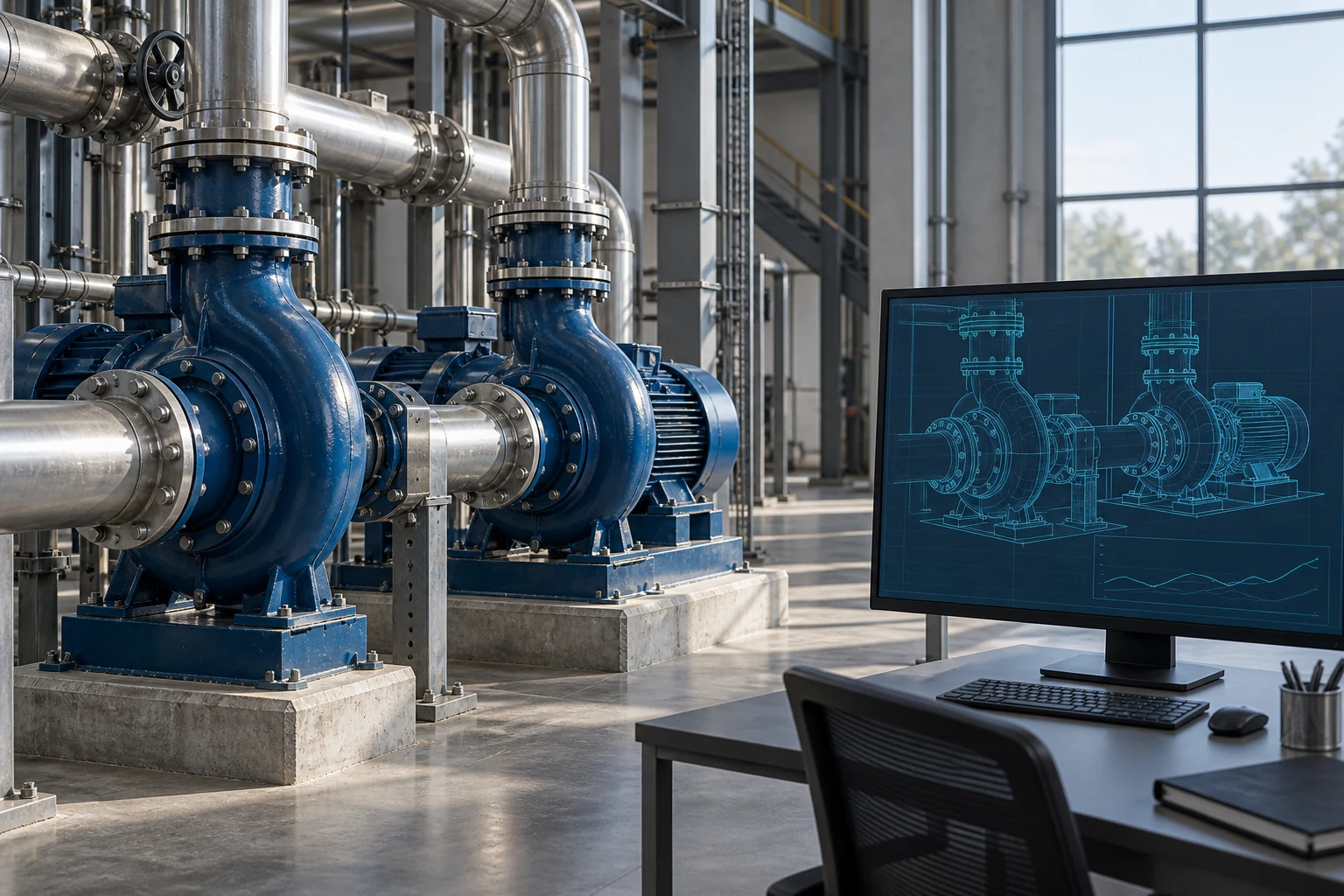
The digital twin idea has a cleaner lineage than most buzzwords. Michael Grieves introduced the concept in 2002 at the University of Michigan as part of product lifecycle management: a virtual construct of a physical system, the physical system itself, and a live data flow binding the two. NASA's John Vickers gave it the name "digital twin," and in 2012 NASA's Glaessgen and Stargel published the definition most engineers still quote — an integrated, probabilistic simulation of a vehicle or system that uses physical models, sensor updates, and historical data to mirror the life of its physical counterpart. Every word of that definition is load-bearing, and most things marketed as twins today satisfy almost none of them.
The blur matters because federal buyers are now writing the term into modernization plans for aircraft, ships, factories, supply networks, and entire enterprises. When the same word covers a CAD viewer, a dashboard, and a live predictive model of a fleet, program expectations and vendor deliveries diverge — and the program discovers the gap at acceptance time. The fix is not better marketing vocabulary. It is being precise about which rung of the ladder a system actually stands on.
The policy floor: digital engineering is now an instruction, not a slogan
The Department of Defense made its position formal with DoD Instruction 5000.97, "Digital Engineering," issued December 21, 2023. It superseded the modeling-and-simulation management guidance that had stood since 2007, and its core demand is simple to state: new acquisition programs incorporate digital engineering methodologies, and detailed digital models become a primary means of communicating system information — not documents describing the models. Existing programs are expected to adopt the practice where practical.
For contractors, the practical consequence is that model-based artifacts are becoming deliverables in their own right. The model is the contract-relevant description of the system: its requirements traceability, its interfaces, its verification evidence. A twin — a model bound to the live state of a fielded system — is the operational extension of that same thread. Firms that treat the models as documentation overhead are on the wrong side of where the instruction points; firms that treat the model pipeline as the product are on the right side of it.
A maturity ladder, not a binary
The most useful mental model in the field is a ladder. Each rung adds engineering burden and decision value, and honest programs name their rung.
| Rung | What it does | What it demands |
|---|---|---|
| Static model | A structured digital description — geometry, configuration, architecture | Modeling discipline; no live data |
| Mirror | Reflects current state of the physical system on a defined cadence | Data integration from systems of record; synchronization; provenance |
| Predictive twin | Projects state forward — wear, backlog, failure, capacity | Validated predictive models; uncertainty honestly stated |
| Prescriptive twin | Evaluates candidate actions and recommends one | Optimization or simulation over the mirror; decision governance |
Most federal value today is created at the second and third rungs. A trustworthy mirror of a supply network or a maintenance enterprise — just the current state, assembled and reconciled — is already a decision tool most operators have never had. The prescriptive rung is real but earns its keep only after the rungs below it are solid.
The data plumbing is the product
Here is what the vendor decks reliably understate: the majority of the engineering in a working twin is data integration. The state of a federal enterprise lives in systems of record — maintenance databases, ERP modules, logistics ledgers, sensor historians — each with its own schema, its own refresh cadence, its own data quality debts, and its own owner. Building the twin means negotiating read access, building extraction against interfaces that were never designed for it, reconciling identifiers that disagree, and doing all of it on a posture the system owners can accept.
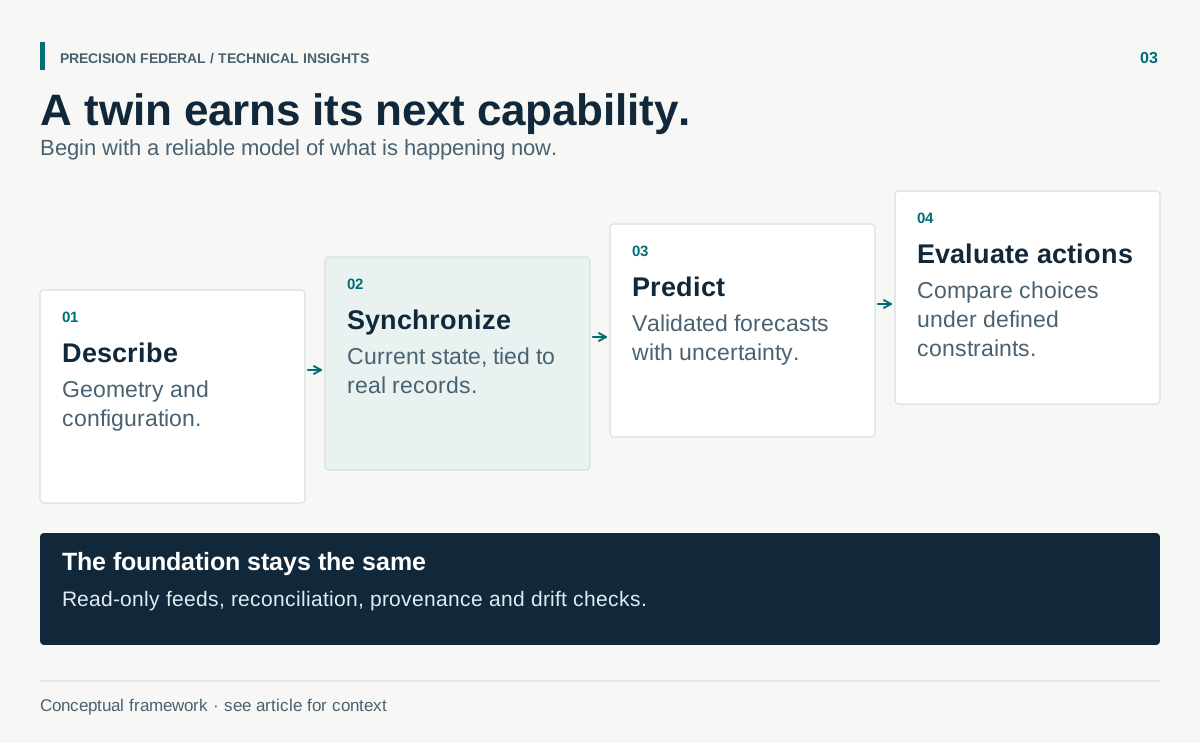
Read-only is the posture that works. A twin that writes back into systems of record multiplies its accreditation burden and its blast radius; a twin that only reads can be added beside legacy systems without destabilizing them. The same logic governs cadence: not everything needs streaming. A supply picture refreshed hourly is transformative if the alternative is a monthly spreadsheet; the engineering question is which decisions need which latency, answered per data feed rather than by reflex.
Twins of things, twins of processes
The canonical twin mirrors a physical asset — an engine, an airframe, a production line. The fastest-growing federal variant mirrors a process or an organization: the flow of parts through a depot, the readiness state of a fleet, the capacity of a manufacturing base, the movement of cargo through a network. The engineering pattern is identical — systems of record, synchronization, models over the top — but the state variables are flows, queues, and inventories rather than temperatures and vibrations.
Process twins are where modernization programs and twin programs converge. An agency that builds the data thread to mirror its own operations has, as a byproduct, done most of the integration work that any future analytics, forecasting, or optimization effort will need. That is the quiet strategic argument for starting with the mirror rung: it is infrastructure disguised as a dashboard.
A twin is not a simulation, and the difference is calibration
Simulation is a hypothetical machine: configure a scenario, run it, study the outcome. A twin is bound to the live system — its claim is that the virtual state tracks the physical state closely enough to reason from. A simulation answers "what would happen if." A twin answers "what is happening now — and what happens next if nothing changes." The two compose beautifully: a validated twin becomes the initial condition generator for simulation, which is exactly how the more mature aerospace and manufacturing programs use them. But a simulation with no live binding is not a twin, however good its physics, and calling it one sets a program up for the acceptance-time argument.
Validation and drift: how you know the twin is telling the truth
A twin makes a continuous factual claim — this is the state of your system — and that claim needs the same treatment as any measurement instrument. The disciplines are known. Reconciliation checks compare twin state against ground truth on a schedule: physical inventories, spot audits, sensor cross-checks. Drift monitoring watches the divergence between predicted and observed values and alarms when it grows. Provenance keeps every twin-displayed number traceable to the source record and timestamp that produced it, so an operator who doubts the picture can inspect it rather than abandon it.
Trust erodes fast and asymmetrically. One visibly wrong number on a watch floor costs more confidence than fifty correct ones earn. Programs that budget validation engineering from the start keep their operators; programs that treat it as a punch-list item train their operators to keep the old spreadsheet open in a second window — at which point the twin has failed regardless of its architecture.
Where the engineering effort actually goes — working twin programs
Editorial weighting from public sources and practitioner reading — illustrative, not a measured statistic.
Security posture: the twin inherits everything it touches
A twin aggregates. That is its value and its security problem: state that was scattered across a dozen systems, each individually unremarkable, becomes a single consolidated picture — and consolidated operational pictures are sensitive almost by definition. Controlled unclassified information handling applies to the aggregate, not just the parts. The workable pattern is the same one that makes the integration tractable: read-only interfaces, least-privilege service accounts per source, and a deliberate decision about where the twin lives relative to existing authorization boundaries. The boundary documentation deserves the same engineering seriousness as the synchronization code, because an unaccreditable twin is a demo.
Where small firms fit
Twin programs decompose along the same seams the engineering does, and several of those seams suit small teams: the extraction and reconciliation layer against a specific family of systems of record, the drift-monitoring and validation harness, the predictive model for one asset class with honest uncertainty, the operator-facing picture for one decision. Federal innovation programs across defense logistics, sustainment, and infrastructure agencies are funding exactly these pieces — usually asking for a working mirror of a bounded slice before any enterprise ambition. That sequencing rewards firms that can show a live, reconciled, provenance-carrying picture of something real, however small, over firms with an enterprise diagram and no feed.
Bottom line
Strip the vocabulary and the digital twin is a disciplined pattern: systems of record, a synchronized virtual state, models over the top, and validation that keeps the whole thing honest — with federal policy now formally expecting the model-based approach it extends. The programs that succeed treat the data thread as the product, climb the maturity ladder one rung at a time, and spend real engineering on the unglamorous parts. The ones that stall bought the top rung first.
Frequently asked questions
A simulation runs hypothetical scenarios from configured initial conditions. A twin is bound to the live state of a real system through continuous or scheduled data flow. A validated twin can feed a simulation its starting state; a simulation without live binding is not a twin.
No. The mirror rung — a reconciled, synchronized picture of current state — is data engineering, and it carries most of the near-term value. Machine learning enters at the predictive and prescriptive rungs, and earns its place only after the mirror is trustworthy.
Issued December 21, 2023, it made digital engineering an expectation rather than an initiative: new programs incorporate model-based methods, and digital models become a primary means of communicating system information across the lifecycle, superseding the 2007-era modeling-and-simulation guidance.
With a bounded mirror: one asset class, one process slice, read-only feeds from the real systems of record, reconciliation checks from day one. The integration built for that slice is reusable infrastructure for everything that follows.