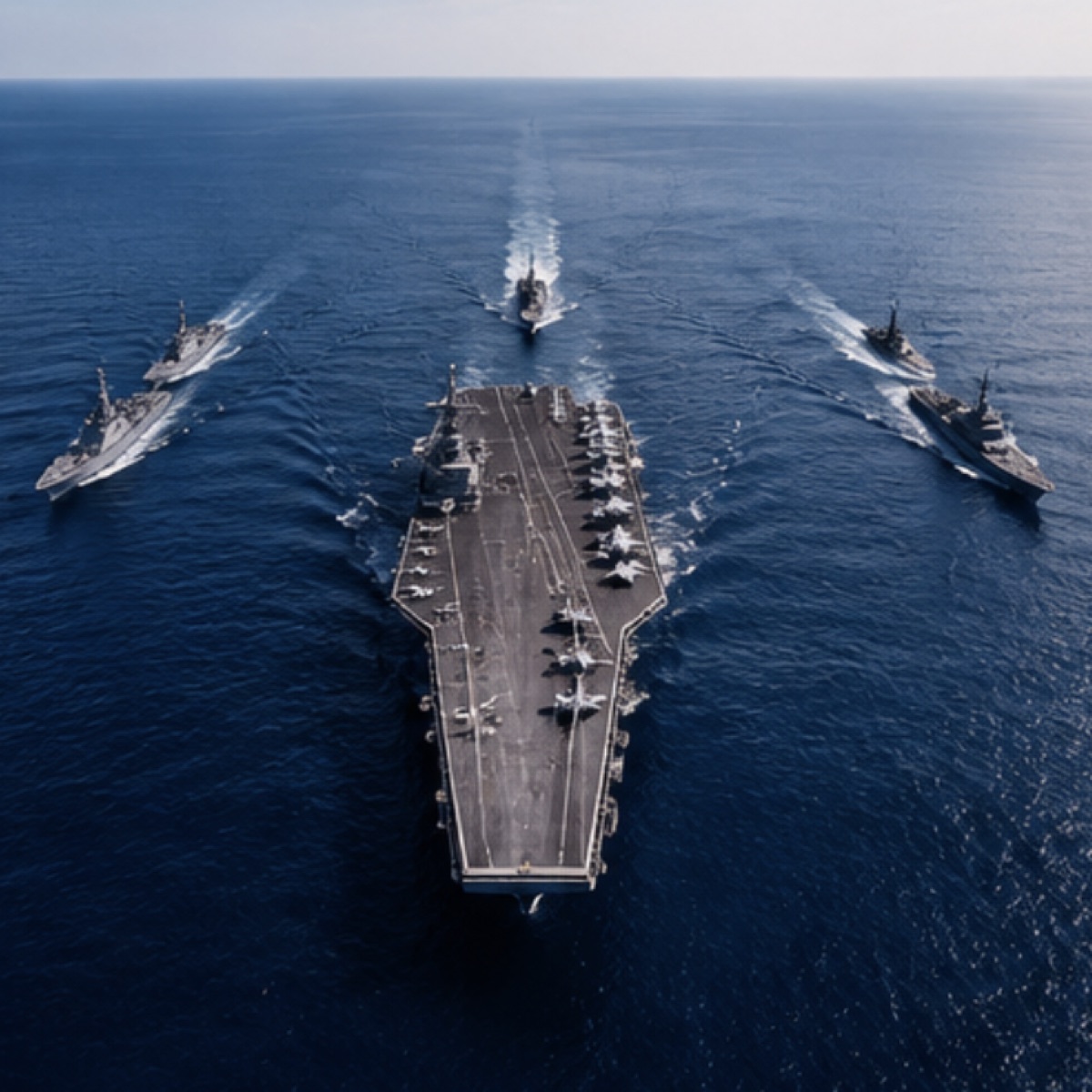
The Navy is a federation of buyers, not one customer
Every small firm that wins its first Navy SBIR learns the same lesson: "Navy" does not buy. NAVSEA buys. NAVAIR buys. NAVWAR buys. ONR funds. MARCOR has its own priorities. The Navy SBIR portal is shared, but the money, the program managers, and the transition pathways are separated by organization, geography, and program culture. You cannot succeed at Navy SBIR by optimizing for "the Navy." You pick a component, learn its program offices, and map your capability to specific programs of record inside that component.
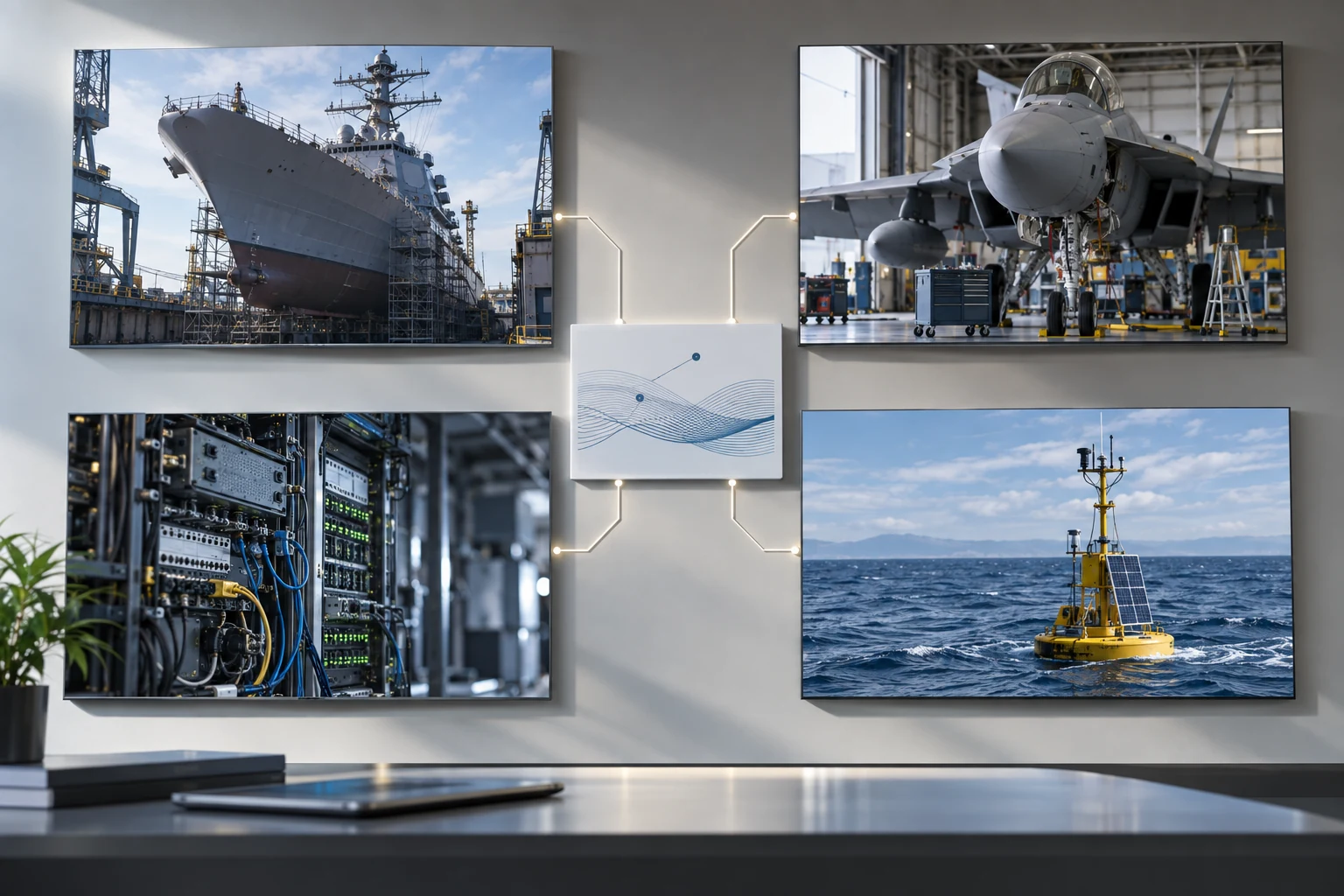
Navy SBIR splits across NAVSEA (ships), NAVAIR (aircraft), ONR (research), and NavalX (commercial bridge). Each has a different acquisition culture. ONR is most research-tolerant; NAVSEA expects transition-ready prototypes.
This post lays out the five Navy SBIR components — what they buy, which program offices inside them generate topics, how AI and ML show up in their topic language, and where Phase III transitions actually happen. It is written for a small AI firm with no prior Navy past performance that needs to pick a first beachhead.
NAVAIR: aviation, mission systems, airframe maintenance
Naval Air Systems Command (NAVAIR) at Patuxent River, Maryland, buys for naval aviation: F/A-18, F-35, E-2D, P-8, MH-60, MV-22, the carrier air wing. NAVAIR SBIR topics cluster around airframe predictive maintenance, mission system software, sensor processing for ASW/AEW, carrier systems integration, and increasingly autonomy (MQ-25 and follow-ons).
NAVAIR Program Management Air (PMA) offices are where Phase III lives: PMA-201 (naval weapons), PMA-234 (airborne EW), PMA-265 (F/A-18 and EA-18G), PMA-275 (V-22), PMA-290 (P-8), and many more. A Phase II tied to a named PMA usually has a visible follow-on funding path. NAVAIR reviewers reward proposals that name the PMA and the specific program. "Generic ML for jet engines" loses; "vibration anomaly detection for F/A-18 F414 engines feeding into PMA-265 readiness reporting" wins.
AI buying at NAVAIR concentrates on predictive maintenance (engine, airframe, rotor head), mission computer software, sensor fusion for AEW and ASW, and training system AI. The Lakehurst campus handles ground support equipment and catapult/arresting gear — there are topics here most outsiders miss.
NAVSEA: ships, submarines, undersea systems, shipyards
Naval Sea Systems Command (NAVSEA) is the largest systems command by program dollar volume. It buys for surface combatants, submarines, carriers, unmanned maritime systems, combat systems, and the four public shipyards (Norfolk, Portsmouth, Puget Sound, Pearl Harbor-Hickam). NAVSEA Warfare Centers at Dahlgren, Crane, Port Hueneme, Newport, and Carderock generate most of the technical topics.
NAVSEA SBIR priorities in 2026 include shipyard modernization (a huge and underserved topic cluster around digital twins and production scheduling AI), undersea autonomy, combat system AI, additive manufacturing, and corrosion prognostics. The shipyard topics are particularly open — there is genuine unmet need, the program office customer is legible (SEA 21 and the shipyard commanders), and the incumbent pool is smaller than in combat systems.
Phase III at NAVSEA flows through PEOs: PEO Ships, PEO Submarines, PEO Integrated Warfare Systems, PEO Unmanned and Small Combatants, and PEO Carriers. A proposal that identifies which PEO will fund the Phase III has already differentiated itself from the median submission.
NAVWAR: C5I, cyber, networks, spectrum
Naval Information Warfare Systems Command (NAVWAR) in San Diego buys for naval information warfare. This is where AI concentrates most heavily across Navy SBIR. Topics cover tactical networks, afloat and ashore cyber, spectrum operations, cryptography, naval command and control, and cross-domain solutions.
NAVWAR topics tend to be software-heavy and favor firms with recent commercial software experience. The PEO C4I and PEO Enterprise Information Systems are the acquisition customers. NIWC Pacific (San Diego) and NIWC Atlantic (Charleston) are the engineering arms that write topics and execute Phase I and II contracts.
If your firm does ML on text, network traffic, signals, or operations data, NAVWAR is where your topics live. The warning is that NAVWAR is also the most competitive Navy component for AI — the pool is heavier with incumbents who have worked the Navy information warfare problem for a decade or more. Differentiate on technique or on workflow integration.
ONR: research, discovery, longer horizon
Office of Naval Research (ONR) funds research — not acquisition. ONR SBIR topics tend to be lower TRL, more speculative, and longer horizon than systems command topics. ONR-33 (Sea Warfare and Weapons), ONR-31 (C3 and Integrated Warfare), ONR-32 (Ocean Battlespace Sensing), ONR-34 (Warfighter Performance), ONR-35 (Aviation, Force Projection, and Integrated Defense), and ONR-36 (Naval Air Warfare and Weapons) each generate different flavors of topic.
ONR does not have a single Phase III customer the way PEOs do. Phase III transition from ONR typically requires the ONR program officer to help you find an acquisition customer — NAVAIR, NAVSEA, NAVWAR, or a program of record. That process is real and it works, but it is slower and less automatic than a systems command transition.
For a firm with genuine research depth, ONR is attractive. The review style rewards scientific rigor. For a firm that wants a direct path to revenue, the systems commands are faster.
MARCOR: Marine Corps inside Navy SBIR
The Marine Corps SBIR program is administered through the Navy SBIR office but its topics originate inside the Marine Corps. MARCORSYSCOM (Marine Corps Systems Command) writes most acquisition-driven topics. MCWL (Marine Corps Warfighting Laboratory) writes experimentation topics. Marine Corps Logistics Command writes logistics topics. PEO Land Systems and PEO Ground Combat Systems are Marine PEOs.
MARCOR topic volume is smaller than the other components, typically 15 to 25 topics per cycle. Priorities in 2026 center on Force Design 2030 follow-through: distributed maritime operations, small-unit fires, expeditionary logistics, counter-UAS, and individual Marine lethality. The Long Range Fires capability and the new Littoral Combat Regiment construct generate topics.
For a small AI firm, MARCOR is a reasonable target when the topic area aligns with tactical AI, edge compute, or expeditionary decision support. The review pool is tighter than NAVWAR, and the program offices are accessible.
Side-by-side: where to target
Editorial weighting from public sources and practitioner reading — illustrative, not a measured statistic.
| Component | Typical topic volume per cycle | AI strength | Phase III transition strength | Accessibility for new firms |
|---|---|---|---|---|
| NAVAIR | 20-30 | Medium-High (PdM, mission systems) | High (PMA-funded) | Medium |
| NAVSEA | 20-30 | Medium (shipyard + undersea) | High (PEO-funded) | Medium-High (shipyard topics) |
| NAVWAR | 15-25 | High (C5I, cyber, networks) | Medium-High | Low-Medium (dense incumbents) |
| ONR | 10-20 | High (research, ML theory) | Medium (depends on PO) | Medium (rewards credentials) |
| MARCOR | 15-25 | Medium (edge, C2, logistics) | Medium | Medium-High |
The Navy calendar in 2026
Navy participates in the DoD SBIR joint release schedule. Key 2026 dates for Navy:
- 26.1 / 26.A Release 1 — opens May 7, closes June 3, 2026. Navy typically posts 60-80 topics in this window.
- 26.2 / 26.B Release 2 — opens September, closes October 2026.
- 26.3 / 26.C Release 3 — opens December 2026, closes January 2027.
Navy also runs its own Forum for SBIR Transition (FST) and Accelerated Transition Program (ATP) events that can surface direct-to-Phase-II and Phase II.5 opportunities between releases.
Practical steps for a first Navy SBIR cycle
- Pick one component, not all five. If your stack is software-heavy with cyber or network telemetry, NAVWAR. If it is time-series ML on hardware, NAVAIR or NAVSEA. If it is science, ONR.
- Name the program office in the first paragraph. PMA for NAVAIR, PEO for NAVSEA, PEO C4I for NAVWAR. Generic "the Navy" proposals lose.
- Use the pre-release TPOC window. Navy TPOCs are generally responsive. A 15-minute conversation in pre-release saves weeks of wrong-direction writing.
- Plan Phase III from the proposal. Navy reviewers weight transition credibility heavily. Say which program of record will fund, which PM, what the funding line looks like.
- Get DD Form 2345 (if you need it) early. Some Navy topics require US-person attestation and export-controlled data handling. Phase II certainly will.
Common first-year Navy mistakes
Writing to "the Navy."
The reviewer is from one PMA or NIWC department. Write to that person.
Ignoring SYSCOM geography
Dahlgren, Crane, Port Hueneme, Newport, Lakehurst, San Diego, Charleston — each site has its own culture. A topic from NIWC Pacific and a topic from NIWC Atlantic will read differently.
Underestimating incumbency at NAVWAR
Cyber and C5I have dense incumbents. A first-time firm competes better on narrower, specialized topics than broad ones.
Confusing ONR and the systems commands
ONR wants novel research. NAVAIR wants deployable capability. Submitting a basic research proposal to NAVAIR or a deployable capability proposal to ONR-32 is a miscalibration reviewers see immediately.
Bottom line
Navy SBIR in 2026 is one of the highest-quality federal SBIR opportunities if you pick the right component and the right program office. Phase III transition rates at NAVAIR and NAVSEA are among the strongest in DoD. NAVWAR has the largest AI concentration but the densest incumbent pool. ONR rewards scientific depth. MARCOR is small but accessible. The firms that build a durable Navy SBIR business pick one component, learn its PMs, win a Phase I, deliver cleanly, and then spread outward from that relationship.
Frequently asked questions
NAVAIR and NAVSEA, driven by tight coupling to programs of record. A Phase II tied to a named PMA or PEO often has a credible Phase III funding line before Phase II delivery closes.
NAVWAR and ONR lead on AI. NAVAIR buys for predictive maintenance and mission systems. NAVSEA for shipyard and undersea. MARCOR for edge/tactical.
Navy posts 60-90 topics per cycle — roughly two thirds of Army volume. Topics tend to be narrower, which trims the proposal pool per topic.
ONR funds earlier-TRL research. Systems commands buy deployable technology with named programs behind them. Pick based on where your product actually is.
Yes. MARCOR SBIR is administered through Navy, but topics originate from MARCORSYSCOM, MCWL, and Marine Corps Logistics Command.
Typically 150 thousand for six months. Phase II up to 1.7 million over 24 months. Some component pilots run higher for specific strategic priorities.