Editorial weighting from public sources and practitioner reading — illustrative, not a measured statistic.
Higher score = stronger published evidence of the methodological discipline.
Why measure cognitive workload
Operator cognitive workload — how much mental effort a task is demanding at a given moment — is a real driver of error, fatigue, and decision quality in high-stakes domains. Several public Army Research Laboratory, Office of Naval Research, and Air Force Research Laboratory documents describe the operational interest in measuring workload non-intrusively and using the measurement to inform training, task allocation, and crew management.
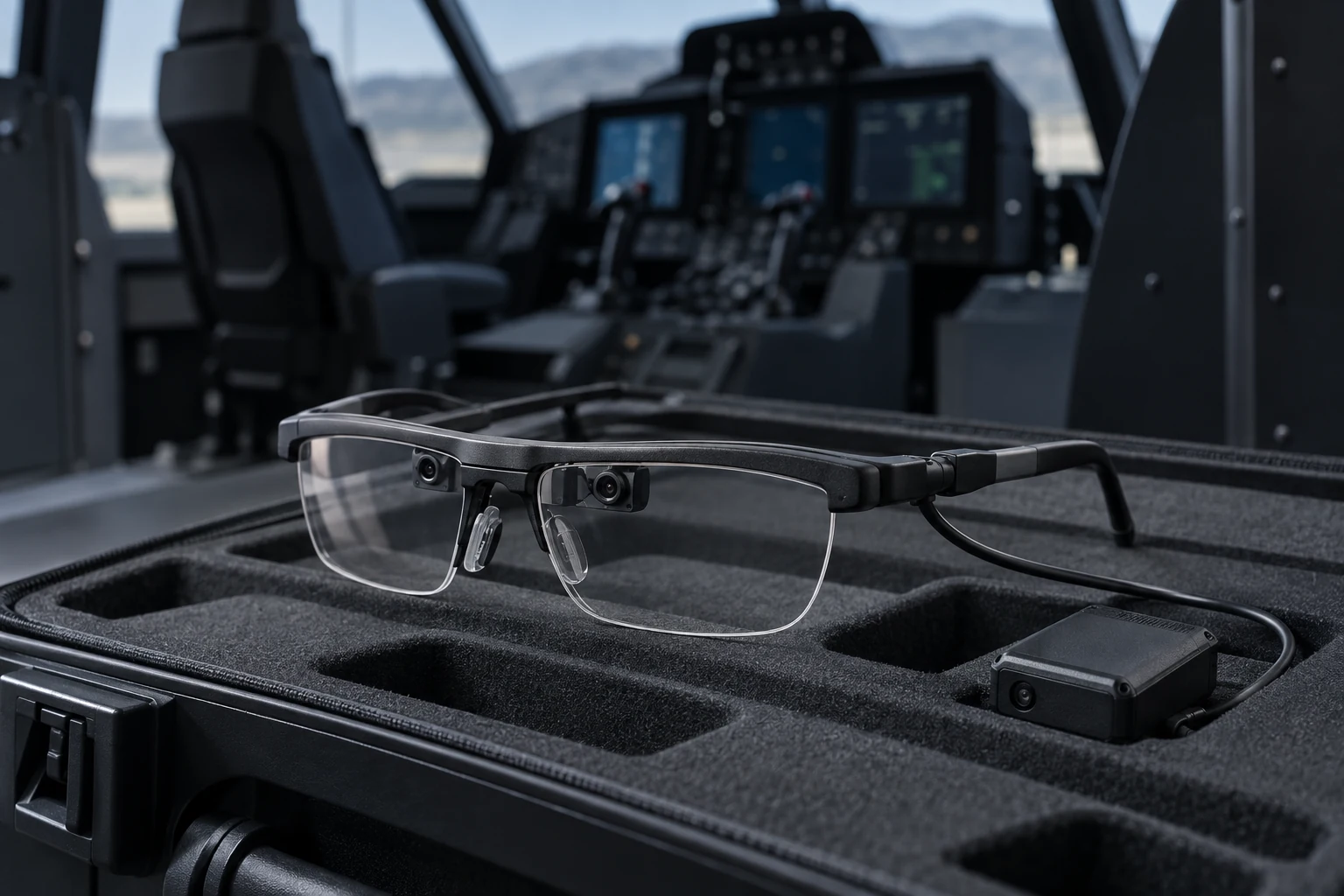
Multi-modal physiological monitoring — EEG, HRV, eye-tracking, fNIRS — with subject-independent evaluation discipline. Closed-loop interventions require careful design; open-loop information presentation is easier to validate.
Sensor modalities in the open literature
The publicly published cognitive workload research community uses several sensor modalities. Electroencephalography (EEG) provides high-temporal-resolution neural signals at the cost of setup complexity. Workload-related EEG markers in the published literature include theta-band power increases over frontal sites, alpha-band suppression over parietal sites, and event-related potential components such as the P300 amplitude reduction under load — all reviewed extensively in journals such as Frontiers in Human Neuroscience, NeuroImage, and the IEEE Transactions on Neural Systems and Rehabilitation Engineering.
Heart-rate variability (HRV) and electrocardiography are less intrusive and provide useful workload information at lower bandwidth. The published HRV-workload literature consistently finds that high-frequency HRV decreases with sustained mental load, and that root-mean-square successive-difference (RMSSD) tracks parasympathetic withdrawal. The Society for Psychophysiological Research publishes recurring methodological reviews of HRV-as-workload-indicator that practitioners cite as standard reference.
Eye-tracking — pupil dilation, fixation patterns, blink rate — is non-invasive and well-validated in many task domains. Pupillometry under controlled luminance is a long-established workload indicator (Beatty, 1982 onward), and modern eye-trackers from vendors such as Tobii, SR Research, and Pupil Labs make pupil and gaze measurement practical in operational contexts. Functional near-infrared spectroscopy (fNIRS) sits between EEG and unobtrusive sensors, with growing AFRL- and ARL-funded operational evidence including work with prefrontal-cortex-focused fNIRS in cockpit and dismounted environments. Each modality has a published evidence base and known failure modes — motion artifacts in EEG, posture sensitivity in HRV, calibration drift in eye-tracking, optical-coupling drift in fNIRS — and operationally credible systems acknowledge those failure modes explicitly.
EEG. High temporal resolution and direct neural measurement, at the cost of setup complexity and operator burden.
HRV / ECG. Less intrusive, lower bandwidth, and provides useful workload information when paired with task context.
Eye-tracking. Non-invasive measurement of pupil dilation, fixation, and blink rate, well-validated across many task domains.
fNIRS. A middle ground between EEG and fully unobtrusive sensors, with growing published evidence.
Behavioral and task-context features. Keystroke timing, control-input variability, and task-progress metrics often add useful signal at near-zero hardware cost.
| Modality | Bandwidth / setup | Operator burden | Common failure mode |
|---|---|---|---|
| EEG | High temporal resolution; lengthy electrode prep | High | Motion artifact in operational settings |
| HRV / ECG | Lower bandwidth; minimal sensor footprint | Low | Posture and respiration confounds |
| Eye-tracking | Mid-bandwidth; calibrated gaze and pupil | Low to moderate | Calibration drift, lighting variability |
| fNIRS | Mid-bandwidth; optode placement matters | Moderate | Optical-coupling drift over the session |
Machine learning on physiological signals
The published ML methods for physiological signal interpretation include time-series CNNs (EEGNet by Lawhern et al. is a widely cited compact architecture for EEG), recurrent architectures, and recently transformer-based approaches that adapt audio and time-series transformer designs to physiological time series. Self-supervised pretraining on unlabeled physiological signals — building on contrastive and masked-signal methods from the speech and audio communities — has emerged as a practical answer to the small-labeled-set problem common in human-subject data.
The methodological discipline includes careful subject-independent evaluation (training on one set of subjects and testing on another), since within-subject performance can be misleadingly high. The IEEE Brain Initiative and the published BCI competition results have documented over many years that the within-subject to between-subject performance gap is large, and that reporting only within-subject metrics overstates operational viability. Leave-one-subject-out cross-validation is the published norm for honest comparison.
Cross-task generalization is also a documented challenge: models trained on one task often do not transfer to another even with the same operator. The published research on domain-generalization methods — adversarial feature alignment, mixture-of-experts conditioning on task context, meta-learning over tasks — has produced incremental rather than dramatic improvements. Practitioners typically report cross-task performance separately rather than aggregating into a single accuracy number.
Public sensor-modality references
- EEG — Theta/alpha/P300 markers; EEGNet (Lawhern et al.) baseline architecture.
- HRV / ECG — RMSSD as the primary autonomic-state metric.
- Eye-tracking — Pupillometry, fixation patterns, blink rate (Beatty literature).
- fNIRS — Functional near-infrared — between EEG and unobtrusive sensors.
- Self-report calibration — NASA-TLX, SWAT, Bedford for label noise discipline.
Calibration and individual differences
Operators vary substantially in baseline physiological signals, in workload-induced changes, and in the behavioral consequences of high workload. The published calibration literature treats this as a per-operator personalization problem with limited per-operator data, and an active research area continues to explore how best to handle it. Recent methods include hierarchical Bayesian models that share across operators while preserving individual variation, transfer-learning fine-tuning from a population model to a per-operator model with minutes of calibration data, and online recalibration that updates the model as new labeled or self-reported data arrives.
Reported performance must reflect realistic per-operator calibration time — not after extensive per-operator training that would not be available operationally. The published norm is to report performance as a function of per-operator calibration data, often as a curve from zero-shot through several minutes of calibration, so that operational planners can choose a calibration burden the mission tolerates.
Workload labels themselves are noisy. Self-report scales such as NASA-TLX, the SWAT (Subjective Workload Assessment Technique), and the Bedford scale each have known limitations, and behavioral or task-performance proxies for workload are imperfect substitutes. Practitioners who treat label noise as an explicit modeling concern — for example, by training with label-smoothing or with explicit noise models — produce more robust systems than those who treat self-reports as ground truth.
Closing the loop
The hardest research question in operational cognitive-workload measurement is not measurement but action: what does the system do when high workload is detected? The published human-factors research — including ARL's HRED publications, ONR-funded work on supervisory control, and AFRL studies of adaptive automation — emphasizes that automated workload-mitigation actions (changing task allocation, simplifying displays, alerting supervisors) need careful design.
Actions that surprise the operator or reduce their authority are rejected. Parasuraman and Riley's classic taxonomy of automation use, misuse, disuse, and abuse from 1997 remains the reference framing for why operators reject high-authority adaptive automation. The newer published research on adaptive automation thresholds, hysteresis, and operator-in-the-loop concurrence is an attempt to build adaptive systems that operators actually accept.
Systems that present workload information to the operator and crew without taking automatic action are easier to validate. The decision to escalate from passive instrumentation to closed-loop control is fundamentally a policy and accreditation decision as much as an engineering one, and the published research consistently treats it as such.
Where software-first firms contribute
The software stack — signal processing, model training, real-time inference, integration with operator-facing displays, audit logging — is the addressable surface for software-first firms. Sensor procurement is rarely the SBIR scope; commercial sensors from established vendors are usually the assumption, and the value-add is in turning sensor streams into operationally useful, calibrated workload estimates.
Integration with existing crew systems, evaluation harnesses against operationally meaningful tasks, and calibrated uncertainty in the workload estimates are the deliverables that scale. Reusable open-source toolchains such as MNE-Python for EEG/MEG, NeuroKit2 for HRV and other physiological signals, and standard time-series ML frameworks anchor the engineering work and make the software contribution auditable to the program office.
The published GIFT (ARL's Generalized Intelligent Framework for Tutoring) and the Common Operational Picture-style operator displays show how workload data can flow into existing instructional and operational systems without re-architecting them. Software-first firms that build on these published reference architectures — rather than proposing parallel stacks — have a more credible Phase II transition story.
Common questions on the public-record framing
What public physiological-monitoring references are foundational?
EEG (theta/alpha/P300 markers, EEGNet by Lawhern et al.), HRV (RMSSD), pupillometry (Beatty), eye-tracking (Tobii, SR Research, Pupil Labs), fNIRS (AFRL, ARL). NASA-TLX, SWAT, and Bedford for self-report calibration.
Why is subject-independent evaluation harder than within-subject?
Within-subject EEG performance overestimates real-world generalization. Leave-one-subject-out (LOSO) discipline is the published evaluation baseline; IEEE Brain and BCI Competition results reflect this.
How does the literature treat closed-loop interventions?
Parasuraman & Riley (1997) automation taxonomy is foundational. Systems that present workload information to the operator and crew, without taking automatic action, are easier to validate operationally.
What does this article not cover?
Specific named operator selection criteria, specific operational performance distributions, or any Precision Federal cognitive-workload architectural approach.
Frequently asked questions
Within-subject evaluation — training and testing on the same operator — overstates performance because individual physiological signatures are highly distinctive. The published methodology trains on one set of subjects and tests on another to estimate how well a model would generalize to a new operator with limited calibration data.
No single modality is universally best. EEG offers high temporal resolution at the cost of setup complexity; HRV and eye-tracking are less intrusive and well-validated in many task domains; fNIRS sits in between. The published evidence supports modality selection based on task, operator burden, and integration constraints rather than a universal ranking.
This is the hardest design question. The published human-factors literature shows that automated mitigation actions need careful design — actions that surprise the operator or reduce their authority are rejected. Systems that present workload information to the operator and crew without taking automatic action are easier to validate and deploy.
Sensor procurement is rarely the SBIR scope. The addressable surface includes signal processing, model training, real-time inference, integration with operator-facing displays, audit logging, evaluation harnesses, and calibrated uncertainty in workload estimates.
Why this work matters to us
Precision Federal is a software-only SBIR firm. The reason articles like this one exist on this site is simple: federal program offices fund teams whose principal investigators have demonstrated, in public, that they think carefully about the problems the program is trying to solve. We write to demonstrate that posture, not to telegraph any particular technical approach. If your office is exploring the problem class above and wants a partner who reads the literature, codes the prototypes, and ships under a Phase I or Direct-to-Phase-II SOW, we are listening.