USDA is the under-followed civilian SBIR
USDA SBIR is administered by the National Institute of Food and Agriculture (NIFA) under the USDA Research, Education, and Economics mission area. It is one of the smaller federal SBIR programs by total dollar volume but one of the more distinctive in mechanics: Phase I awards are up to 200 thousand dollars over 8 months (higher than most civilian SBIR Phase I ceilings), and topic areas span a technology landscape that most AI firms never scan.
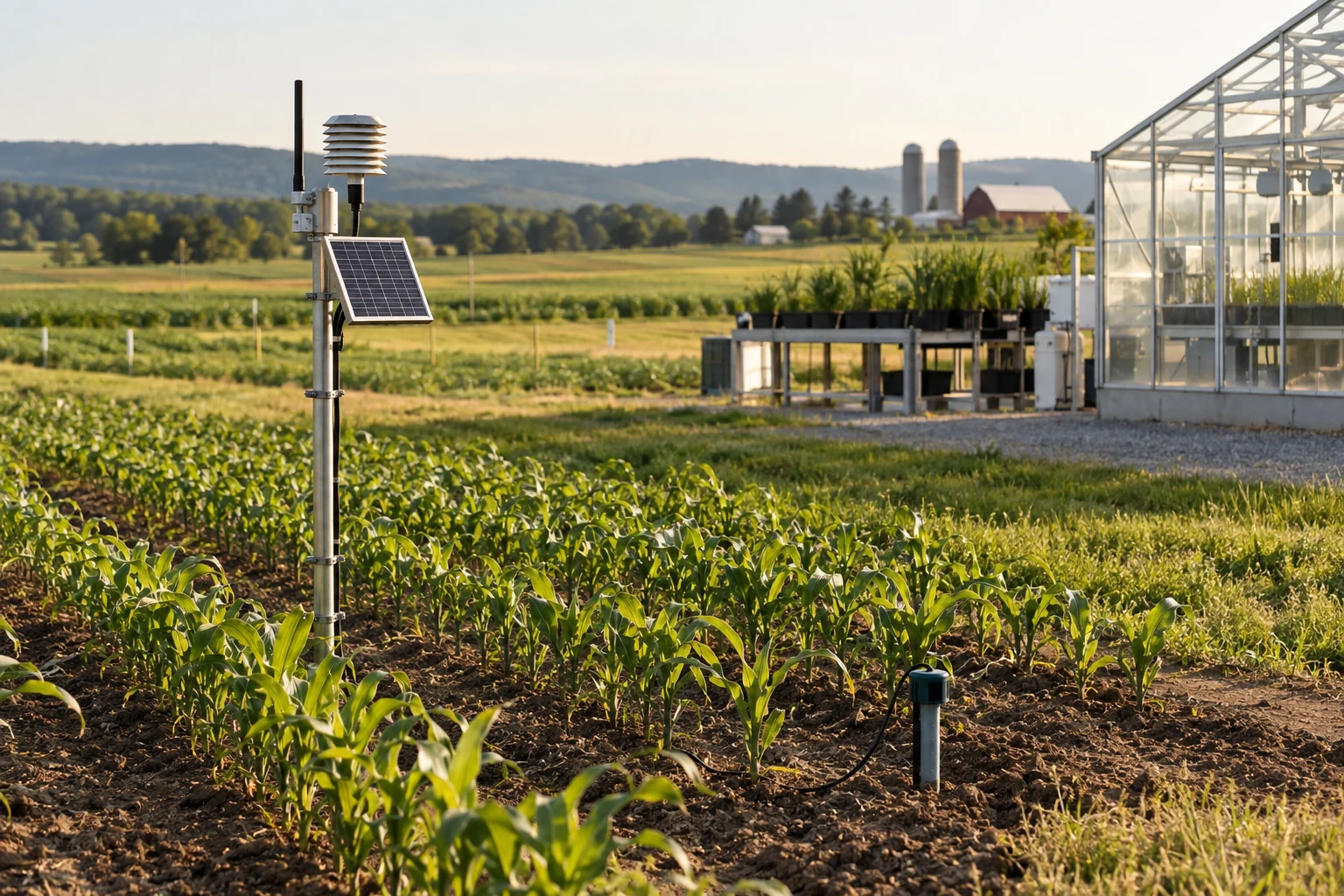
USDA SBIR sees 3–5 applicants per topic on average — among the lowest in federal SBIR. Agricultural AI topics: precision agriculture, crop health ML, food safety, climate adaptation forecasting.
The Phase I structure matters. At 175 thousand dollars over eight months, USDA Phase I runs longer than the six-month Phase I most agencies use, without requiring the six-to-eight month wait of NSF's pitch-then-full-proposal gate. For a small firm with AI applicable to agriculture, food systems, or rural technology, USDA is an under-priced opportunity.
USDA SBIR topic area AI fit for a tech firm
Editorial weighting from public sources and practitioner reading — illustrative, not a measured statistic.
The 10 topic areas in 2026
USDA SBIR organizes its annual solicitation into 10 topic areas:
- 8.1 Forests and Related Resources
- 8.2 Plant Production and Protection — Biology
- 8.3 Animal Production and Protection
- 8.4 Management of Natural Resources
- 8.5 Food Science and Nutrition
- 8.6 Rural and Community Development
- 8.7 Aquaculture
- 8.8 Biofuels and Biobased Products
- 8.12 Small and Mid-size Farms
- 8.13 Plant Production and Protection — Engineering
For AI firms, the most accessible topic areas are 8.2, 8.3, 8.5, 8.6, 8.7, and 8.13. Each sees active SBIR volume and many of the topics admit AI/ML approaches.
Where AI applies in USDA topics
Precision agriculture (8.2, 8.13)
Crop scouting from drone imagery, disease detection ML, yield prediction, variable-rate application algorithms, weed identification on in-field edge devices, soil moisture modeling. The Ag Data Commons and increasingly public satellite/drone imagery are usable data sources.
Livestock and aquaculture (8.3, 8.7)
Animal health monitoring from video and wearable data, parasite detection, aquaculture production optimization, automated feeding systems with ML.
Food safety and nutrition (8.5)
Contamination detection, traceability ML, supply chain risk analytics, foodborne illness surveillance integration.
Rural broadband and community development (8.6)
Rural network ML, telehealth infrastructure, rural cybersecurity, digital inclusion tools. The recent federal infrastructure investments create a larger market context here.
Biofuels and process tech (8.8)
ML for bioreactor optimization, feedstock characterization, process control.
Award mechanics in 2026
Phase I: up to 175 thousand dollars (125 thousand in topic areas 8.6 and 8.12), up to 8 months. Phase II: up to 600 thousand, up to 24 months. USDA Phase II is smaller than DoD or NIH Phase II, which affects revenue planning. Phase II sequential and supplement mechanisms exist but are smaller.
USDA also runs a Small Business Innovation Research Phase IIB supplement for firms with significant private capital match — a Phase II.5 mechanism that can effectively double the Phase II award.
Review culture
USDA NIFA review uses external subject-matter experts drawn from land grant universities, USDA research agencies (ARS, ERS, NASS), and industry. Reviews emphasize scientific/technical merit, commercialization potential, and rural impact. Reviewers are agriculture-literate but not necessarily AI-literate — proposals must explain AI approach in agriculture-relevant terms, not in pure ML jargon.
Phase III at USDA
USDA does not fund Phase III directly. Phase III paths include commercial sales to growers, cooperatives, and food processors; licensing to agricultural technology companies; and in some cases direct contracts or cooperative agreements with USDA action agencies (NRCS, APHIS, RD) or state Cooperative Extension. The commercialization planning for USDA Phase II is often the weakest section of first-time firms' proposals and the highest-leverage place to invest.
Cadence and timing
USDA SBIR runs one Phase I solicitation per year, typically opening in May/June with a deadline in September/October. Phase II applications come approximately six months after Phase I notification. The annual cadence means firms should plan USDA as a one-proposal-per-year commitment rather than a multi-cycle portfolio like DoD.
Practical steps for a first USDA SBIR
- Pick a topic area that matches your capability and agriculture domain exposure.
- Read the current solicitation's specific topic language for that area. USDA topic descriptions are broader than DoD's — they invite firm-defined approaches.
- Talk to a USDA topic contact if listed, or to a researcher at a land grant university working in your area.
- Write the proposal with the agriculture problem foregrounded. AI is the enabling method, not the story.
- Include a credible commercialization plan: which cooperatives, which distributors, which pricing model, which regulatory path if any (e.g., EPA for pesticide AI, FDA for food safety AI).
- Plan Phase III as commercial sales plus possible action-agency adoption.
Who this fits and who it does not
Fit: AI firms with some agriculture exposure (directly or through a co-founder, advisor, or existing customer), or with a strong generalizable capability that can be demonstrated on an agriculture-relevant dataset. Unfit: firms with no agriculture exposure, no plan to acquire agriculture domain expertise, and no customer in the sector. USDA reviewers can tell when a firm has never spoken to a farmer.
Bottom line
USDA SBIR in 2026 is an under-followed opportunity for AI firms with some agriculture adjacency. The eight-month Phase I period provides more runway than most civilian SBIR schedules. The reviewers are agriculture-literate and reward proposals that foreground the agricultural problem. Phase II is smaller than DoD or NIH, but the sector is large and commercial adoption paths are legitimate. For a firm with an agriculture angle, USDA is worth one disciplined proposal per year.
Frequently asked questions
USDA's National Institute of Food and Agriculture (NIFA) administers SBIR. Topics cover 11 topic areas spanning crops, livestock, food, forests, rural development, aquaculture, and biofuels.
Up to 175 thousand dollars over up to 8 months (125 thousand in topic areas 8.6 and 8.12). Phase II is up to 600 thousand over 24 months.
8.2 (Plant Production Biology), 8.3 (Animal Production), 8.5 (Food Science), 8.6 (Rural Development), 8.7 (Aquaculture), and 8.13 (Plant Production Engineering) see the most AI-applicable topics.
Annually. Solicitation typically opens in May/June with a September/October deadline. Phase II applications follow approximately six months after Phase I notification.
Through commercial sales to growers and processors, licensing to ag tech companies, and in some cases cooperative agreements with USDA action agencies (NRCS, APHIS, Rural Development) or Cooperative Extension.
They are agriculture-literate but not necessarily AI-literate. Proposals should foreground the agricultural problem and explain AI as an enabling method in terms the reviewers' training rewards.