
Why commercialization plans fail
The most common commercialization plan submitted to an SBIR solicitation reads like a market study that was copy-pasted from a Gartner summary. "The global AI market is projected to reach $1.5 trillion by 2030. We plan to capture a small fraction of this market." This kind of writing scores at the bottom of the rubric for a predictable reason: reviewers are not looking for market size. They are looking for a plan.
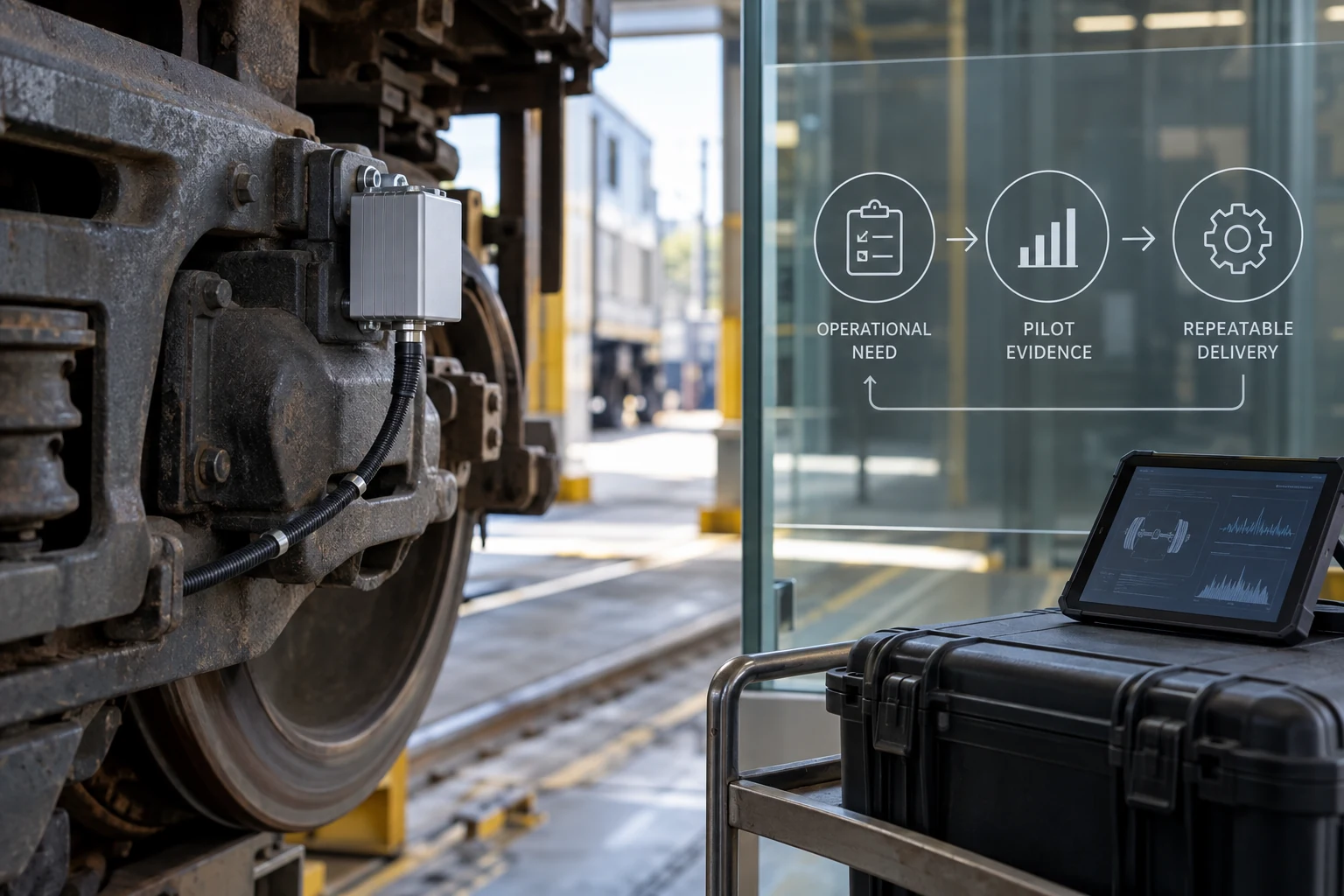
Phase II commercialization scoring has grown to 40–50% at most DoD agencies. A plan with named beta customers and a go-to-market path through an existing prime contract scores 30–40 points higher than one built on TAM projections.
A commercialization plan is a narrative with three connected parts: who specifically will buy this, how they will be made aware and convinced, and what the revenue looks like over a five-year horizon. Every sentence should answer one of those three questions. If a sentence does not advance one of them, it is filler.
NIH REVIEWER WEIGHTS
Editorial weighting from public sources and practitioner reading — illustrative, not a measured statistic.
DoD REVIEWER WEIGHTS
Editorial weighting from public sources and practitioner reading — illustrative, not a measured statistic.
The structure reviewers expect
Agencies do not publish a single commercialization template, but the sections reviewers look for are consistent:
| Section | Pages | What reviewers want to see |
|---|---|---|
| Federal opportunity | 1-2 | Named program offices, identified budget lines, specific contracts or transition pathways. |
| Commercial opportunity | 1-2 | Specific customer segments with named early customers if possible. No TAM without a bottom-up build. |
| Competition and differentiation | 0.5-1 | Who else solves this and why your approach wins on specific axes. |
| Go-to-market and sales | 1 | How the product reaches customers. Direct sales, channel partners, procurement vehicles. |
| Five-year revenue projection | 0.5-1 | Yearly revenue by segment with unit economics. Total range, not a single number. |
| Capitalization plan | 0.5 | How the firm funds growth — SBIR, follow-on contracts, revenue, outside capital if any. |
Federal vs dual-use framing
SBIR is designed to produce dual-use technologies — capabilities that serve government and commercial markets. Reviewers want evidence of both sides. A proposal that is purely federal reads like rent-seeking; a proposal that is purely commercial reads like it should go to a VC, not an agency.
The balance to strike: the federal side anchors credibility (named customer, clear transition) and the commercial side anchors scale (broader market, unit economics, defensible pricing). For an AI capability built under an Army maintenance topic, the federal side is Army logistics commands and potentially Air Force maintenance; the commercial side is heavy-asset industries — rail, aviation maintenance, manufacturing — that have similar predictive-maintenance problems.
The five-year revenue model
Reviewers want to see a year-by-year projection that looks like a real plan, not a hockey stick. A credible projection has:
- Year 1: Phase II execution + first Phase III pilot or commercial pilot. Revenue in the low hundreds of thousands.
- Year 2: Phase II continues, Phase III awarded, first commercial customer signs. $1-3M range.
- Year 3: Phase III at scale, 2-5 commercial customers. $3-8M range.
- Year 4: Phase III renewal, second federal program office, commercial expansion. $5-15M range.
- Year 5: Established federal contract base + commercial product revenue. $10-25M range.
These numbers should be supported by unit economics — what each customer is worth per year, how many customers per year, realistic conversion rates. A projection that shows $100M in year 5 without supporting math reads as unserious.
What evidence to include
Strong commercialization plans include concrete evidence of customer interest. In order of strength: signed letters of intent from paying customers, letters of support from program offices, meeting notes or agreements with specific named customers, and industry association endorsements. The weakest evidence is generic market research citations.
For a new firm (Precision Delivery Federal LLC was formed in March 2026), the honest framing is: "The PI has delivered production ML systems under prior employment at Harmonia Holdings, including a federal health agency production deployment that serves 300+ partner organizations. That delivery history, combined with the customer conversations described below, supports the commercialization plan." Reviewers respect honesty about corporate tenure combined with demonstrated founder track record.
Capitalization plan — the part everyone skips
Most firms write nothing or a single line for capitalization. That is a missed opportunity. Reviewers want to know that the firm has thought about how it will fund the next five years beyond SBIR. Options to cover: continued SBIR awards (portfolio plan), Phase III contracts, commercial revenue, non-dilutive federal funding from other programs, equity capital if relevant. Pick the options that fit your actual plan and write one sentence on each.
The common mistakes
- TAM without a bottom-up build. "The AI market is $1.5T" says nothing. "We have identified 47 potential commercial customers across rail and aviation maintenance, average contract value $180K" says something.
- Federal-only plans. If there is no commercial story, the plan looks like the firm is chasing grants rather than building a business.
- Hockey-stick projections. Revenue that goes from $200K to $50M in four years with no explanation fails the smell test.
- No competition analysis. Every capability has competitors. Pretending otherwise signals naivety.
- Generic partner language. "We will partner with industry leaders" is filler. Name partners or omit the section.
Reusing across proposals
Much of a commercialization plan is reusable across proposals. Company background, team commercialization experience, capitalization plan, and broad competitive landscape can be templated. The customer-specific and topic-specific sections must be written fresh for each proposal. A firm that has submitted 10 proposals should have a mature 15-page commercialization deck that compresses into topic-specific 4-5 page versions.
Frequently asked questions
Phase I commercialization is typically 20-30% of the score. Phase II rises to 40-50%. In Phase II, commercialization often separates selected from selectable.
Only with a bottom-up build showing specific customer counts and contract values. A top-down TAM number alone is a tell that you did not do the customer work.
4-5 pages in the technical volume, with a longer supporting plan attached where the solicitation allows.
They help but are not required. Letters of support from named federal end-users are more common and score well.
Build bottom-up: identify customer segments, estimate reachable customers, apply conservative conversion rates, multiply by expected contract value. Show the math.
The structural sections yes; customer-specific and topic-specific sections no. Always customize.