The provision that makes Phase III special
15 U.S.C. 638(r) is the single most valuable paragraph in the SBIR statute. It says that a federal agency may enter into a Phase III contract with an SBIR awardee without competition, and that the Phase III work is derived from, extends, or completes the earlier SBIR work. Practically: the program office that used your Phase II can turn around and write you a multi-million-dollar contract for production work, and they do not have to run a competition to do it. There is no dollar cap on Phase III awards.
Phase III Transition Timeline
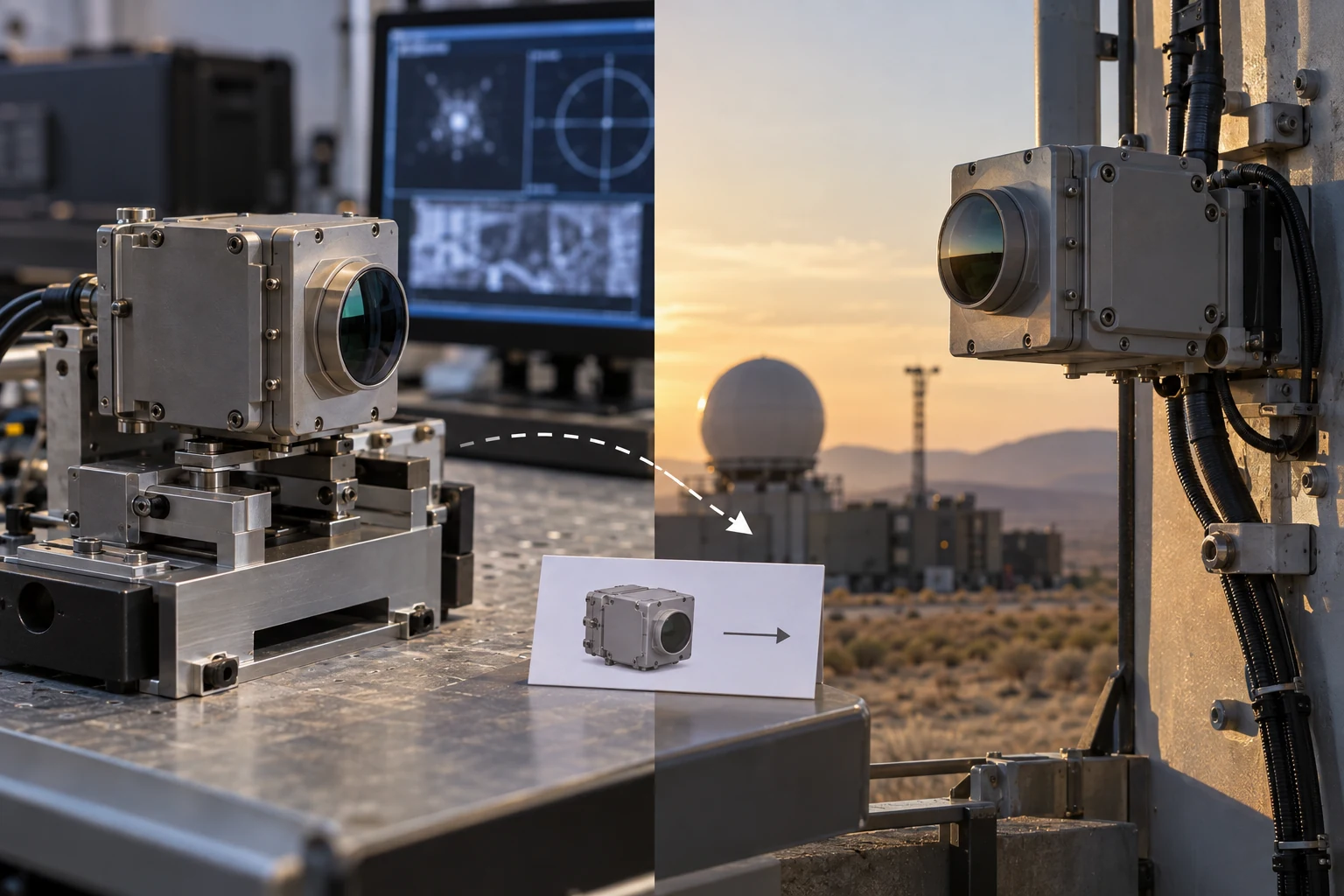
Phase III has no award ceiling and requires no new competition — but it requires a champion inside the program office with budget authority to sole-source or bridge-fund. Finding that champion is the actual job.
This is not a loophole. It is the explicit statutory intent. Congress built SBIR to move technology from small firms into government use, and sole-source Phase III is the mechanism that bridges the valley of death between prototype and production. Contracting officers are trained on it. Program offices know about it. The problem is that first-time SBIR firms often do not know about it and do not position for it.
Who pays for Phase III
Phase III is funded with non-SBIR dollars. That is a feature, not a bug — it means the money comes out of the receiving program office's own budget, which they are more motivated to protect and less constrained on how to spend. Common funders:
The program office that used your Phase II
Most common. They have seen the prototype, they want the production version, they write a sole-source Phase III against their own appropriation.
A different program office at the same agency
If your capability applies to another program's mission, that program can contract with you directly under Phase III authority.
A different agency
Phase III is cross-agency. A Navy Phase II can become an Air Force Phase III if an Air Force program office wants the capability.
A prime contractor
Primes can use your Phase III status to sole-source you onto a larger program. The prime then bills the government through their own contract vehicle.
The mechanics of getting a sole-source award
A sole-source Phase III award requires the contracting officer to make a Justification and Approval (J&A) determination. Under 638(r), that J&A is streamlined — the CO cites the SBIR statute as the authority and the work's derivation from prior SBIR effort as the justification. The firm's role is to make the CO's job easy:
| What CO needs | What you provide |
|---|---|
| Derivation statement | A clear narrative linking the Phase III scope to the Phase I/II work — which capabilities extend, which new features build on the SBIR-developed IP. |
| Phase I/II award documentation | Copies of the awards, final reports, and any transition documentation from the Phase II. |
| Cost / pricing proposal | A commercial-style proposal. Phase III is not cost-plus; you can quote firm-fixed-price at commercial rates. |
| Data rights assertion | Explicit statement of which data is SBIR-protected (typically 20 years) and which is commercial IP. |
| Performance history | Evidence of Phase I/II performance — delivered milestones, final reports, government POC references. |
Data rights are the leverage
Under the SBIR Data Rights clause, technical data and computer software developed with SBIR funding is protected for a statutory period — 20 years for SBIR awards made after certain 2019 reforms. During the protection period the government has limited rights; it cannot release your data to a competitor, and it cannot recompete the work using your data as the baseline. This means that the program office, even if they wanted to compete the follow-on, cannot easily do so without your IP.
The practical consequence: data rights give you pricing power. A Phase III negotiation is not "we have to buy from you because the statute says so" — it is "buying from you is the path of least resistance and competing us out requires starting over." That is a strong negotiating position. Do not over-play it — program offices have long memories — but do not give it away either.
Program-of-record pull-through
The highest-value Phase III pattern is pull-through into a program of record (POR). A POR is a funded, multi-year program with its own appropriation line — aircraft platforms, major IT systems, missile programs, logistics platforms. Getting onto a POR converts your capability from a one-off contract into a recurring revenue stream.
The pull-through mechanic: your Phase II lands in a program office that owns a POR. The POR has a capability gap your Phase II solution fills. The POR manager issues a Phase III sole-source to integrate your capability into the POR baseline. You become a permanent line item in that program's budget, renewing annually under the Phase III authority. This is how SBIR firms turn into real defense contractors.
Pricing Phase III
Phase I and Phase II are cost-reimbursable with capped fee (typically 7-9% on DoD). Phase III is not. Phase III can be firm-fixed-price, time-and-materials, or any other vehicle the parties agree to, and the pricing is commercial — market rates, not cost-based. A senior engineer priced at $180/hr cost-plus in Phase II can be priced at $280/hr T&M in Phase III if that is the commercial market rate.
Practical guidance: do not price Phase III against your Phase II rates. Price it against the commercial benchmark for comparable capability. If a commercial AI integration firm charges $300/hr for senior ML engineering, that is your ceiling. If you undercut too aggressively, you leave money on the table and set a precedent that is hard to walk back on the next Phase III.
Positioning during Phase II
Every Phase II should be run with Phase III as the target state. Concretely:
- Identify the POR early. By month 6 of Phase II, you should know which program of record the capability is targeting and who the POR manager is.
- Build the derivation narrative as you work. Keep a rolling document of "Phase III candidate scope" — capabilities that extend or complete the Phase II work. This becomes the basis for the J&A later.
- Deliver a demo, not just a report. A Phase II that ends with a functioning, deployable prototype in the government's environment gets a Phase III. A Phase II that ends with a PDF does not.
- Ask for a Phase III commitment at the mid-point review. The program office may or may not commit, but the conversation starts the sole-source positioning.
- Line up the contracting office. COs vary in comfort with sole-source Phase III. Identifying the CO early and helping them get comfortable with the authority is part of your job, not theirs.
When Phase III does not happen
Most Phase II awards do not convert to Phase III. Common reasons: the program office's priorities changed, the appropriation got cut, a competing capability emerged, or the Phase II prototype did not deliver cleanly. Phase III conversion rates are not well-published, but field observation suggests 20-40% of Phase II awards convert to some kind of Phase III activity within 3 years.
If Phase III does not land at the original program office, the capability is still worth marketing to other program offices and other agencies. Phase III rights travel with the firm, not the agency. A capability developed under Air Force Phase II can become an Army Phase III if an Army program office wants it.
Frequently asked questions
The commercialization phase, funded with non-SBIR dollars. Sole-source authority under 15 U.S.C. 638(r). No dollar cap.
Yes, by statute, to the original SBIR firm for work that derives from, extends, or completes the SBIR effort.
No statutory cap. Awards routinely reach $10M-$100M and occasionally more.
A 20-year protection period on SBIR-developed technical data and software, giving the firm negotiating leverage.
Any federal customer with non-SBIR budget authority, or a prime contractor with SBIR flow-through.
Commercial rates, not cost-based. Phase III is where SBIR firms convert to real commercial pricing.