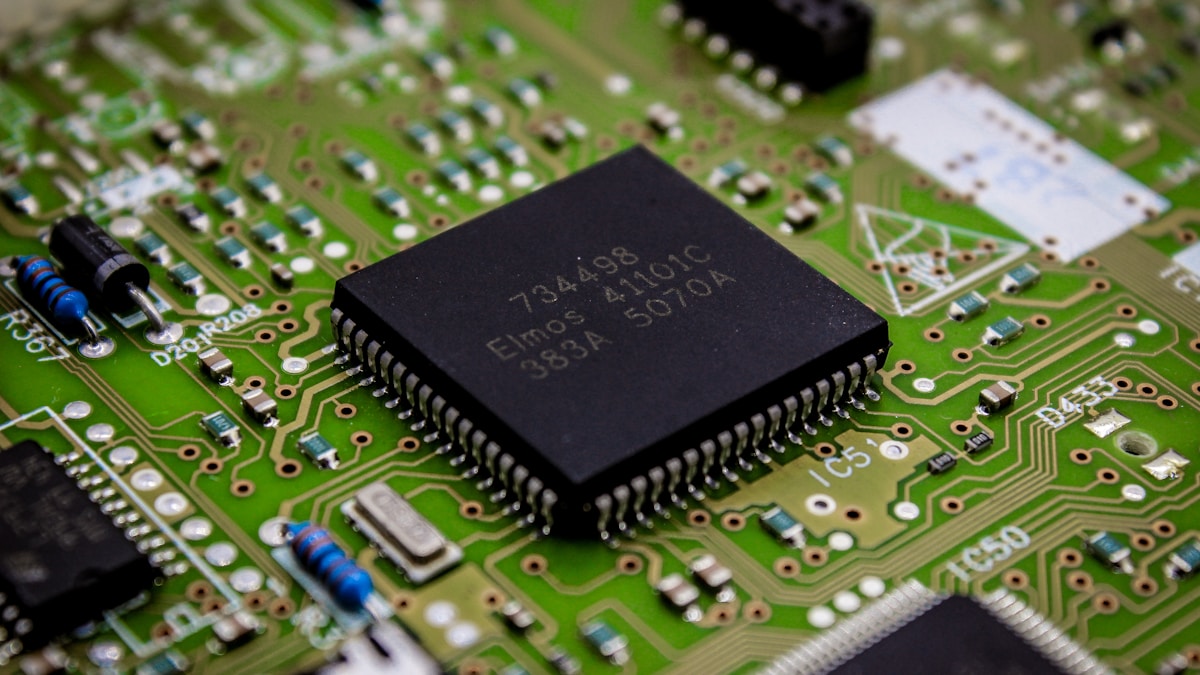
DMEA is a specialized DoD component with unusual authority
The Defense Microelectronics Activity (DMEA) is a DoD field activity at McClellan Park, California, reporting through the Office of the Under Secretary of Defense for Acquisition and Sustainment. DMEA's mandate is unusual: it operates a secure microelectronics manufacturing facility, administers the Defense Department's Trusted Foundry and Trusted Supplier programs, provides microelectronics engineering support across DoD, and manages a small but specialized SBIR topic inventory.

Defense Microelectronics Activity funds exclusively microelectronics, trusted sources, and supply chain security. SBIR competition is thin — most commercial AI firms skip DMEA entirely. That is the opportunity.
DMEA SBIR is small — typically 5 to 15 topics per cycle — but the topics are highly specific to DoD microelectronics assurance, long-lifecycle electronics sustainment, and chip supply chain integrity. For AI firms with relevant capability, DMEA is an underpriced opportunity because the bidder pool is small and the technical fit is narrow.
DMEA SBIR topic area focus and relative funding
Editorial weighting from public sources and practitioner reading — illustrative, not a measured statistic.
The Trusted Foundry and Trusted Supplier programs
DoD relies on a network of accredited Trusted Foundry and Trusted Supplier firms to produce microelectronics for national security systems. DMEA manages the accreditation process, maintains the Trusted Supplier list, and works with primes and integrators to ensure that DoD-unique microelectronics can be sourced through trusted channels. The CHIPS Act and the evolving semiconductor landscape have raised the profile of this work substantially.
DMEA SBIR topics often support the Trusted Supplier mission: chip provenance verification, counterfeit detection, supply chain intelligence, reverse engineering for sustainment, and EDA tooling for obsolescence management.
Where AI applies in DMEA topics
Chip supply chain intelligence
ML on procurement records, supplier data, and open-source intelligence to identify risk in the microelectronics supply chain. Graph analysis, entity resolution, and anomaly detection apply.
Counterfeit detection
Computer vision on die photos, X-ray imagery, and electrical characterization data to flag counterfeit or substandard chips. Active research area with genuine unmet need.
Reverse engineering and obsolescence
ML for circuit netlist extraction from die images, automated functional analysis, and component cross-reference for obsolescence management. DMEA itself operates reverse engineering capability; SBIR topics often augment that.
EDA automation
ML-assisted design flows, formal verification acceleration, layout optimization, test pattern generation for DoD-specific chips and FPGAs.
Electronics sustainment
Long-lifecycle management of legacy electronics through predictive obsolescence, part substitution analysis, and automated redesign.
Award mechanics
DMEA SBIR follows the DoD joint release schedule and uses standard DoD amounts: Phase I at 150-250 thousand dollars for six months, Phase II up to 1.7 million over 24 months. Topics appear in DoD cycles under the DMEA component heading.
Review culture
DMEA topics are reviewed by DMEA engineering staff with deep microelectronics expertise. Proposals that show genuine engineering understanding of the semiconductor lifecycle — from design through fabrication through test through sustainment — read credibly. Proposals that apply ML generically without microelectronics specificity lose.
Phase III at DMEA
DMEA Phase III can flow through: direct DMEA contracts for microelectronics engineering services, inclusion in Trusted Supplier programs, prime contractor integration on defense electronics platforms, or extension into broader DoD microelectronics assurance work. The CHIPS Act implementation has increased the number of downstream customers for chip supply chain and assurance technology.
Who fits DMEA SBIR
Fit: AI firms with semiconductor domain expertise (co-founder or team member with IC design, EDA, or microelectronics manufacturing background); firms working on visual inspection of industrial goods who can adapt to die imagery; firms with supply chain intelligence capability applicable to regulated procurement; firms with CAD/EDA automation capability. Unfit: firms with generic ML capability and no semiconductor exposure.
How DMEA connects to broader DoD microelectronics direction
DMEA's work connects to the Office of the Secretary of Defense for Research and Engineering microelectronics strategy, the CHIPS for America Act implementation (through Commerce), and semiconductor-related work at DARPA MTO, Air Force Research Laboratory, Naval Research Laboratory, and the NSA. A firm that understands the DoD microelectronics ecosystem can use DMEA SBIR as one entry point in a larger strategy.
Practical steps for a first DMEA SBIR
- Read the DMEA mission and public Trusted Supplier information.
- Identify which part of the semiconductor lifecycle your capability fits.
- Contact the DMEA topic point of contact during pre-release.
- Write the proposal with specific semiconductor lifecycle language — design, fab, test, assembly, sustainment.
- Name a potential Phase III pathway: Trusted Supplier augmentation, prime integration, or direct DMEA engineering service.
- Consider teaming with a firm that holds Trusted Supplier status if your technology will need to be deployed in a Trusted context.
Bottom line
DMEA SBIR is small, narrow, and under-bid. For AI firms with semiconductor adjacency — chip supply chain, counterfeit detection, reverse engineering, EDA automation, obsolescence — it is one of the better opportunities in DoD SBIR for firms with genuine domain depth. The CHIPS Act environment and the increased focus on microelectronics assurance raise the downstream market substantially. Phase I volume is low; pick carefully and write with engineering specificity.
Frequently asked questions
Defense Microelectronics Activity — a DoD field activity at McClellan Park, California, that operates a secure microelectronics manufacturing facility, administers the Trusted Foundry and Trusted Supplier programs, and provides microelectronics engineering support across DoD.
Typically 5 to 15 topics, smaller than service components. Topics appear in DoD SBIR cycles under the DMEA heading and follow standard DoD amounts.
DoD's accredited supplier network for microelectronics used in national security systems. DMEA manages accreditation and maintains the list. Many DMEA SBIR topics support the Trusted Supplier mission.
Chip supply chain intelligence, counterfeit detection via die imagery and X-ray, reverse engineering for sustainment, EDA automation, and electronics obsolescence management.
Firms with semiconductor domain depth — IC design, EDA, manufacturing, supply chain — plus AI capability. Generic ML firms without microelectronics exposure generally do not fit.
Through direct DMEA engineering contracts, Trusted Supplier program integration, prime contractor integration on defense electronics platforms, or extension to broader DoD microelectronics assurance work.