DHS SBIR is run by S&T, but components drive topics
The Department of Homeland Security SBIR program is administered by the DHS Science and Technology Directorate (S&T). S&T's Office of Industry Partnerships runs the portal, manages the solicitation, and handles Phase I and II contracts. But the topics originate from operational components — CBP, TSA, CISA, FEMA, USCG, Secret Service, ICE, and from S&T's own research divisions. Reading DHS SBIR without understanding which component drove a topic is reading it blind.
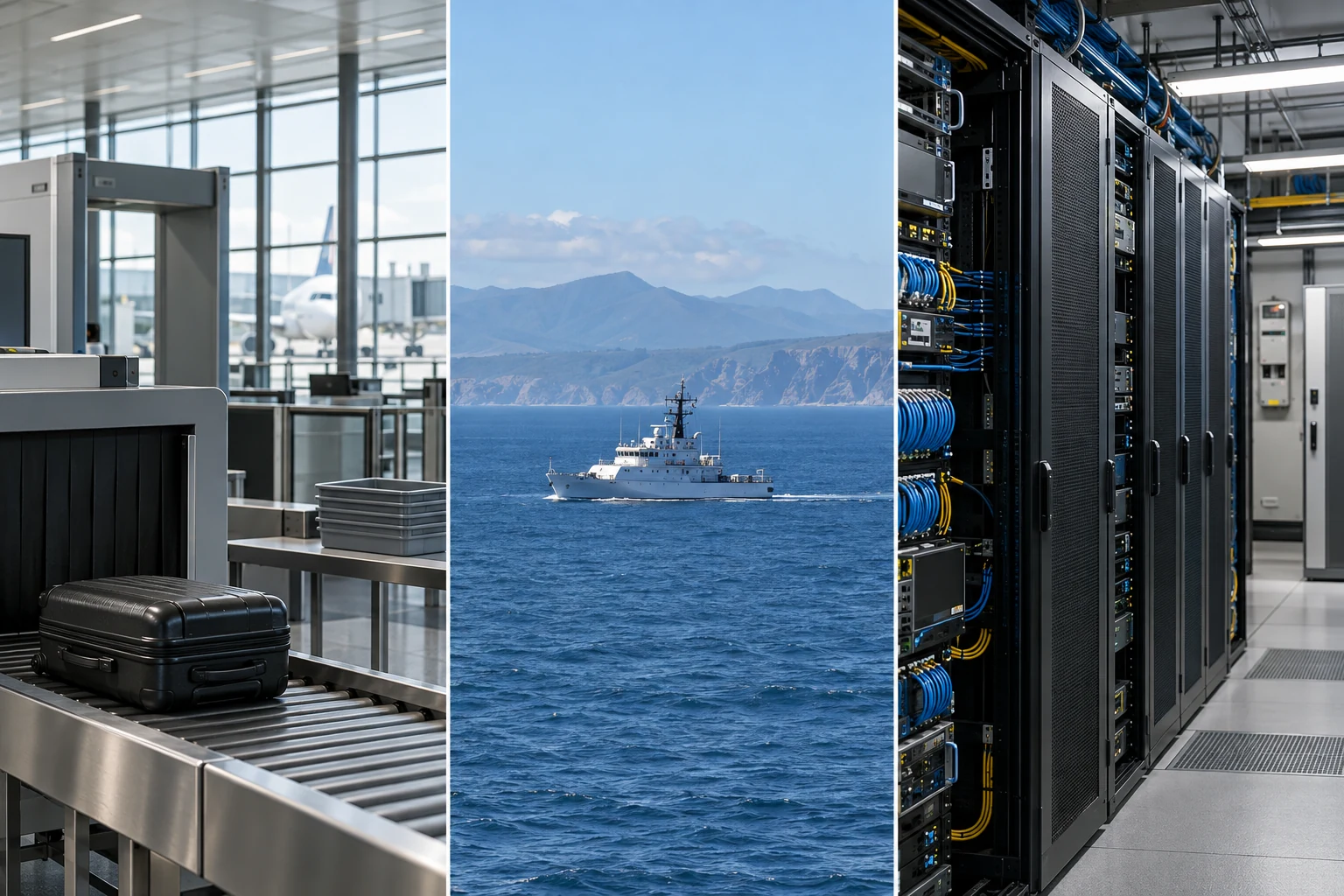
DHS S&T runs the SBIR program centrally, with topics driven by component needs. CISA is the primary buyer for cybersecurity and AI. CBP drives the majority of border surveillance and biometrics AI demand.
DHS SBIR volume is modest compared to DoD or NIH — typically 15 to 25 topics per annual solicitation. Topics are often specific and tied to a named program of record or a specific operational problem. Phase I is typically 150 thousand dollars for six months; Phase II is up to 1 million over two years. Phase III transitions go through component acquisition programs or through S&T transition vehicles.
DHS component AI opportunity concentration
Editorial weighting from public sources and practitioner reading — illustrative, not a measured statistic.
Component by component
Customs and Border Protection (CBP)
CBP is the largest operational component and a heavy SBIR topic generator. Topics cover border surveillance (ground sensors, aerial platforms, underwater), port of entry technology (non-intrusive inspection, document authentication, biometric), trade enforcement AI, and cargo supply chain analytics. The Office of Field Operations and the US Border Patrol are the primary customers. AI topics concentrate on computer vision, anomaly detection in cargo flows, and identity processing.
Transportation Security Administration (TSA)
TSA topics focus on aviation and surface transportation security: explosive detection, threat image algorithms, passenger screening analytics, insider threat detection, and canine program support tech. AI shows up in threat detection ML for X-ray and CT imagery.
Cybersecurity and Infrastructure Security Agency (CISA)
CISA is the AI-heaviest DHS component. Topics span federal network defense, OT/ICS security, critical infrastructure resilience, vulnerability intelligence, and emergency communications. AI topics include anomaly detection on network traffic, OT protocol analysis, supply chain software intelligence, and cyber threat intelligence automation. CISA also works election security and chemical security.
Federal Emergency Management Agency (FEMA)
FEMA topics focus on disaster response and preparedness: damage assessment from aerial and satellite imagery, predictive flood modeling, resource logistics optimization, and emergency communications. AI topics around computer vision on post-disaster imagery and resource allocation ML are warm.
United States Coast Guard (USCG)
USCG topics cover maritime domain awareness, search and rescue, port security, and fisheries enforcement. AI topics include vessel classification, dark vessel detection, and route prediction on AIS data.
US Secret Service (USSS)
USSS topics cover protective operations, cyber financial crime, and forensic analysis. Smaller SBIR footprint. AI topics in deepfake detection and threat assessment.
Immigration and Customs Enforcement (ICE)
ICE topics cover investigation, intelligence, and detention operations. Smaller SBIR presence but topics around forensic analysis and investigative analytics appear.
S&T Research Divisions
S&T's own Cyber Security Division, Borders and Maritime Security Division, First Responder Group, and others write topics tied to their research portfolios.
Warm AI topic areas in 2026
- OT/ICS cybersecurity ML — CISA and S&T Cyber Security Division. Anomaly detection on industrial protocols, asset inventory for brownfield OT networks, AI-assisted incident triage.
- Border and port computer vision — CBP. Cargo imagery analysis, vehicle identification, anomaly detection in trade flows.
- Disaster damage assessment — FEMA. Automated damage classification from post-event aerial imagery, building-level damage scoring, change detection.
- Aviation screening ML — TSA. Threat detection algorithms for CT baggage imagery, anomaly detection in passenger behavior data.
- Maritime domain awareness — USCG. AIS anomaly detection, dark vessel detection, route prediction.
The S&T solicitation mechanics
DHS runs an annual SBIR solicitation, typically released in late summer or early fall with deadlines in late fall. Pre-release conversations with topic authors are generally allowed and encouraged in the pre-release window. DHS also occasionally runs out-of-cycle Special Topic solicitations tied to specific operational urgencies.
Phase III transition
Phase III at DHS goes through component acquisition programs. For CBP, that is PMO programs under the Acquisition Directorate. For TSA, it is the TSA Acquisition Program. For CISA, it is procurement through CDM (Continuous Diagnostics and Mitigation) and other cyber vehicles. FEMA Phase III flows through the FEMA Acquisition Program or through grant-administered capability buys.
DHS S&T's Transition-to-Practice program (TTP) specifically works to move SBIR Phase II technologies into component operational use. Engaging TTP is a legitimate Phase II-to-Phase III accelerator.
Practical steps for a first DHS SBIR
- Identify which DHS operational component matches your capability.
- Read that component's current strategic priorities (public) and recent procurement notices.
- Contact the topic author during pre-release. S&T publishes contact information.
- Write the proposal with the component need specified, not the S&T administrative framing.
- Plan Phase III through the component's acquisition program. Name the likely vehicle.
- Consider S&T's Transition-to-Practice program for Phase II.5 support.
Failure modes to avoid
- Writing to S&T as the customer. S&T administers; the component buys.
- Ignoring classification and data rights language. CBP and TSA topics often involve sensitive operational data.
- Generic cyber AI pitches to CISA. CISA has dense incumbents and rewards OT specificity or a genuine technical novelty.
- Underestimating DHS procurement pace. Phase I to Phase II is long; plan revenue accordingly.
Bottom line
DHS SBIR in 2026 is a small but specific program. For AI firms, CISA (OT/ICS and cyber), CBP (border and cargo computer vision), FEMA (disaster response analytics), and USCG (maritime AI) are the warm entry points. Topics come from operational components, so component relationships matter more than S&T conversations. Transition-to-Practice provides a Phase II.5 path. Plan on longer cycle times than DoD but equally real revenue for firms that build the component relationship.
Frequently asked questions
DHS Science and Technology Directorate (S&T), specifically the Office of Industry Partnerships. Topics originate from operational components — CBP, TSA, CISA, FEMA, USCG, and others.
Phase I is 150 thousand dollars for six months. Phase II is up to 1 million over 24 months. Phase II.5 mechanisms including Transition-to-Practice can extend funding.
CISA leads in AI topic volume, particularly for OT/ICS cybersecurity, network anomaly detection, and critical infrastructure resilience. CBP is second with computer vision and trade analytics topics.
Through component acquisition programs. CBP PMO, TSA Acquisition, CISA CDM vehicles, and FEMA Acquisition each handle Phase III differently. S&T's Transition-to-Practice program helps bridge Phase II to component adoption.
Typically late summer or early fall with deadlines in late fall. DHS occasionally runs out-of-cycle Special Topic solicitations tied to operational urgencies.
Yes, and encouraged. S&T publishes topic author contact information during pre-release. A conversation with the component topic author is more valuable than one with the S&T administrator.