
CDAO is strategy, not a service component
The Chief Digital and AI Office stood up in 2022 by merging the Joint AI Center (JAIC), Defense Digital Service (DDS), the Chief Data Officer function, and the Advana program into a single office reporting to the Deputy Secretary of Defense. CDAO's mandate is not to buy weapon systems — it is to set DoD-wide AI, data, and digital policy, to run enterprise platforms (Advana, data mesh, AI infrastructure), and to coordinate AI adoption across the department.
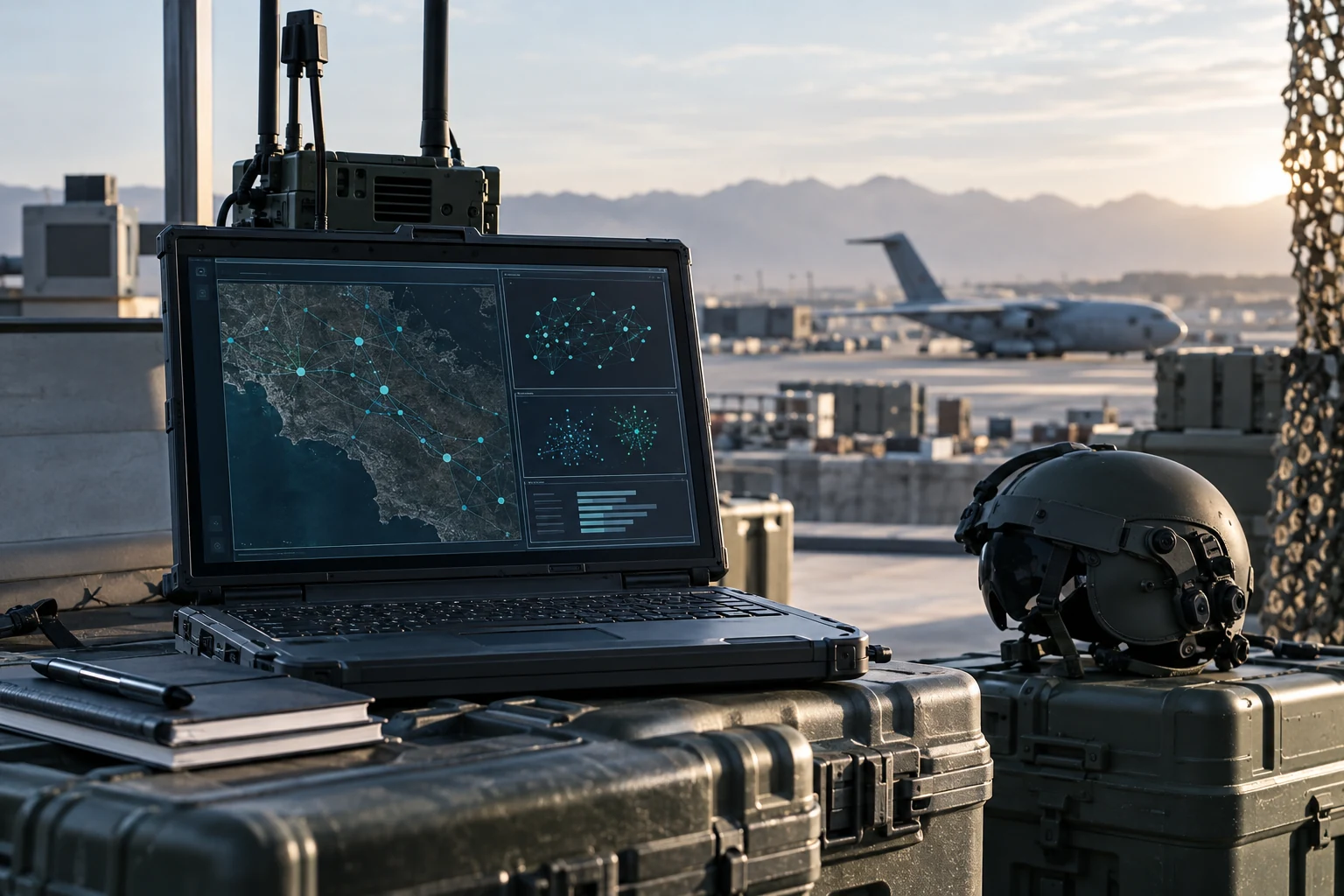
The Chief Digital and AI Office oversees Project Maven, the Advana data platform, and AI-enabled C2. SBIR topics from CDAO are directly tied to programs with active deployment paths — not research warehouses.
CDAO does not run a standalone SBIR topic inventory like Army or Navy. Instead, CDAO shapes topic direction in three ways: it co-writes topics with service components tied to enterprise data and AI priorities, it sets Task Force Lima (the Generative AI task force) priorities that trickle into service and OSD topics, and it owns the JWCC cloud contracts and Advana analytics platforms that Phase II performers will likely build on.
CDAO / Tradewinds marketplace pathway
Why CDAO matters for SBIR firms
For a small AI firm, CDAO's influence shows up in four places:
Topic language
OSD and service topics increasingly reference CDAO data standards, the DoD data mesh, and CDAO-approved AI infrastructure. Topics that align with CDAO enterprise direction are more fundable than topics that do not.
Phase II infrastructure
Phase II AI work in DoD is expected to run on CDAO-approved infrastructure — JWCC clouds (AWS, Azure, Google, Oracle), Advana for analytics, and the department's evolving AI platform stack.
Responsible AI compliance
CDAO owns the DoD Responsible AI Strategy and Implementation Pathway. Phase II AI deliverables are expected to align with the DoD AI Ethical Principles (responsible, equitable, traceable, reliable, governable). Proposals that treat RAI seriously score better.
Generative AI direction
Task Force Lima, stood up in 2023 inside CDAO, sets generative AI direction. Many generative AI SBIR topics across services are downstream of TFL priorities.
JWCC as a Phase II platform
The Joint Warfighting Cloud Capability (JWCC) is DoD's multi-cloud contract vehicle — four prime contracts with AWS, Microsoft, Google, and Oracle for up to 9 billion dollars through 2028. JWCC is not an SBIR vehicle, but CDAO owns the JWCC program management and SBIR Phase II AI workloads increasingly run on JWCC clouds.
Practical consequence: a Phase I proposal that demonstrates awareness of JWCC and plans for Phase II deployment to a JWCC cloud is better positioned than one that assumes on-premises or ungoverned commercial cloud. IL4 and IL5 accreditation paths on JWCC are real and reviewers know it.
The Advana and data mesh implications
Advana is CDAO's department-wide analytics and data platform, growing from its original audit-focused mandate into a broader data platform serving multiple DoD functions. The DoD data mesh initiative further decentralizes data ownership while maintaining enterprise discoverability and interoperability. For SBIR firms, the implication is that Phase II AI work is often expected to pull data from Advana-compatible pipelines and to expose results through Advana-compatible interfaces.
Task Force Lima and generative AI direction
Task Force Lima was created to assess, synchronize, and employ generative AI capabilities across DoD. TFL's public priorities include coding assistance, language services, content generation for training, summarization for intelligence and operations, and cross-domain information tasks. Topics related to these capability areas appear across OSD, Army, Navy, Air Force, and SOCOM SBIR cycles — TFL sets the direction; services write the specific topics.
For a firm pitching generative AI capability, aligning with TFL's public priorities is worth explicit mention in proposals.
Where CDAO-adjacent topics appear in 2026
OSD SBIR
OSD's own SBIR solicitations often carry CDAO-originated topics directly. Smaller topic count but high relevance for enterprise-scale AI pitches.
Service topics flagged with CDAO interest
topics on data mesh components, responsible AI tooling, AI assurance, data pipeline automation often have CDAO-visible co-interest.
Generative AI topics across services
TFL-aligned capability areas appear across Army, Navy, Air Force, SOCOM.
Advana-relevant topics
data pipeline, analytics automation, dashboard AI for defense enterprise analytics.
What CDAO alignment looks like in a proposal
- Cite the DoD Data Strategy and RAI Strategy in the technical approach.
- Identify the JWCC cloud(s) where Phase II deployment would land and the required accreditation level (IL4 or IL5).
- Describe data schema and metadata alignment with DoD data mesh principles (discoverability, accessibility, trust, interoperability).
- For generative AI work, explicitly reference Task Force Lima's public priorities.
- Plan Responsible AI test and evaluation as part of the Phase I work — not as an afterthought.
The dual-use positioning advantage
CDAO emphasizes dual-use commercial AI where feasible. A small firm with a commercial AI product that can be adapted to DoD use through a Phase I effort fits the enterprise direction more than a firm proposing a bespoke DoD-only build. Commercial-first language in proposals tracks with CDAO guidance.
Practical steps for CDAO-aware SBIR
- Read the DoD Data Strategy, Responsible AI Strategy and Implementation Pathway, and Task Force Lima public statements.
- For each target topic, identify whether CDAO direction is referenced implicitly or explicitly.
- Align the technical approach with CDAO infrastructure direction: JWCC, Advana, data mesh.
- Name RAI test and evaluation as Phase I deliverable where appropriate.
- Consider direct engagement: CDAO holds periodic industry days and hosts an Innovation and Digital Tech Office that accepts commercial capability briefings.
Bottom line
CDAO is not a standalone SBIR buyer. It is the strategic center of DoD's AI direction, and its influence shows up in service topic language, Phase II infrastructure expectations, and RAI compliance. Small AI firms that treat CDAO direction as the default environment for their Phase II deployment — JWCC clouds, data mesh, RAI, TFL-aligned generative AI priorities — write stronger proposals than firms that ignore the enterprise context. CDAO-aware is the new default for DoD AI SBIR.
Frequently asked questions
Not standalone. CDAO co-writes topics with service components and OSD, shapes topic direction through strategic guidance, and owns enterprise infrastructure (JWCC, Advana) that SBIR Phase II work increasingly runs on.
CDAO's generative AI task force, standing up in 2023. TFL assesses, synchronizes, and employs generative AI across DoD. Many generative AI SBIR topics across services are downstream of TFL priorities.
Joint Warfighting Cloud Capability — DoD's multi-cloud contract vehicle (AWS, Microsoft, Google, Oracle) managed by CDAO. Phase II AI work is increasingly expected to deploy on JWCC clouds with IL4 or IL5 accreditation.
Reference the DoD Data Strategy and Responsible AI Strategy, name the JWCC cloud for Phase II deployment, align data schemas with data mesh principles, cite Task Force Lima for generative AI work, and plan RAI test and evaluation as Phase I output.
Yes. Advana is CDAO's enterprise data platform. Phase II AI work that integrates with Advana-compatible pipelines tracks with enterprise direction.
Yes. CDAO guidance emphasizes dual-use commercial AI where feasible. Firms with commercial AI products adapted to DoD use fit the strategy better than firms pitching bespoke DoD-only builds.