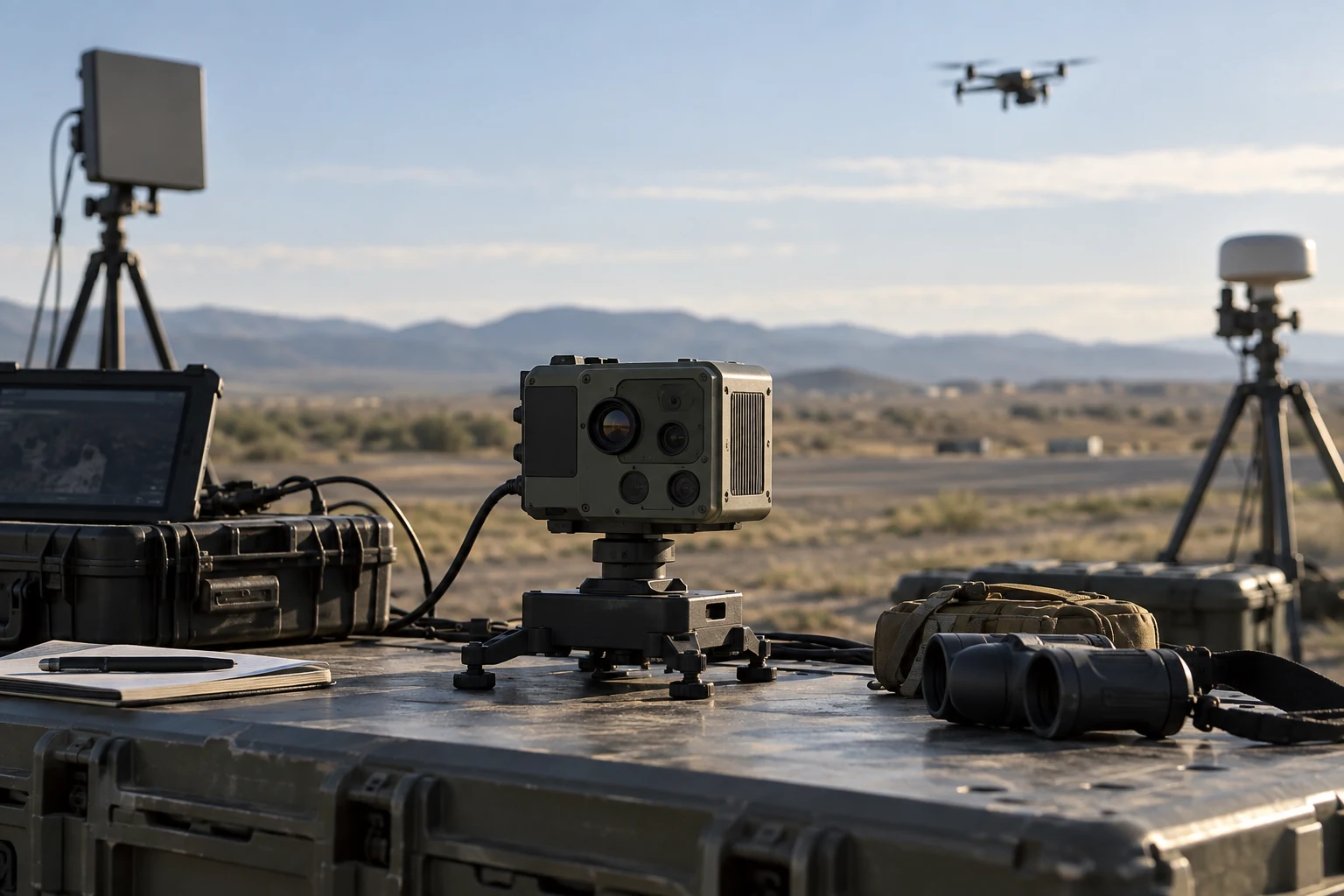
SOCOM buys differently because it has to
US Special Operations Command (USSOCOM) is structurally unlike the other combatant commands. Its forces train and equip across every service, it has its own acquisition authority (MFP-11 funding), and it operates at a tempo the rest of DoD cannot match. Those facts shape how SOCOM buys. The command leans heavily commercial-first: if a capability exists on the open market that meets the need, SOCOM buys it. If not, SBIR, OTA, or rapid prototyping fill the gap. The bureaucracy that drives multi-year acquisition at a major service is deliberately compressed at SOCOM.
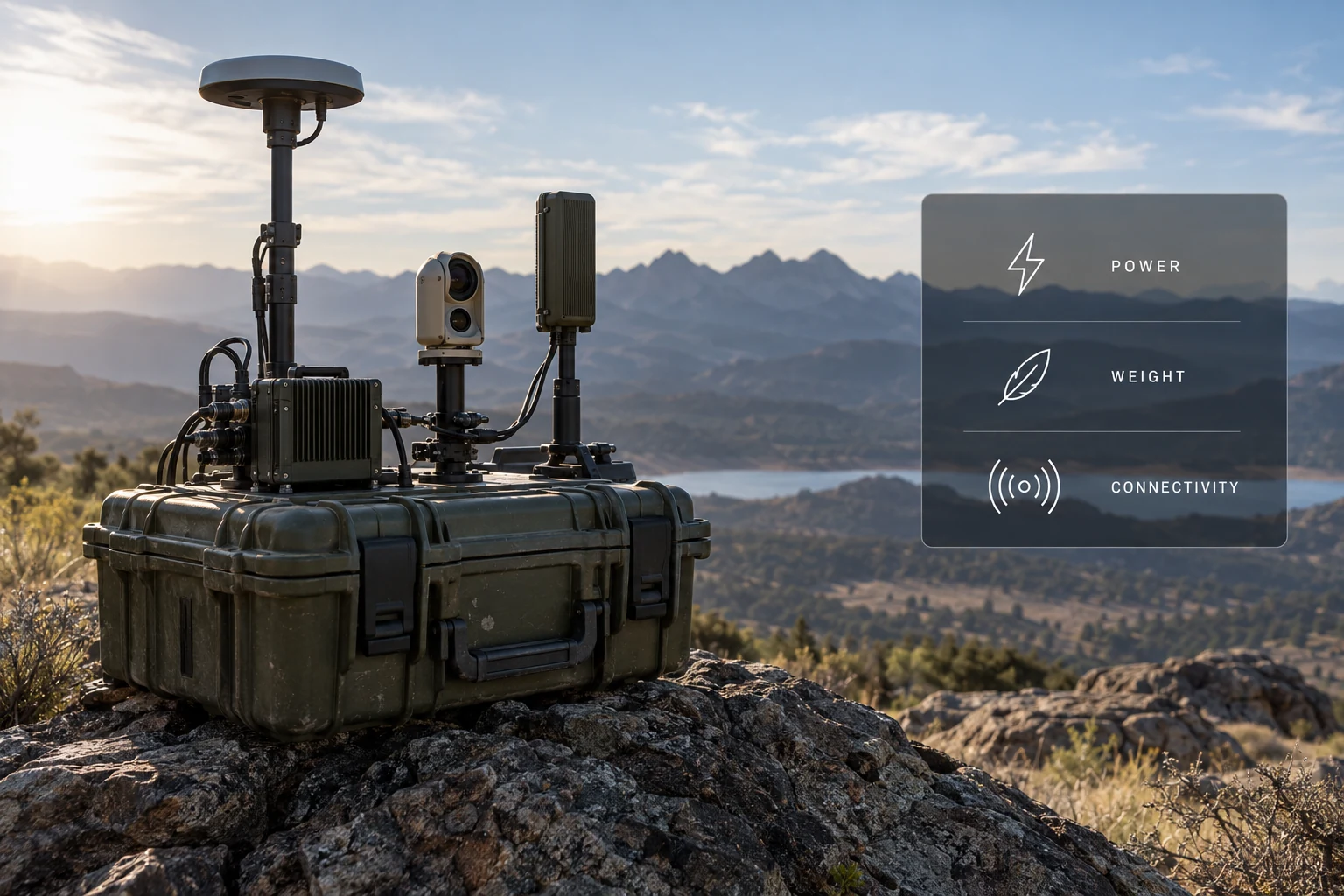
SOCOM has one of the fastest Phase I-to-Phase II transition rates in DoD. Topics favor systems demonstrable in a field environment within 6 months. Human-in-the-loop and physical ruggedization are non-negotiable.
SOCOM SBIR volume is smaller than the services — typically 15 to 25 topics per cycle — but the topics are sharper and the transition-to-fielding path is shorter when it works. For a small AI firm with fielded or near-fielded capability, SOCOM is one of the fastest doors in DoD to a real customer.
SOFWERX: the front door
SOFWERX is SOCOM's innovation hub in Tampa, Florida. It is not a procurement office — it is the place where small firms, SOF operators, and SOCOM program offices meet. SOFWERX runs events: assessment events (AE), rapid capability assessments (RCA), hackathons, tech sprints, and collaboration workshops. Firms that engage with SOFWERX get direct access to SOF end users and to the SOCOM PEOs who translate operator need into acquisition.
Practical path: engage SOFWERX, attend an AE or rapid event, get feedback from operators, use that feedback to refine your product and proposal, submit to an SBIR topic or OTA call with operator-level endorsement. This pipeline is real and it works for firms that will show up in person in Tampa.
SOCOM PEOs and what they buy
PEO Special Reconnaissance, Surveillance and Exploitation (PEO SR&SE)
Intel, surveillance, biometric, identity, exploitation. AI-heavy. Topics around multi-INT fusion, computer vision on edge devices, voice and language processing, identity resolution.
PEO Command, Control, Communications, Computers and Cyber (PEO C4 / PEO Cyber)
Tactical networks, SOF radios, mission command systems, cyber tools. AI topics around tactical decision support and mesh network resilience.
PEO Rotary Wing and PEO Fixed Wing
SOF-peculiar aviation. Predictive maintenance topics, mission planning topics.
PEO Maritime
SOF submersibles, surface craft. Smaller SBIR footprint.
PEO SOF Warrior
Individual operator equipment, weapons, protective systems, load-bearing.
PEO Services
Training systems, simulators, decision support.
Warm topic areas for AI firms in 2026
- Counter-UAS at the tactical edge. SOCOM has active urgency around group 1-3 drone threats. Topics span detection, tracking, ID, and defeat. ML-on-edge with RF, EO, and IR fusion is directly relevant.
- Mission command AI and decision support. SOF teams operate distributed, often without comms. Edge decision support tools that work offline and sync opportunistically are in demand.
- Biometric and identity processing. Voice, face, gait, document, and latent processing with edge inference. PEO SR&SE is the customer.
- Language and cultural AI. Low-resource language models, dialect processing, translation assist in-country.
- Small-unit logistics. Predictive resupply, health-of-equipment tracking, additive-manufacturing-at-the-edge workflow.
- Simulation and training AI. Adaptive training, scenario generation, after-action analysis.
Fit score = estimated alignment between topic requirements and a typical commercial-first AI firm's existing capability stack. Higher score = less bespoke development needed in Phase I.
The commercial-first posture
SOCOM reviewers are explicitly instructed to prefer commercial capability over bespoke development. An SBIR topic from SOCOM often reads: "we are looking for a capability already demonstrated in an adjacent commercial market, adapted to SOF use." Proposals that lead with adapting an existing product outperform proposals that propose to develop something new.
Phase III at SOCOM
SOCOM Phase III often skips the usual Phase III vehicle choreography because SOCOM can contract rapidly. A SOCOM Phase II that delivers well can transition via SOF AT&L rapid acquisition, through a PEO production contract, or through an OTA consortium SOCOM participates in (including Defense Innovation Unit OTA vehicles). Transition dollar sizes are moderate — SOCOM is not a mass-platform buyer — but the timelines are short.
Calendar and mechanics in 2026
SOCOM participates in the DoD SBIR joint calendar. Topic counts are modest per release. The 26.1 Release 1 closing June 3, 2026 will include SOCOM topics. SOCOM also runs AE events and rapid capability calls through SOFWERX outside the SBIR calendar, and these are as important as the SBIR cycle itself for firms building a SOCOM practice.
Practical steps for first-time SOCOM engagement
- Register with SOFWERX. Basic profile, capability statement, point of contact.
- Attend one AE or RCA in your capability area. Not remote — Tampa in person.
- Meet three operators and one PEO staff member during that visit.
- Use what you learn to reshape your product pitch.
- Submit the next cycle's relevant SBIR topic with operator or PEO endorsement referenced.
- Execute Phase I cleanly and use the delivery as evidence for the next SBIR topic or OTA call.
Failure modes to avoid
- Treating SOCOM SBIR as a remote engagement. It is not. Tampa visits are part of the work.
- Pitching a to-be-built product. SOCOM wants demonstrable capability.
- Ignoring the classification picture. Many SOF use cases are classified. Unclassified products with a clear classified-extension story do fine.
- Assuming one Phase I win unlocks SOCOM. The operator relationship is the unlock, not the award.
Bottom line
SOCOM SBIR rewards firms that already have a product, will engage SOFWERX in person, and can adapt their capability to SOF operational tempo. The topic volume is smaller than services but the transition timeline is faster when it works. Counter-UAS, edge AI, biometric processing, and tactical decision support are the warm 2026 areas. The firms that build durable SOCOM practices treat SOFWERX as a permanent fixture, not a one-time visit.
Frequently asked questions
SOFWERX is SOCOM's innovation hub in Tampa. It runs assessment events, rapid capability assessments, and workshops that connect small firms with SOF operators and SOCOM PEOs. It is the practical front door to SOCOM SBIR and OTA work.
Typically 15 to 25, smaller than the services but sharper. The 26.1 cycle closing June 3, 2026 will include SOCOM topics. SOCOM also runs out-of-cycle rapid capability calls through SOFWERX.
Counter-UAS at the tactical edge, mission command AI and decision support, biometric and identity processing, low-resource language AI, small-unit logistics, and adaptive training.
Yes. SOCOM reviewers prefer firms with demonstrated commercial capability adapted to SOF need over firms proposing to build something new. A to-be-built Phase I pitch underperforms an adaptation pitch.
SOCOM has rapid acquisition authority and can transition Phase III faster than services. A clean Phase II can move to PEO production, SOF AT&L rapid contract, or OTA consortium follow-on in months rather than years.
Effectively yes. SOFWERX events are where operator and PEO relationships form. Remote-only engagement underperforms in-person SOFWERX participation by a wide margin.