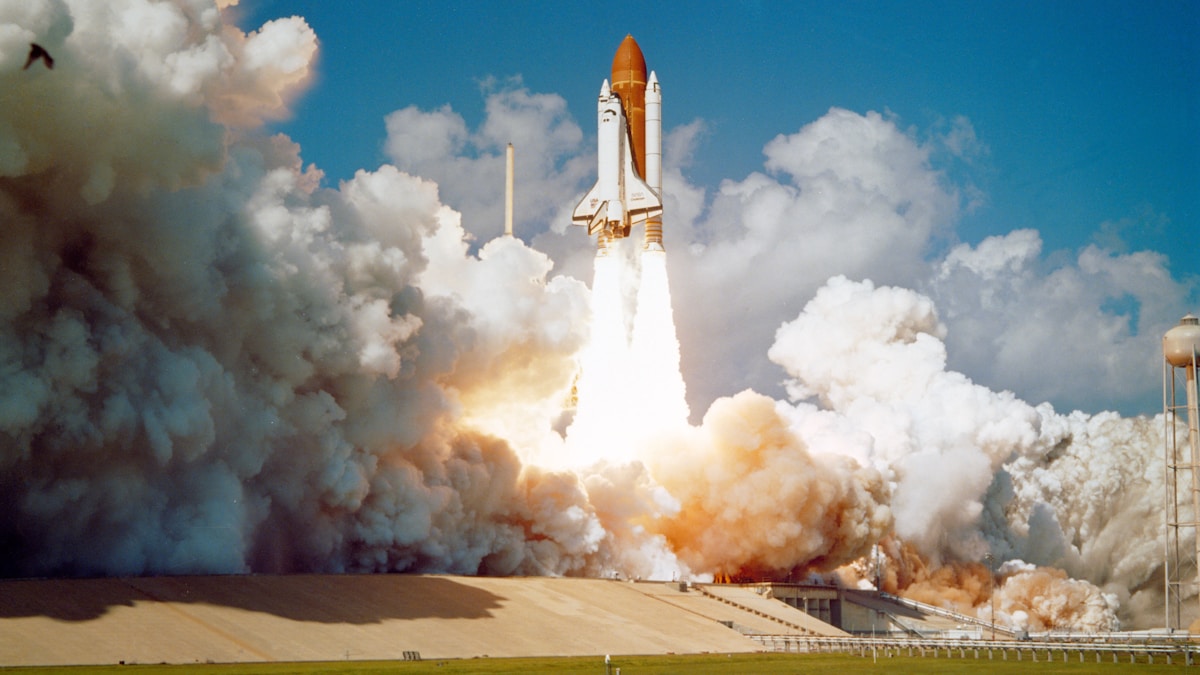
NASA SBIR is a federation of centers
NASA SBIR is administered by the NASA SBIR/STTR Program Management Office at Ames Research Center, but topics originate across ten field centers. Each center has its own mission directorate ties, its own engineering culture, and its own procurement preferences. For a small firm, center selection matters more than topic selection in the same way that service selection matters more than topic selection at DoD.
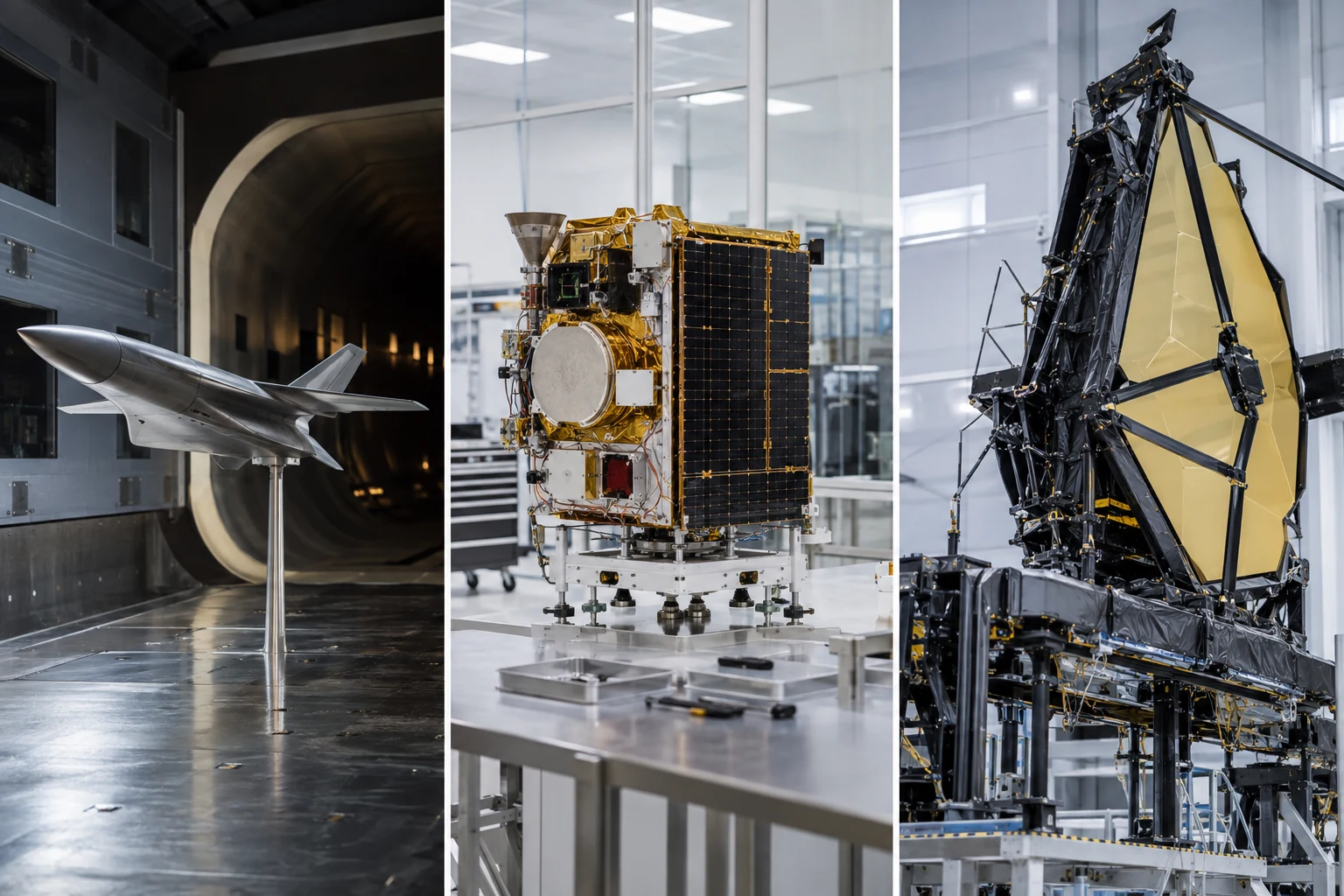
Each NASA center has its own SBIR budget and priorities. JPL: deep space and robotics. Goddard: Earth observation ML. Marshall: propulsion and materials. Topics are written by center scientists, not HQ.
NASA SBIR Phase I in 2026 is 150 thousand dollars for six months. Phase II up to 850 thousand over 24 months — smaller than DoD Phase II but larger than some civilian SBIRs. Post-Phase-II Initiative (PPI) and Ignite track supplements extend this. The Phase III transition vehicle is typically a center task order or a prime integration under a large mission program.
NASA center AI relevance score (approx. 2025)
Mission directorates shape topic themes
NASA topics are organized by five Mission Directorates: Aeronautics Research (ARMD), Exploration Systems Development (ESDMD), Space Operations (SOMD), Science (SMD), and Space Technology (STMD). The directorates set the topic themes; the centers write and execute them. Knowing which directorate a topic sits under tells you which centers are likely the primary and secondary buyers.
The centers and what they procure
Ames Research Center (Moffett Field, CA)
Autonomy, AI, human factors, air traffic management, entry systems, astrobiology. Ames is the AI-heaviest center. Topics across ML for aeronautics, UTM, autonomous systems, and planetary science. For AI firms, Ames is the most natural entry point.
Langley Research Center (Hampton, VA)
Aeronautics, materials, structures, atmospheric science. AI shows up in flight dynamics modeling and data-driven CFD surrogates. Strong aeronautics industrial base in the region.
Goddard Space Flight Center (Greenbelt, MD)
Earth and space science missions, satellite systems, scientific instruments. Heavy data processing topics around remote sensing, hyperspectral analysis, and mission operations automation. Goddard also partners with Landsat and the Earth Observation program.
Jet Propulsion Laboratory (Pasadena, CA)
Planetary and deep space missions, rovers, orbital mechanics. Technically JPL is a FFRDC operated by Caltech, so its SBIR engagement is slightly different — but JPL task orders on Phase III work are legitimate transitions. AI topics span onboard autonomy, mission planning, and instrument data processing.
Marshall Space Flight Center (Huntsville, AL)
Propulsion, launch systems, SLS, Artemis engineering, in-space manufacturing. More mechanical than AI, but ML-for-propulsion and model-based systems engineering topics appear.
Johnson Space Center (Houston, TX)
Human spaceflight, ISS operations, Orion, Artemis crew systems. AI topics around crew decision support, medical monitoring, and mission operations.
Glenn Research Center (Cleveland, OH)
Aeropropulsion, space power, communications. ML topics in propulsion health management and adaptive control.
Kennedy Space Center (Cape Canaveral, FL)
Launch operations, ground systems, commercial crew/cargo integration. Fewer AI SBIR topics but adjacent ground processing automation fits.
Stennis Space Center (MS)
Rocket engine testing, instrumentation. Small SBIR footprint.
Armstrong Flight Research Center (Edwards, CA)
Flight research, UAS, X-planes. AI for flight test data analytics and autonomous flight research.
Where AI firms should target
Ames is the natural home for autonomy, aeronautics AI, and data-driven physical modeling. Goddard is the home for Earth observation, scientific data processing, and mission operations automation. JPL is the home for onboard autonomy and planetary science AI. If your stack touches these, start there.
Langley, Johnson, Glenn, and Marshall produce AI topics less frequently but are accessible once a firm has a prior NASA Phase I delivery.
Building a center relationship
NASA centers operate as semi-autonomous research institutions. A relationship is not built by the proposal — it is built by engineering conversations with center technical staff before the proposal. The practical pattern:
- Identify the center division whose work maps to yours. Center websites publish division-level research portfolios.
- Read recent NASA Technical Reports Server (NTRS) publications from that division.
- Find the authors of the most relevant recent reports. They are likely the topic writers or reviewers.
- Reach out in pre-release with a one-paragraph note identifying overlap with your work.
- When a topic is released, submit with clear reference to the division's ongoing work.
Phase III at NASA
Phase III at NASA typically flows through one of three channels: center task orders (direct Phase III contracts from the center), integration under a larger prime mission program (e.g., a Phase III subcontract from Northrop on an SLS element), or programmatic funding from a mission directorate for sustained technology maturation. The transition path is specific to the center and to the program the Phase II matured toward. Firms that plan for Phase III early — in their Phase I proposal — outperform firms that wait.
NASA also offers Post-Phase-II Initiatives (PPI) and a Civilian Commercialization Readiness Pilot Program (CCRPP) that function as Phase II.5 vehicles, often requiring external customer co-investment.
Review culture
NASA SBIR review is done by technical evaluators drawn from the center division. Reviews tend to emphasize technical feasibility, innovation, and a clear path to utility for the mission directorate. Commercialization review weighs mission utility and dual-use commercial potential. Reviewers are credentialed engineers — they notice hand-waving on technical claims immediately.
Practical steps for a first NASA SBIR
- Pick one directorate whose work aligns with your capability (STMD, ARMD, SMD, SOMD, ESDMD).
- Identify the primary center for that directorate's topics.
- Read current open Space Technology Mission Directorate priorities in particular — they drive a lot of 2026 topic content.
- Engage center technical staff in pre-release.
- Plan the Phase III center or prime integration path in the Phase I proposal.
Bottom line
NASA SBIR in 2026 is small-scale but highly specific. For AI firms, Ames, Goddard, and JPL are the primary entry points. Phase II dollar ceiling is lower than DoD, but PPI and CCRPP extend the funding. Phase III transitions are center-led, so building the center relationship early is the single highest-leverage action. Plan on two to three cycles of disciplined engagement before the first win, and much faster movement once the center knows your team.
Frequently asked questions
Ames (autonomy and aeronautics AI), Goddard (Earth observation and mission operations), and JPL (onboard autonomy and planetary science) are the three most AI-heavy centers.
Phase I is 150 thousand dollars for six months. Phase II up to 850 thousand over 24 months. Smaller than DoD but extended by PPI and CCRPP Phase II.5 mechanisms.
Phase III typically flows through a center task order, a Phase III subcontract under a prime mission program, or programmatic funding from a mission directorate. Planning the path starts at Phase I, not after.
Functionally yes. The reviewers are center technical staff and the topics are written from center work. Firms with pre-release conversations with center staff outperform firms that submit cold.
Aeronautics (ARMD), Space Technology (STMD), Science (SMD), Space Operations (SOMD), and Exploration Systems (ESDMD). They set topic themes; centers execute.
Yes. JPL is a federally funded research and development center operated by Caltech. Its SBIR engagement differs slightly in contracting, but Phase III task orders through JPL are legitimate and active.