DOE is a federation of labs with a small program office on top
The Department of Energy SBIR program funds small business research across the Office of Science, ARPA-E, NNSA, Fossil Energy, Nuclear Energy, Electricity, Environmental Management, Energy Efficiency and Renewable Energy, and Cybersecurity Energy Security and Emergency Response. Each of these program offices writes topics. But the intellectual center of gravity at DOE is its 17 national laboratories — Argonne, Berkeley, Brookhaven, Fermilab, Idaho, Lawrence Livermore, Los Alamos, NREL, Oak Ridge, Pacific Northwest, Princeton Plasma Physics, Sandia, SLAC, Savannah River, Thomas Jefferson, Ames, and NETL. The labs set the research agenda, often through multi-decade programs. SBIR topics, particularly at the Office of Science, flow from lab priorities.
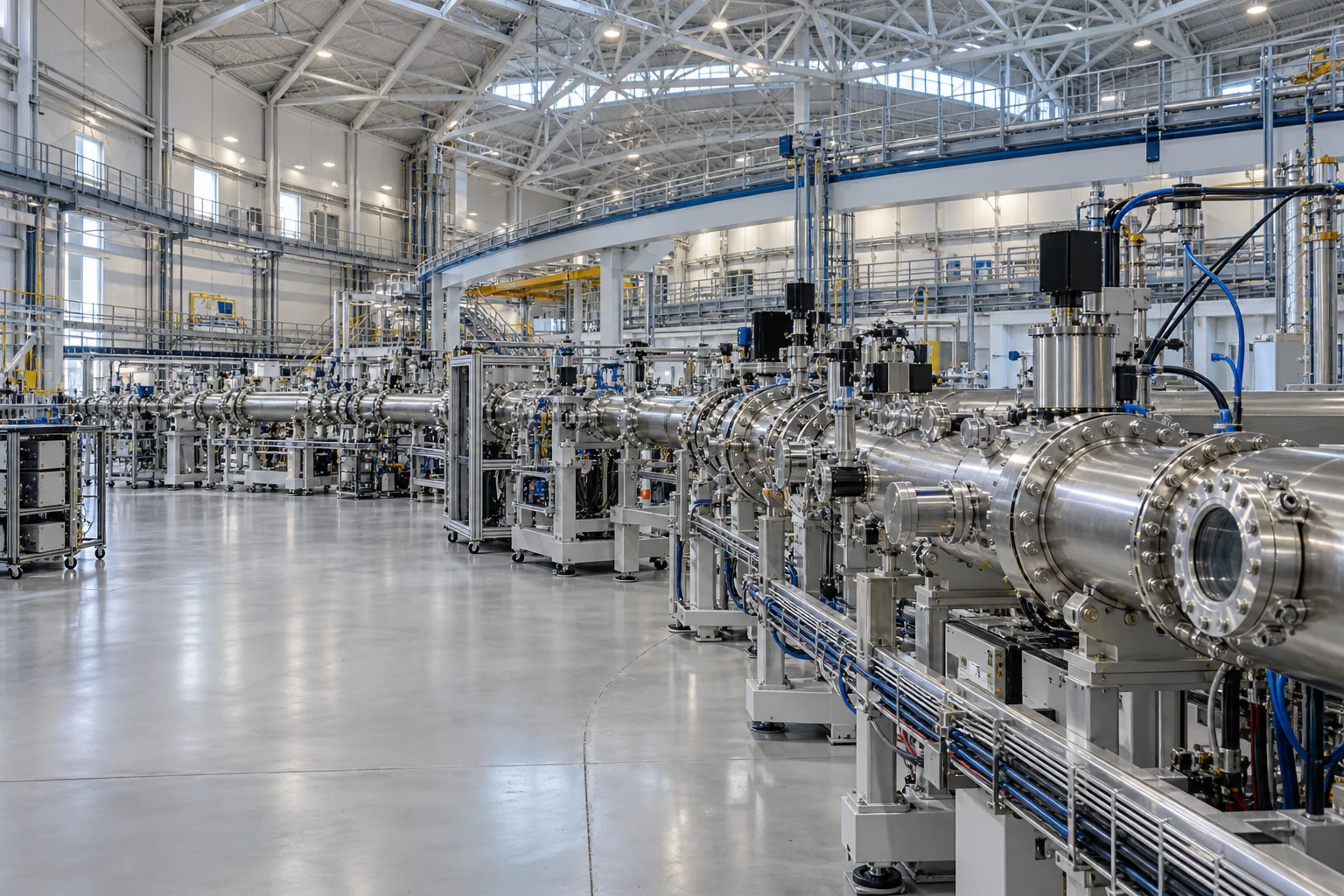
DOE SBIR topics originate from national laboratories — Argonne, ORNL, NREL, Lawrence Berkeley. The most competitive proposals have a direct relationship with the lab scientist who wrote the topic.
The practical consequence for a small firm: a DOE SBIR proposal with a named national lab collaborator, a lab letter of support, or a pending CRADA discussion carries significantly more weight than a proposal without one. Not because of favoritism but because the reviewers — often lab staff or former lab staff — read lab alignment as technical validation.
National lab SBIR partnership pathway
Award mechanics in 2026
DOE SBIR Phase I in 2026 is typically 250 thousand dollars for up to 12 months (Office of Science runs higher on some topics). Phase II is up to 1.8 million over 24 months. DOE also runs Phase II Sequential and Phase II-B enhancements for firms that need additional funding for technology maturation. DOE accepts longer technical narratives than some agencies, which favors firms with substantive research content.
Office of Science and ARPA-E: two different cultures
Office of Science (SC)
Office of Science funds basic and applied research across High Energy Physics, Nuclear Physics, Fusion Energy Sciences, Basic Energy Sciences, Biological and Environmental Research, and Advanced Scientific Computing Research. Office of Science SBIR topics tie closely to lab experimental facilities: scientific instruments, detectors, accelerator technology, HPC software, AI for scientific discovery. Reviewers reward scientific rigor and alignment with lab facility needs.
ARPA-E
ARPA-E operates more like DARPA: program manager driven, transformational energy technology focused, higher risk tolerance. ARPA-E SBIR topics appear through its OPEN and focused-program solicitations. Topics map to specific ARPA-E program themes — grid, battery, carbon management, fusion, advanced nuclear, industrial decarbonization. AI plays a supporting role in grid control, materials discovery, and process optimization.
Applied programs (EERE, FECM, NE, CESER, OE, NNSA)
Applied Office topics focus on deployable technology for specific energy sectors. EERE covers renewables, vehicles, and buildings. FECM covers fossil. NE covers nuclear. CESER covers cyber for energy infrastructure. OE covers the grid. NNSA covers nuclear security. Each has its own review culture but generally rewards deployability and a credible industrial partner story.
Where AI/ML firms should target
- Advanced Scientific Computing Research (ASCR) — AI for science, HPC software, data management at exascale. Most directly AI-aligned of the Office of Science sub-offices.
- Basic Energy Sciences (BES) — ML for materials discovery, autonomous experimentation, scientific imaging.
- Biological and Environmental Research (BER) — bioinformatics, climate model ML, environmental sensing.
- ARPA-E — ML in materials, grid optimization, energy systems autonomy. Note ARPA-E is its own grant program alongside SBIR.
- CESER — AI for grid cyber defense, OT network anomaly detection.
- NNSA — ML for nonproliferation, signal processing, simulation acceleration (often classified, requires clearances).
The CRADA and lab partnership mechanics
A Cooperative Research and Development Agreement (CRADA) is the standard contracting instrument between a small firm and a national lab. CRADAs allow the lab and the firm to share personnel, facilities, and IP under defined terms. CRADAs take weeks to months to execute.
For an SBIR, a full CRADA is usually not required at proposal time. A letter of interest or letter of intent from a lab staff member, indicating willingness to collaborate if Phase I is awarded, is the usual artifact. A named lab collaborator is stronger. A pending CRADA discussion is stronger still.
How to make the first lab contact
- Identify the lab division that does your technical area. Labs publish division-level organization charts.
- Search recent DOE Office of Scientific and Technical Information (OSTI) publications from that division. Find authors.
- Email a staff scientist directly. A one-paragraph introduction plus a specific question about a recent paper is a legitimate opening.
- If the scientist is responsive, propose a 20-minute call. During the call, explain your capability and ask whether the division sees overlap.
- If there is interest, ask whether the scientist would be willing to provide a letter of interest for an SBIR proposal in a topic area that aligns with their work.
Topic cadence and timing
DOE runs SBIR on an annual Phase I solicitation cycle, typically with a Release in August and closing in October, and a Release 2 in December/January. ARPA-E SBIR topics come through OPEN solicitations and focused-program announcements on variable cadence. Office of Science publishes its FOAs in the fall for most cycles.
The 2026 cycle timing means firms planning DOE SBIR work should begin lab outreach in spring/early summer for an August topic release, giving time for letters of support and CRADA conversations.
Review culture
DOE SBIR proposals are reviewed by topic managers and external reviewers, often drawn from the national lab system. The review emphasizes technical approach, scientific merit, commercialization potential, and team qualifications. Proposals that engage with the scientific literature of the topic area — citing relevant publications, identifying specific gaps — read as more credible than proposals that do not.
Phase III at DOE
DOE Phase III paths include: direct contracts from DOE program offices, subcontracts under national lab prime contracts, licensing to commercial energy firms, and follow-on DOE grants or demonstrations. Some DOE programs (EERE in particular) have demonstration funding mechanisms that function similar to Phase III.
Practical steps for a first DOE SBIR
- Pick one DOE program office (Office of Science sub-office, ARPA-E, or applied program) aligned with your capability.
- Identify one national lab whose work overlaps.
- Make the lab contact. Get a letter of interest.
- Read the current topic list. Match your capability to a specific topic, not a general area.
- Write the proposal with the lab collaborator named and the technical approach grounded in current literature.
- Plan Phase III: demonstration partner, commercial customer, or lab task order pathway.
Bottom line
DOE SBIR rewards firms that engage with the national lab system. A lab letter of support is the single highest-leverage artifact a small firm can add to a DOE proposal. For AI firms, ASCR, BES, BER, ARPA-E, and CESER are the natural entry points. Topic cadence is annual, which means lab outreach should start months before topic release. Phase III paths exist through demonstration funding and lab task orders, but require the same relationship discipline as the initial SBIR.
Frequently asked questions
No. A letter of interest from a national lab staff scientist is usually sufficient at proposal time. Full CRADAs are typically executed after award when the collaboration begins in earnest.
Phase I is typically 250 thousand dollars for up to 12 months. Phase II is up to 1.8 million over 24 months. Phase II Sequential and Phase II-B enhancements extend that further.
ARPA-E is program-manager driven and funds transformational energy technology — higher risk, shorter horizon. Office of Science funds basic research aligned with national lab facility needs — longer horizon, deeper scientific content.
ASCR (Advanced Scientific Computing Research) for AI-for-science and HPC software. BES for materials ML. BER for bioinformatics and climate ML. ARPA-E for energy-systems AI. CESER for grid cyber AI.
Identify the lab division that does your technical area, find recent OSTI publications from that division, and email a staff author directly. A one-paragraph introduction plus a question about a specific paper is a legitimate opening.
Paths include direct DOE program office contracts, subcontracts under lab prime contracts, licensing to commercial energy firms, and demonstration funding through applied offices like EERE.