
The ATO delay is not mysterious
Federal Authority to Operate for AI systems takes longer than ATO for conventional systems. Not because the controls are harder, but because the technology is newer to assessors, the documentation patterns are unsettled, and the supply chain (model weights, prompt templates, RAG indexes) is unfamiliar territory.
The delay is mostly self-inflicted by the program. Every week of extra review traces back to a fixable thing: a boundary diagram that does not match the deployed system, an SSP narrative written the week of assessment, audit log samples assembled by hand, an SBOM that covers containers but not model weights, or a prompt injection control described in marketing language rather than implementation.
This playbook is what we do to move an AI system from sprint one to signed ATO in 3 to 6 months for a Moderate baseline, 6 to 9 for High. The core move is the same across every system: controls live in source, evidence is generated, not assembled, and documentation is a view on reality rather than a parallel artifact.
Why AI ATOs take longer
Five patterns show up in every slow AI ATO:
- Assessor unfamiliarity. Assessors review dozens of traditional web apps a year. They have reviewed far fewer LLM or agentic systems. Every novel control interpretation needs a deeper walkthrough.
- Ambiguous data classification. Prompts and completions often carry mixed classification. The package rarely calls this out clearly, so the assessor has to dig.
- Model supply chain. Nobody on the program has ever written an SSP paragraph about model weight integrity before. SI-7 language is vague.
- Prompt injection as a new threat. Not in the assessor's mental model. Shows up as a late question.
- Inherited FedRAMP posture not documented. The program says "it's on GovCloud" but does not produce a responsibility matrix. Every inherited control gets re-argued.
All five are fixable before the assessor ever opens the package.
Pre-assessment: win the ATO before it starts
The single highest-leverage activity in an ATO is the work you do before the assessor shows up. Four things matter.
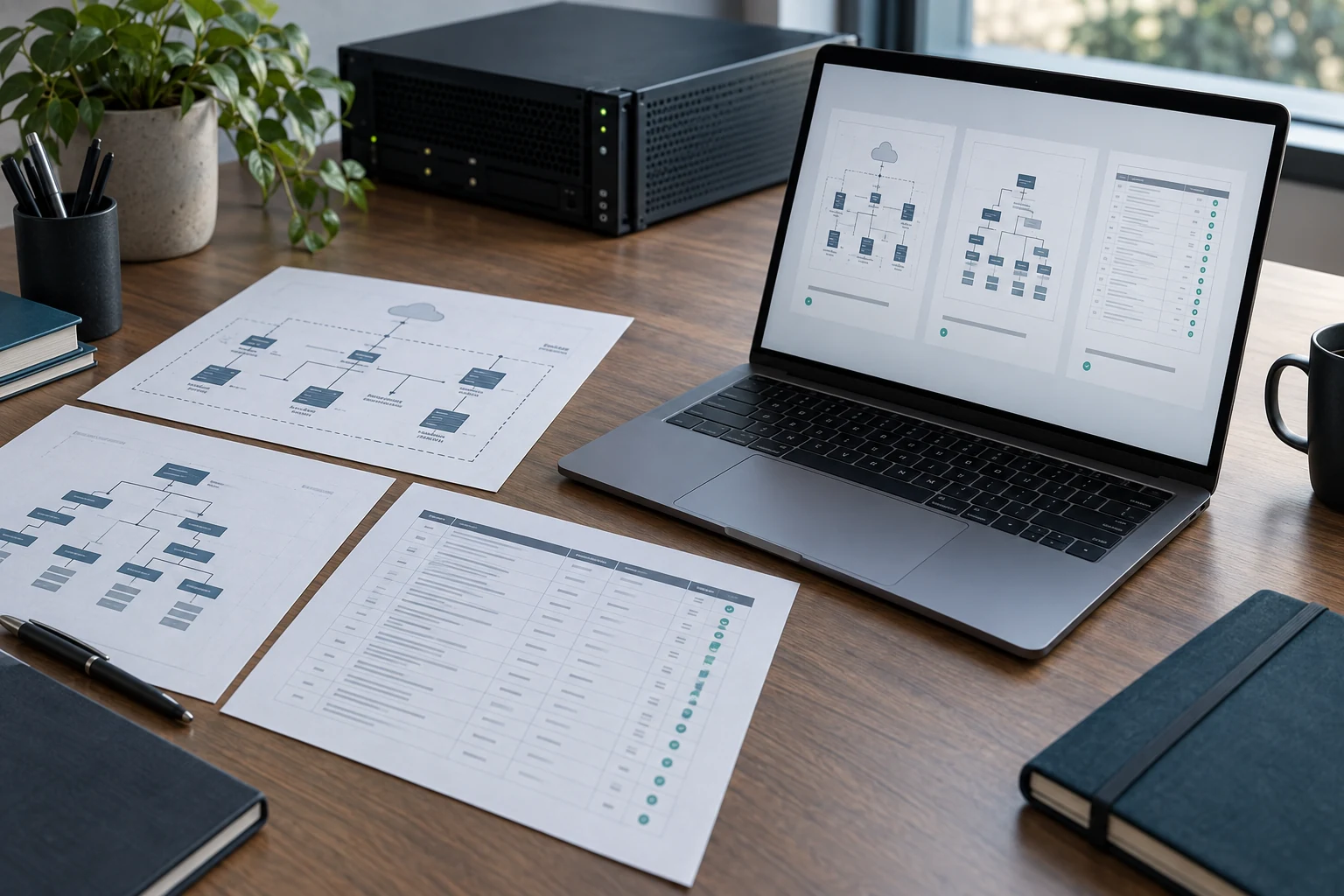
Control mapping in code. Every control has an owner, a link to implementation (file path, Terraform module, policy document), and a test or evidence artifact. We keep this in a single controls/ directory under version control with one YAML or Markdown file per control family. The SSP is generated from it.
Responsibility matrix with the cloud. Explicit table of every control, marked Inherited / Shared / System Responsibility, with the cloud's SSP Appendix J referenced for each inherited control. Assessors stop re-asking inherited questions when this is in the package on day one.
Data flow diagram that is current. Generated from your Terraform state, not drawn in Visio. Every arrow carries a classification label. Every system boundary is explicit.
Pre-brief with the assessor. A 60 to 90 minute walkthrough of the architecture, the AI-specific controls, and the evidence pipeline, before any formal review. This concentrates weeks of back-and-forth into one conversation.
Evidence automation
Manual evidence collection is the single biggest source of ATO slippage. By the time a Moderate system reaches assessment it has a few thousand pages of evidence to produce. If that happens in the last two weeks, things slip.
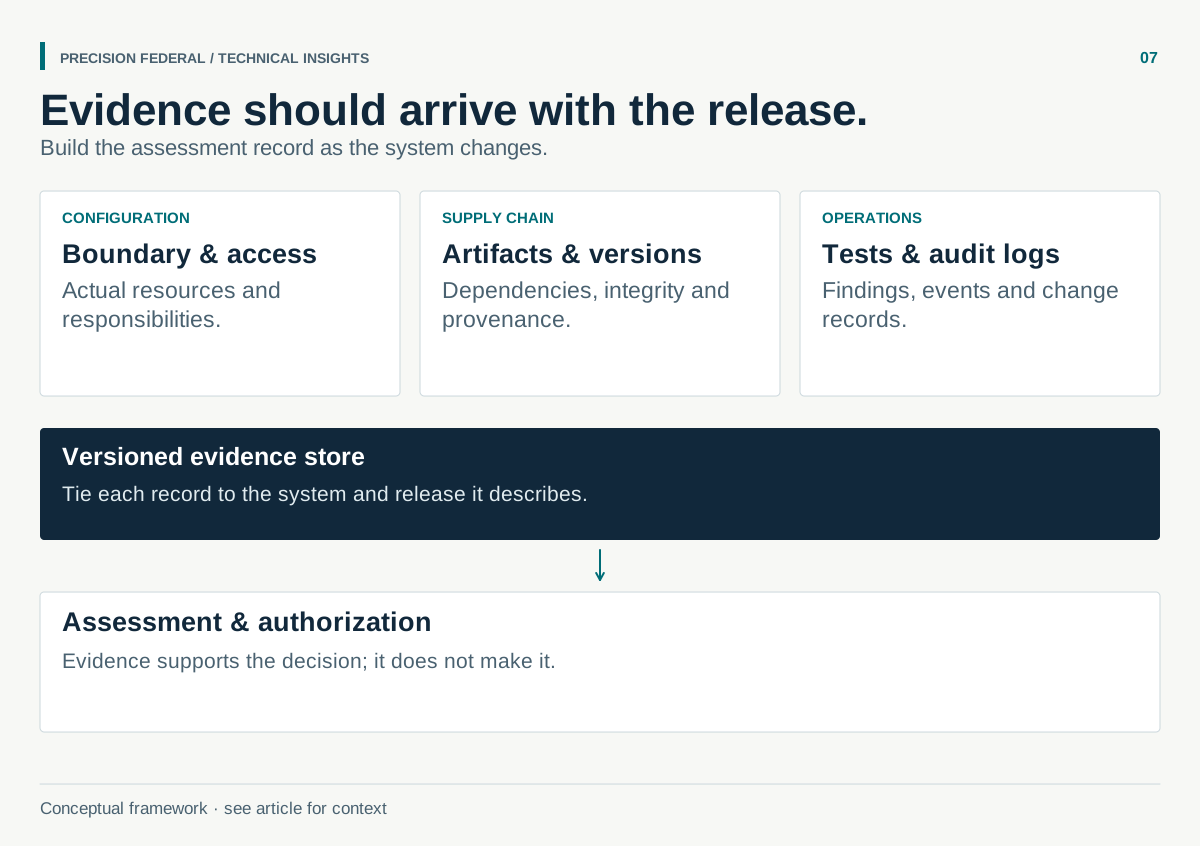
A working evidence pipeline generates these artifacts on a schedule and drops them into a versioned evidence store:
SSP sections
rendered from the controls directory via a template.
Configuration evidence
Terraform state snapshots, Kubernetes manifests, IAM policy dumps, security group summaries.
Audit log samples
deterministic queries against CloudWatch Logs or Log Analytics that pull representative events per control.
Vulnerability scan reports
Trivy, Grype, OpenSCAP, and model-weight scans archived with dates.
SBOMs
Syft SPDX and CycloneDX outputs for every container image and every model artifact.
Boundary diagrams
generated from Terraform state using rover, inframap, or a custom renderer.
Access review exports
IAM users, groups, and roles with last-used timestamps; Entra ID conditional access and app registrations.
Change records
pull request metadata, deployment logs, approvers, linked tickets.
Run the pipeline nightly. Store outputs in S3 or Azure Blob with object lock (Moderate) or WORM policies (High) for chain of custody. When the assessor asks for evidence, you are pulling pre-generated artifacts, not scrambling to produce them.
STIG-hardened base images
Half of CM and much of SI is about configuration. If your base images are STIG-hardened from the start, those controls fall out for free. If they are not, you will spend weeks remediating findings that should never have existed.
Build once, scan every PR. A base image pipeline produces Ubuntu, RHEL, and Windows Server images with DISA STIGs applied. OpenSCAP scans run in CI on every image build and on every application image built from them. Findings go into a baseline report and any new findings block the merge.
Drift detection. A daily job compares running container images to the golden base image. Drift generates a ticket. This keeps the authorization boundary tight over time.
GPU nodes. AI workloads often run on GPU nodes that use custom AMIs. Harden the GPU base image the same way. Nvidia's CUDA stack has specific STIG implications; document them.
SBOMs for AI workloads
An SBOM for a typical container image is solved. An SBOM for an AI workload has a twist: the model weights are a software component, and most SBOM tools do not include them by default.
Container layer. Syft produces SPDX and CycloneDX SBOMs from container images. Archive both formats; different agencies prefer different ones.
Model layer. Generate a separate SBOM entry for each model artifact: provider, model family, version, hash, size, training data lineage where available. For open-weight models this includes the Hugging Face revision hash. For fine-tunes, add the parent model, the fine-tuning dataset identifier, and the training job ID.
Signing. Sign container images and model artifacts with Cosign or sigstore. Store SLSA provenance attestations alongside. Verify signatures at load time in the deployment pipeline and at runtime on every pod start.
Upstream drift. When a hosted foundation model provider (Bedrock, Azure OpenAI) silently bumps a model version, your SBOM should flag it. Record the model_version_hash or provider-returned version string on every inference call (see audit schema below) and diff it nightly.
Boundary diagrams from Terraform
Assessors ask for a boundary diagram early. The diagram shows what is inside the authorization boundary, what is outside, and every flow that crosses it. When that diagram is drawn by hand once and then never updated, it goes stale within a sprint.
Generate it. Feed Terraform state into a renderer. Classify resources by tag. Draw the boundary as a ring around the in-scope set. Every S3 bucket, VPC endpoint, security group, and IAM role shows up because it is in state; nothing shows up that is not deployed.
Export the diagram as SVG weekly. Drop it into the evidence store with a timestamp. The same artifact is what goes into the SSP.
Pen tests, scans, and adversarial testing
Cadence matters more than any individual scan.
Trivy / Grype
on every PR and every nightly image build. CVE thresholds defined per severity; criticals block merge.
Semgrep / CodeQL
on every PR for code-level issues. Custom rules for the common LLM pitfalls (unsafe deserialization, injection in prompts built by string concat).
OpenSCAP
on every image against the relevant STIG profile.
DAST (ZAP or Burp)
weekly against the staging environment.
Pen test
annually at minimum, with scope that includes the LLM-specific surface (prompt injection, jailbreaks, tool misuse).
Adversarial / red team on the AI surface
quarterly at minimum for production LLM systems. Document findings in the POA&M.
Common ATO blockers for AI systems
Unclear data classification. Fix by labeling every prompt and completion at ingestion, propagating classification through retrieval, and recording the classification in the audit log. Document the classification model in the SSP.
Missing audit log for model I/O. Fix by logging every model invocation through a gateway with the schema from our NIST 800-53 for LLMs post. Prompt, completion, model version, tool calls, user identity, latency.
Model weight integrity. Fix with signed artifacts (Cosign), SBOMs that include models, runtime signature verification, and a control narrative under SI-7 that specifically addresses model artifacts.
Prompt injection not addressed. Fix by mapping prompt injection defenses to SI-3 and SI-4 with specific implementation (input classifiers, delimiters, output parsers) and documenting the policy threshold and rejection behavior.
FedRAMP inheritance not documented. Fix with a responsibility matrix that covers every control, referencing the cloud's ATO boundary. One page saves weeks of assessor questions.
Tool runtime isolation. Fix with per-invocation sandboxes (Firecracker, gVisor, dedicated containers) for any tool that executes code. Shared Python processes are a finding in every AI system that has them.
The practical checklist
Print this. Tape it to the wall. If every item is green two weeks before assessment, you will not slip.
- SSP generated from source, not written in Word
- Responsibility matrix with cloud inheritance documented
- Boundary diagram generated from Terraform state, updated weekly
- Data flow diagram with classification labels on every arrow
- Audit log schema covers prompt, completion, model version, tool calls, user identity
- SBOM for every container image and every model artifact
- Cosign signatures on images and models, verified at load time
- STIG-hardened base images with OpenSCAP in CI
- Vulnerability scans on every PR and every nightly build
- Prompt injection classifier and control narrative
- Tool runtimes isolated per invocation
- POA&M with clear SLAs per severity
- Quarterly adversarial testing engagement on file
- Pre-brief with assessor scheduled before any formal review
- Evidence pipeline running nightly into a WORM-protected store
- Controls directory under version control with one file per family
- Model inventory in CMDB with version, provider, classification
- Access reviews automated, exports archived
- Change records captured from git and deployment pipeline
- Continuous monitoring plan documented and running
Timeline with the playbook
Here is how the timeline actually compresses when the pieces above are in place from sprint one.
Month 1. Architecture, boundary, inheritance matrix. Controls directory stood up. Evidence pipeline producing nightly artifacts. STIG base images in CI. Pre-brief scheduled for month 4.
Month 2. Core application built. LLM gateway with audit logging live. Prompt injection controls implemented. SBOM and signing integrated. SSP v0.5 generated.
Month 3. Hardening. Continuous monitoring plan active. POA&M populated. Adversarial test run against staging. SSP v0.9. Assessor pre-brief.
Month 4. Assessor questions answered from the evidence store. Remediation on any legitimate findings. Mock ATO walkthrough.
Month 5. Formal assessment. Most questions are variants of what came up in the pre-brief, so answers are ready.
Month 6. Authorization letter. Continuous monitoring takes over.
That is 3 to 6 months for Moderate. Add 3 for High. Subtract weeks if the assessor has reviewed similar systems recently. Add weeks if any of the foundational pieces above are skipped.
What accelerates real systems (and what does not)
Things that reliably shave weeks:
- Controls in source, SSP as a view
- Evidence generated, not assembled
- Assessor pre-brief 8 weeks out
- Responsibility matrix on day one
- STIG images from day one
Things that look productive but do not shave weeks:
- Beautiful slide decks that do not match the SSP
- Large tiger team pulled in two weeks before assessment
- New GRC tools adopted mid-ATO
- Relying on the assessor to explain what they want
FAQ
How we run this
Every federal AI engagement we take starts with the controls directory, the evidence pipeline, and the pre-brief on the calendar. It is a direct way we know to compress authorization without compressing actual security. See our DevSecOps, machine learning, and agentic AI capabilities, or reach out directly.